Oakcliff Sailing Center owns 105 boats. Nacra 17s, 49ers, beautiful wooden boats, Waszps, Swedish Match 40s, Melges 24s, powerboats, turbo-charged Farr 40s, and more. Oakcliff’s mission is to develop leaders in the sport. One of the ways the organization instills those leadership traits is through boat maintenance. Harken Blockheads went there and met some of the key personalities involved.
This is the fourth and final video in the Harken Blockheads series at Oakcliff Sailing Center:
When the breeze drops to zero, a lot of sailors head for the docks, but Coach Willie McBride and the Skiff Squad have found that hours on the water can still be productive in super light conditions if they’re spent the right way.
That’s where Boat Yoga comes in. It’s a drill that forces sailors to feel the heel of the boat and work on balance & smoothness as they move from one position to the next. Boat Yoga has a special place in the hearts of the Skiff Squad. They invented a few poses. Enjoy these photos, courtesy of the Skiff Squad.
Remember, if you decide to try these on your own, be sure you have appropriate supervision and safety precautions in place.

The crew hooks in and hangs on the windward side of the boat
while the skipper maintains consistent leeward heel to keep
the crew out of the water.
–

The crew performs a handstand on the side of the boat while the
skipper balances the boat using the mainsheet and body weight.
–

The crew trapezes off of the boom while the skipper trims the mainsheet.
Try to sail around the course like this.
–

The crew hangs off of the windward side of the boat and
assumes the “race car driver” position while the skipper
steers to make the boat respond to the crew’s motions
and sound effects. For example, the crew might say
“veeeeerrrooooommm,” and pretend to turn a steering
wheel right, so the skipper would turn the boat right.
–

The crew hooks into the trapeze above the puck (as high as possible)
and heels the boat to windward so that they can “walk” with their feet
above the water. The skipper keeps the boat balanced for as long as possible.
–

Both crew members go to the back of the boat and cause it to pop a
wheelie. Try to get the centerboard out of the water without capsizing.
–
Article and photos by Willie McBride and the Skiff Squad. The Skiff Squad is a regional sailing program based in Southern California, that helps high performance sailors develop a process for improvement in sailing with implications far beyond the race course. The Squad aims to create lifelong sailors who fall in love with the sport by organizing and supporting training, clinics, and regattas in the 29er sailboat class, as well as working with Olympic hopefuls in high performance Olympic classes. As a partner in the Challenger Project, its aim is to develop leaders in and through the sport of sailing. To learn more about what the Squad alumni have accomplished, visit www.skiffsquad.com.
What’s it like to get started in the Opti? USODA Executive Director Genoa Fedyszyn shows Harken Blockheads what the green fleet lifestyle is about: learning, friends, and just plain fun.
Explore the ins and outs of ratchet blocks and how they work with Chuck Lob, Harken Senior Engineer. This is a follow up to our previous video: Ratchet Blocks Give Your Hands a Break.
Test your knowledge of all things nautical by taking a swing at the monthly Blockheads trivia question. If your answer is correct, you could be randomly drawn to win a Blockheads Dry Bag and Brandana! Join Harken Blockheads to start receiving the monthly Blockheads Bulletin newsletter for next month’s trivia question.
Check out last month’s answer and winner below.
What is the last U.S. Navy ship to sail by wind?
USS Constitution / “Old Ironsides.”
🏆 Congratulations to February’s winner – Jeff Shabino! 🏆
Test your knowledge of all things nautical by taking a swing at the monthly Blockheads trivia question. If your answer is correct, you could be randomly drawn to win a Blockheads Dry Bag and Brandana! Join Harken Blockheads to start receiving the monthly Blockheads Bulletin newsletter for next month’s trivia question.
Check out last month’s answer and winner below.
Part 1: If an Opti experiences 18.1 kg (40 lb) load on the boom, and is rigged with a 3:1 mainsheet purchase, how much weight will the skipper end up having to pull when the sheet reaches their hand?
Part 2: In the same wind speed, the boom on a foiling Nacra 17, with a much bigger sail, will experience 72.5 kg (160 lb) of load. How much purchase will the Nacra 17 need in its mainsheet system, so the skipper only has to pull the same weight as the Opti sailor?
Part 1: 13 lbs / 6 kg
Part 2: 12:1 purchase
🏆 Congratulations to February’s winner – Kevin Dunn! 🏆
Over time, UV rays will gradually degrade the gel coat layer on your boat. Learn the fundamentals of the process for restoring the gel coat to its former glory so you are ready to fly at the next regatta.
Learn the fundamentals of filling-in and patching-up damage to your dinghy’s centerboard.
Finish the job in part two:
Learn how to treat wear-induced spider cracks that appear along the hull of your dinghy. If not managed, these small cosmetic annoyances can lead to bigger problems down the road.
Finish the job in part two:
NOTE: Always make sure you are accompanied by someone experienced in working with marine chemicals and power tools before attempting any of these projects.
Follow along and learn how to repair common types of damage to the gel coat layer on the hull of your dinghy. (Watch Part 2 below)
Gel coat is a thin protective layer that is applied on top of the fiber glass core of the hull. You can think of it this way: if the hull is the chocolate inside of an M&M, gel coat is the candy-colored shell. Keeping the gel coat layer intact is very important to the long-term health of any sailboat. If water is allowed to creep into the fiber glass core, it can soften the material and rapidly reduce the structural integrity of the boat.
Now, we of course understand that all sorts of things can happen to a dinghy throughout a typical day of sailing. Dropping the transom onto pavement is pretty much guaranteed to happen. It’s OK! It just means that learning how to repair gel coat can prove to be an essential skill and key to maximizing the lifespan of your boat.
Many club-owned boats feature rubber bow bumpers designed to minimize the consequences of just-too-close encounters that can occur while racing. Great as they are, these fiber-glass-saving tools can only take so much abuse before requiring their own attention. In this video, learn how to repair or replace the bow bumper on your 420 or a dinghy like it.
Carrying the right spare parts is essential for making quick fixes when you’re on the water. Learn what to bring along in your life jacket or dry bag that can help avoid day-ending breakages, featuring Taylor Martin, director of Pewaukee Lake Sailing School.
To prevent breakages aboard your boat, you need to know what to look for. In this series of in-depth walkthroughs of the Club 420, Laser, and Opti, learn what can go wrong and how to prevent it, featuring Taylor Martin, director of Pewaukee Lake Sailing School.
To prevent breakages aboard your boat, you need to know what to look for. In this series of in-depth walkthroughs of the Club 420, Laser, and Opti, learn what can go wrong and how to prevent it, featuring Taylor Martin, director of Pewaukee Lake Sailing School.
To prevent breakages aboard your boat, you need to know what to look for. In this series of in-depth walkthroughs of the Club 420, Laser, and Opti, learn what can go wrong and how to prevent it, featuring Taylor Martin, director of Pewaukee Lake Sailing School.
Learn how to apply the Harken Blockheads tuning decal on the Melges 14 to create repeatable settings next time you hit the water. Featuring John Pearce, US Sailing Youth Director.
Follow along as John Pearce, US Sailing Youth Director, applies the Harken Blockheads tuning decal on a Laser to create fast, repeatable settings.
Laser sailors know that active control line adjustment is crucial to fast sailing. As a result, it’s important to identify and address potential friction points in the control systems that can lead to reduced efficiency and performance. In this video, learn where these friction points are and why applying a dry lubricant such as McLube® Sailkote can be a lifesaver when you’re out on the race course.
Follow along as John Pearce, US Sailing Youth Director, applies the Harken Blockheads tuning decal on a Club 420 to create fast, repeatable settings.
You can use the photos below to supplement the video:
A. Tie a line to the jib tack pin.

B. Bring the line back through the fairlead and cleat-off as if it were a jib sheet. This will give you the theoretical tightest trim angle the jib would see.

C. On both sides of the boat, locate the point along your piece of line where the middle of the jib foot would be when trimmed. Place a strip of electrical tape on the deck, parallel and to the outside of the line. Using the tuning decal as a ruler, place it perpendicular to the tape so that the outside edge of the tape aligns with the number 1 mark on the decal. From here, place two more strips of electrical tape at the number 3 and number 5 marks, aligning the outside edges of each with the marks.

D. These three strips will help you to define baseline jib trim positions.

A. Take the horizontal strip of the tuning decal and adhere it to the boom along the outhaul line just immediately aft of the outhaul cleat.

B. Adjust the outhaul to roughly half-way between the max ease and max trim you would see. Using a marker or piece of tape, mark the outhaul line at the tuning decal’s number 5 mark. From here you can record settings as the outhaul is trimmed and eased, using the number 5 as your middle point.


A. Using the vertical strip of the tuning decal, adhere it to the mast along the jib halyard purchase. When doing this, set the jib halyard tension to medium and then place the decal so that the number five is right next to the top of the block.

B. Using the top of the block as your marker, you can now record and repeat heavy and light jib halyard trim settings.

This is the first episode in a new video series that teaches you how to use a Harken Blockheads Tuning Decal to create repeatable settings for your dinghy.
In this episode, John Pearce, US Sailing Youth Director, applies the tuning decal to an Opti to create a measurement system for raising and lowering the sprit halyard.
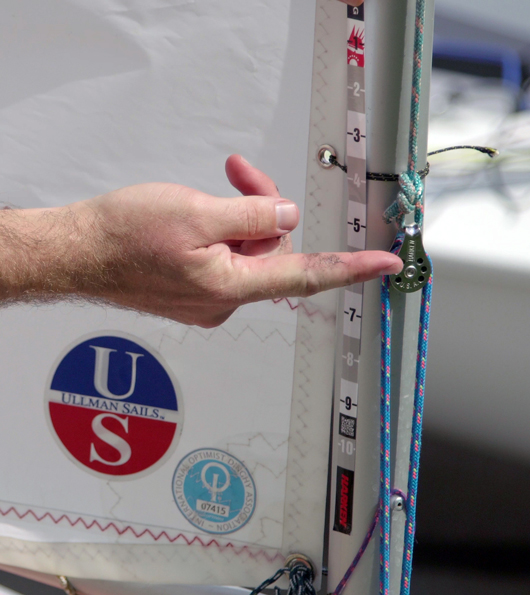
Place the tuning decal on the mast so that it sits in the middle of the range that the block will move.

In this example, when eased, the top of the knot sits right around the 3 inch marker.

In this example, when trimmed, the top of the knot sits right around the 5 inch marker.
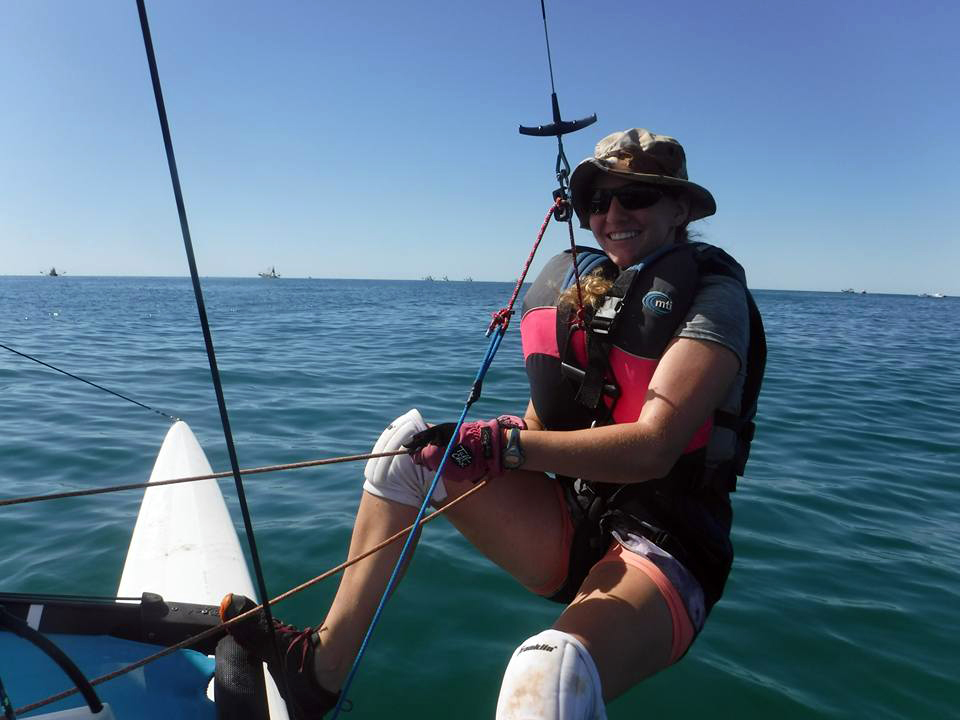
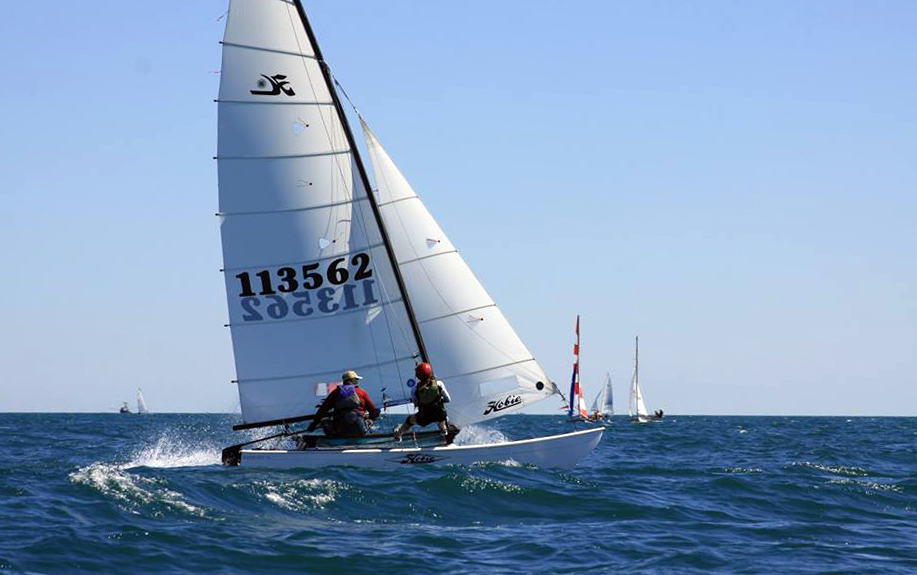
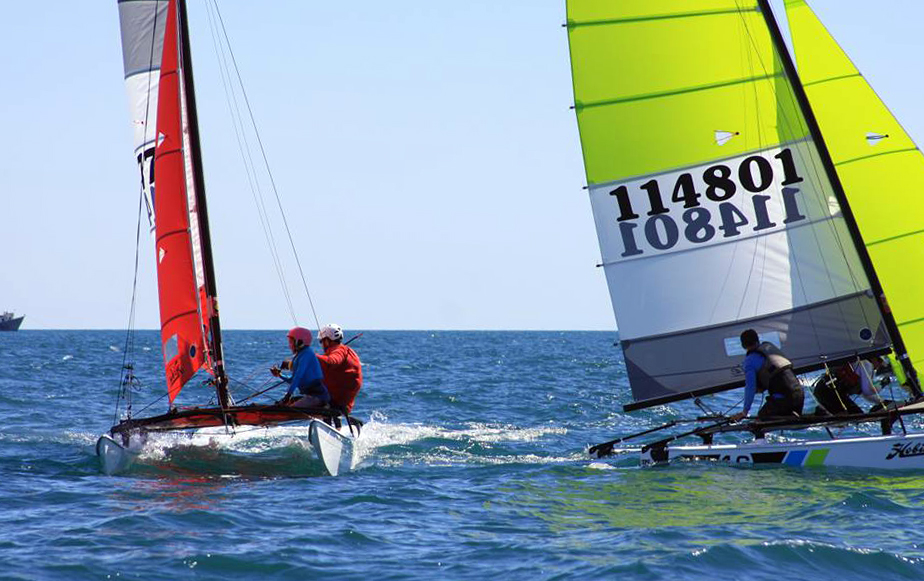
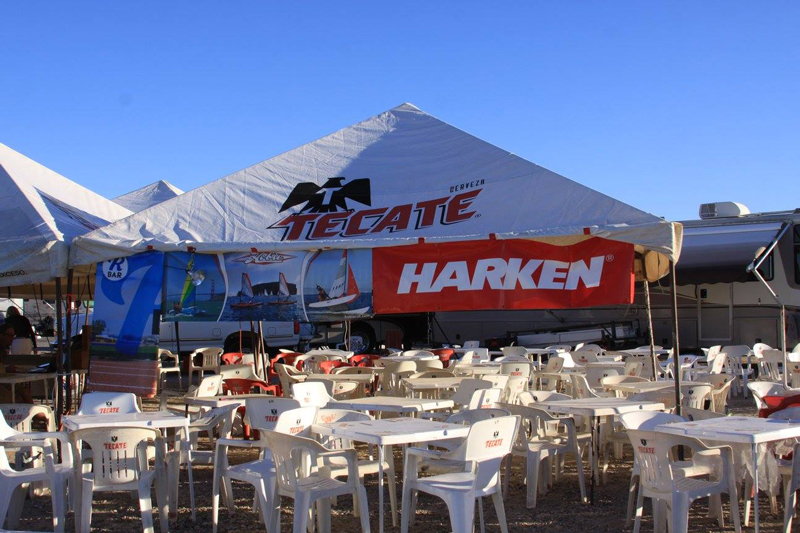
Each October, as Harken HQ prepares for winter, Hobie sailors from Tucson Fleet 514 hitch-up their trailers for the annual Piñata Regatta. Hosted in the small Mexican beach town of Puerto Peñasco, crews are welcomed by friendly people and the beautiful warm waters of the Sea of Cortez. The 32nd edition of the regatta did not disappoint, attracting 80 entries for a weekend of solid trapeze-worthy breeze. Check out these photos from the regatta, including some of brand new Blockheads!
Harken Blockheads is proud to help support the Piñata Regatta and its mission of spreading the “Hobie Way of Life” to sailors of all ages.
Learn more about Tuscon Hobie Fleet 514 and the Piñata Regatta here.
Photos courtesy of Tuscon Hobie Fleet 514 and Barb Perlmutter.
Follow the journey of Annie Samis and Peter Barnard, two awesome Blockheads. They went from true-blue Opti sailors, to learning how to wrangle a double-handed boat, to racing in Bermuda during the America’s Cup!