Melges 15 Nationals – Harken Blockhead Youth Award

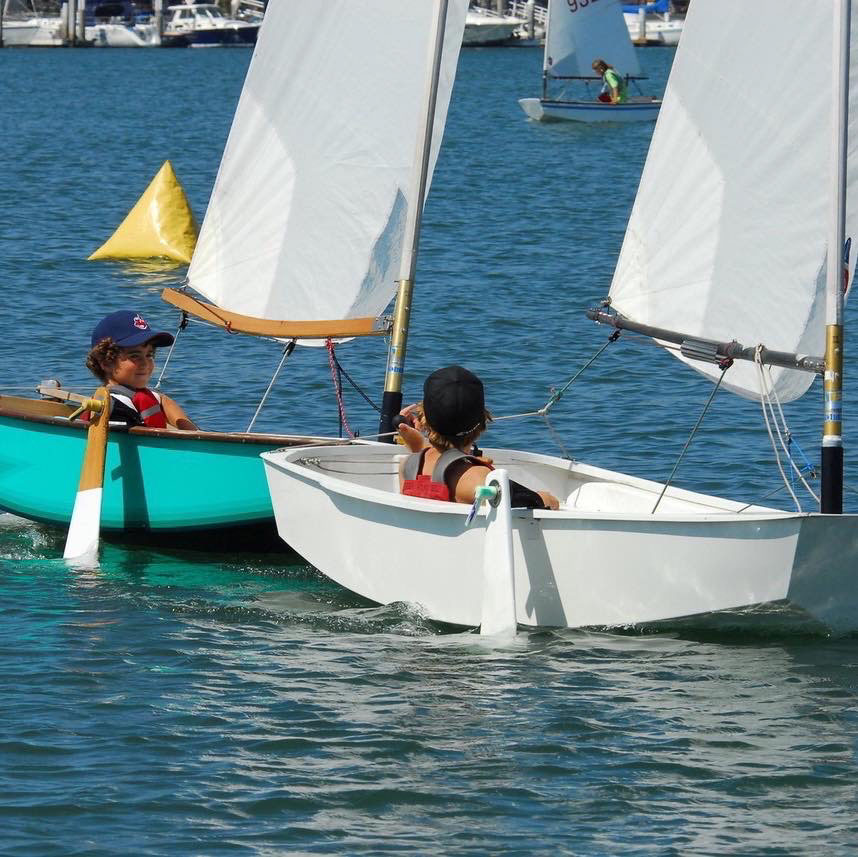
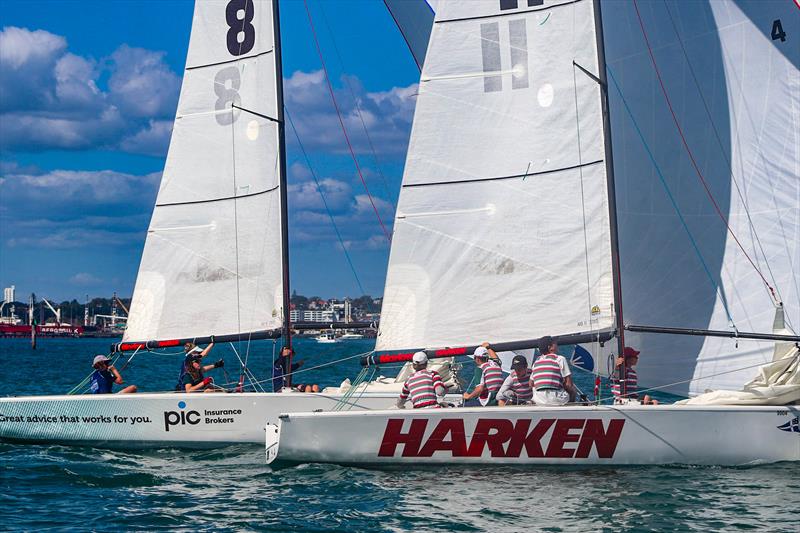
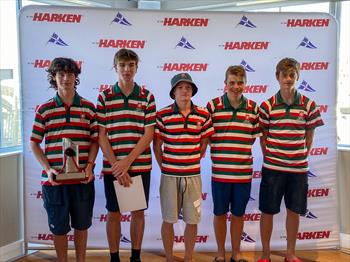
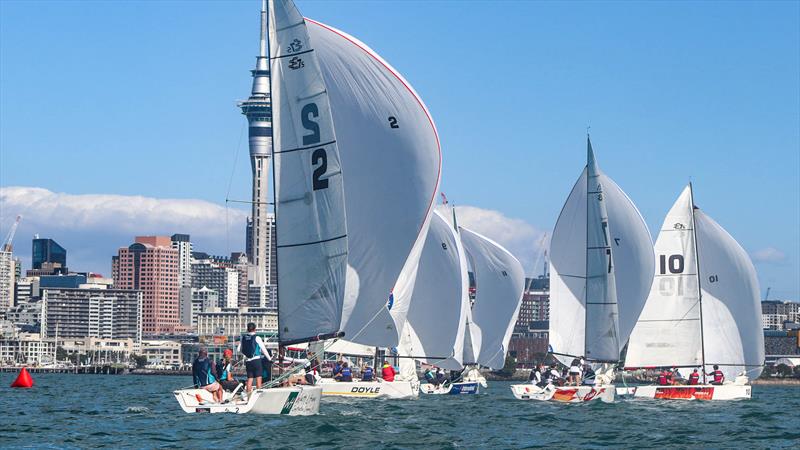
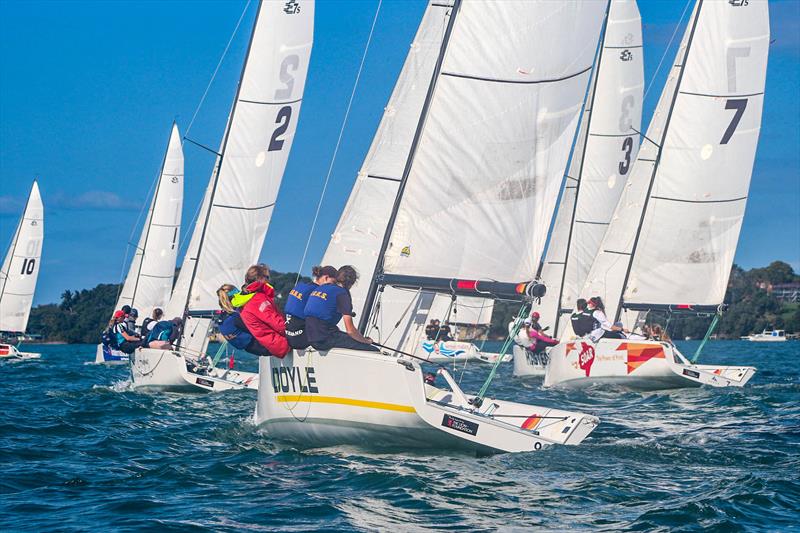
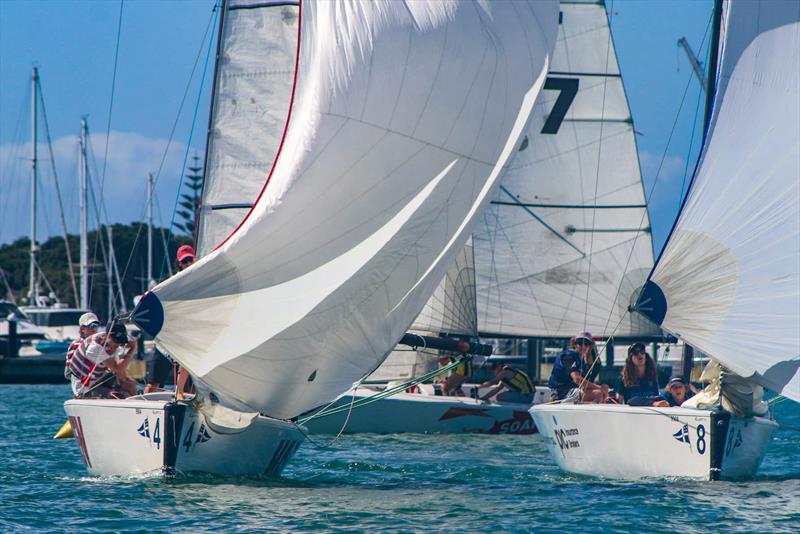
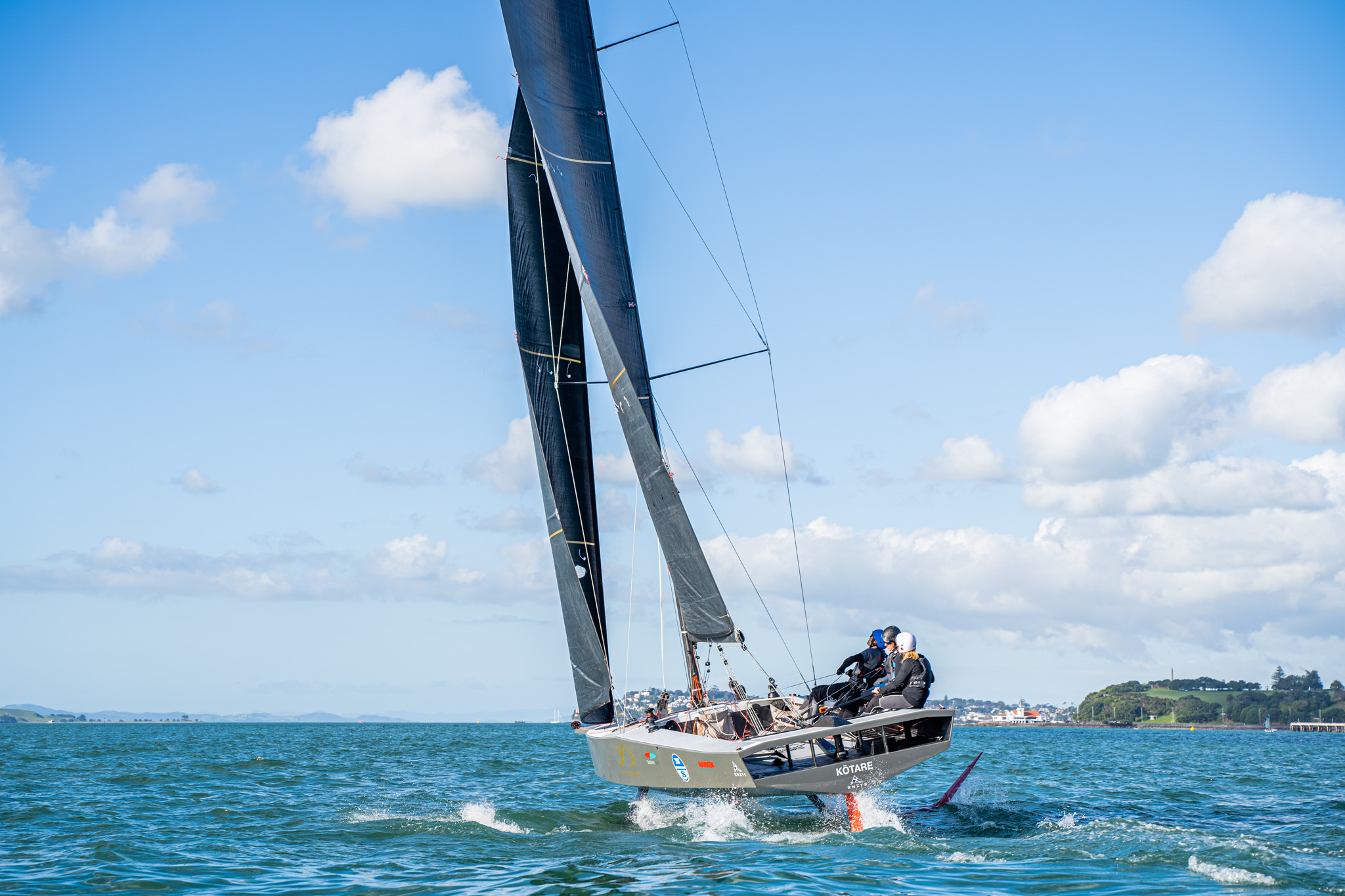
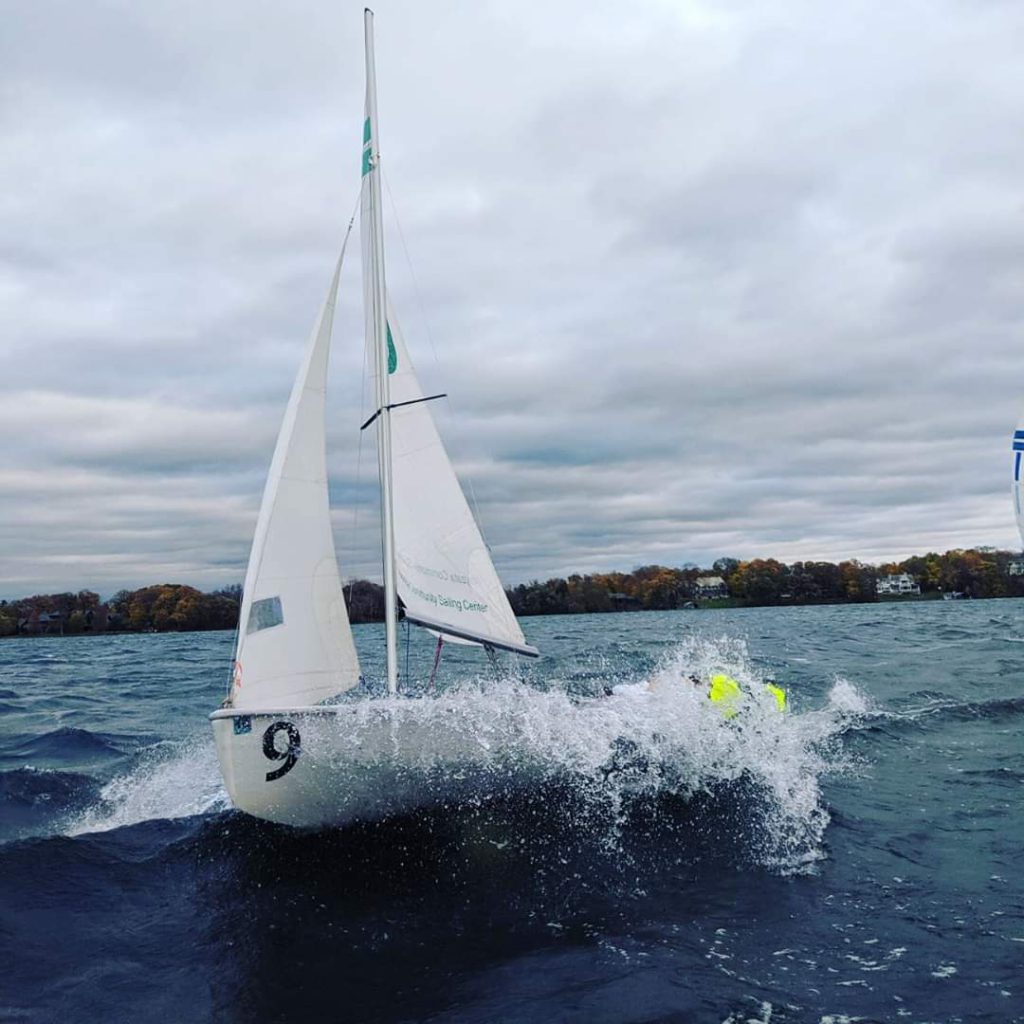
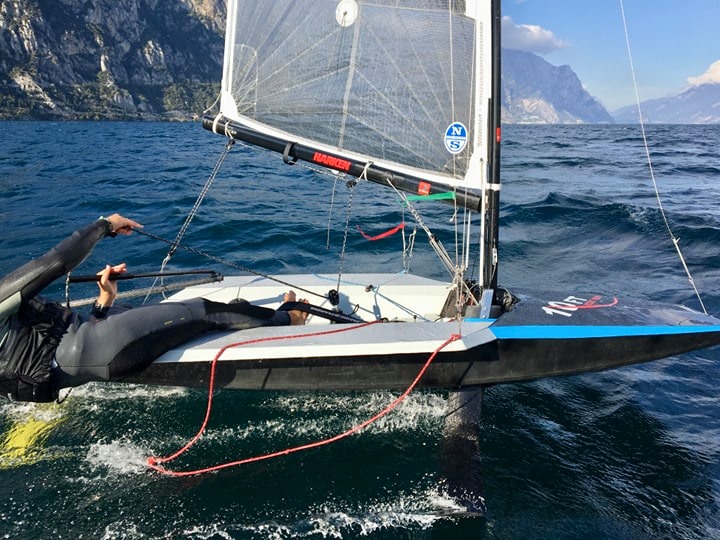
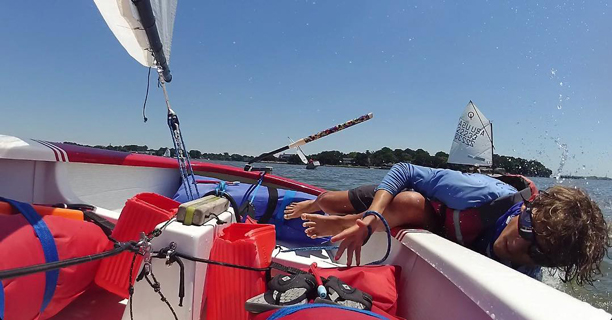
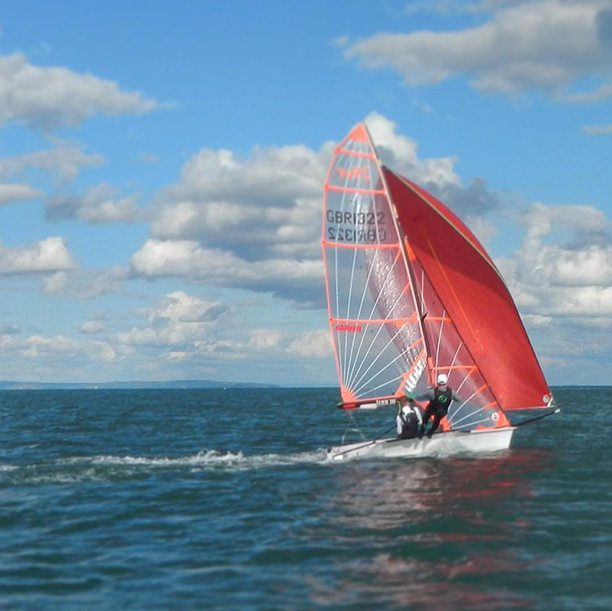
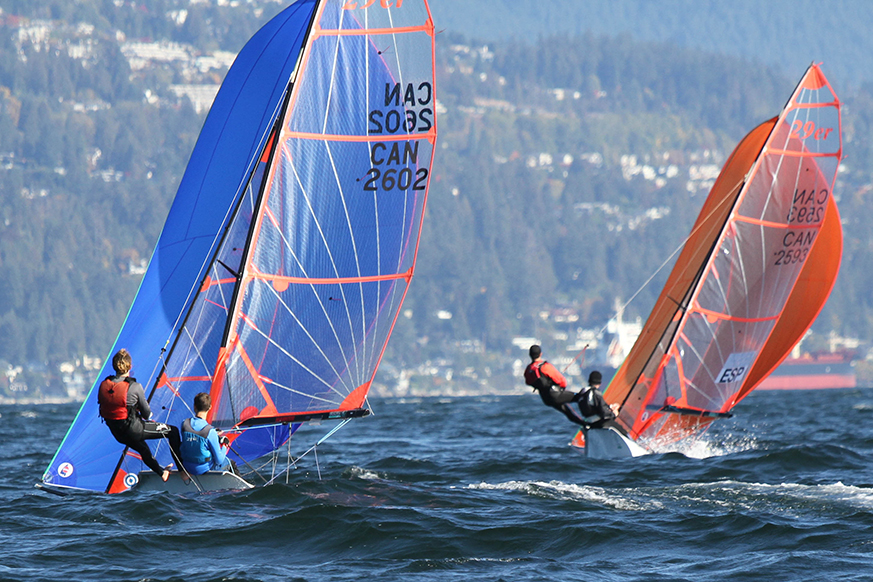
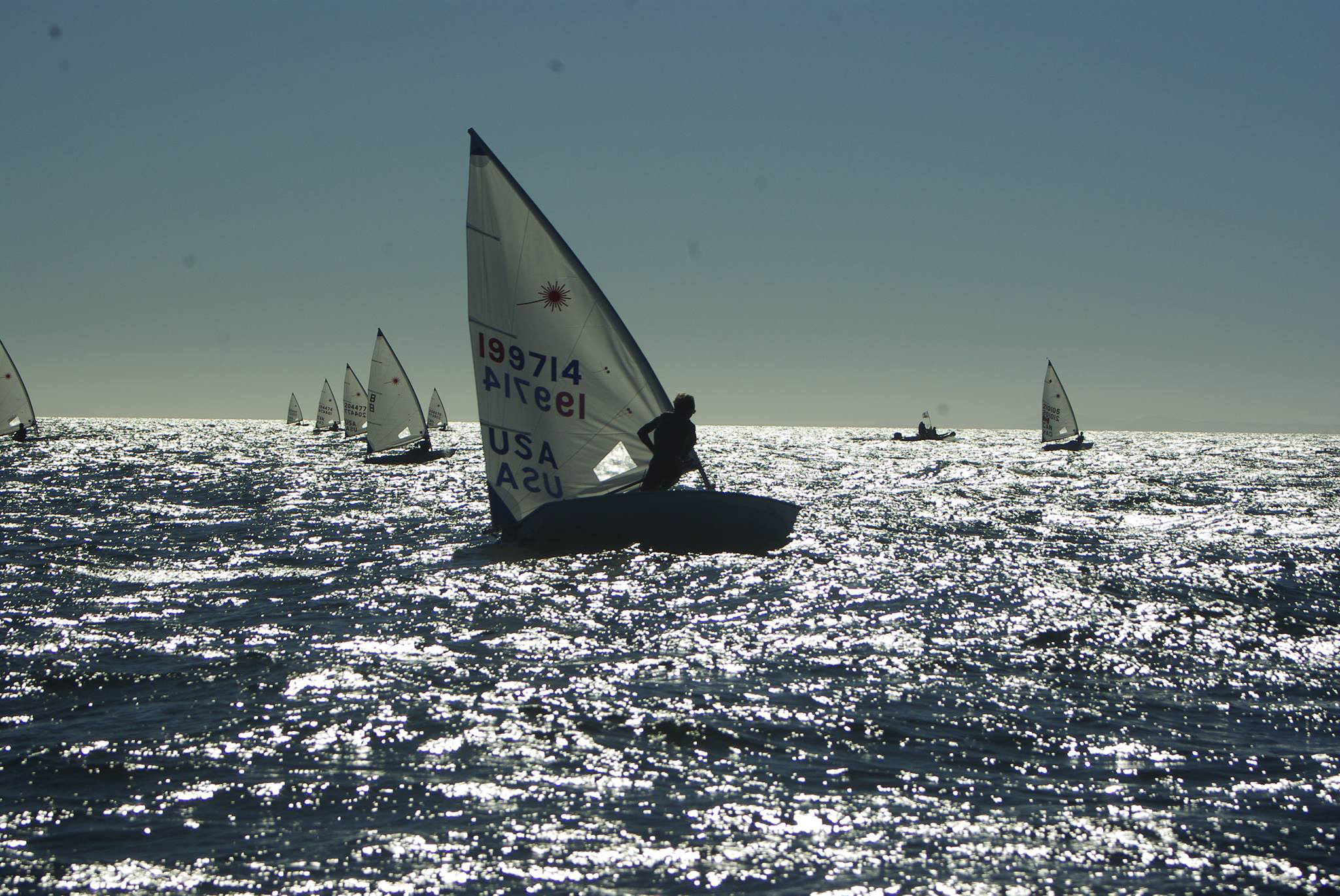
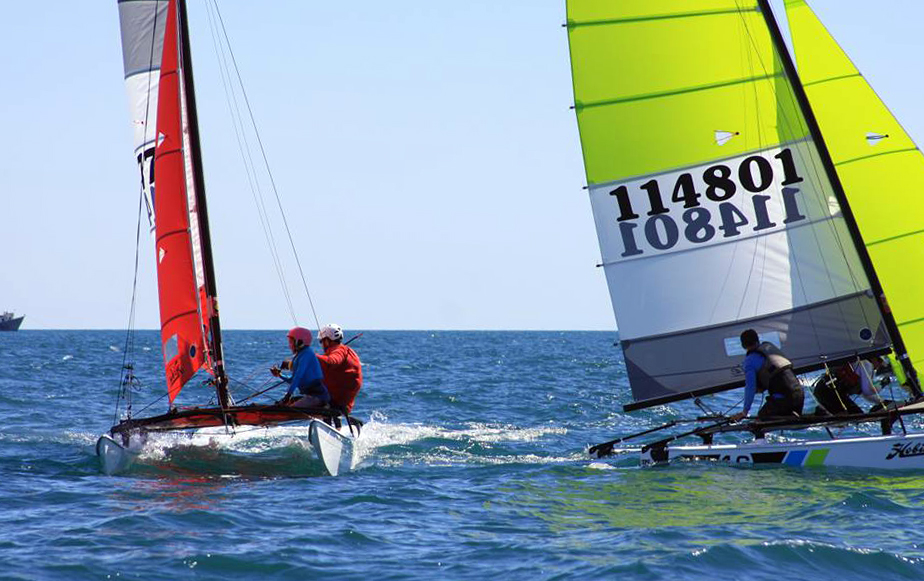
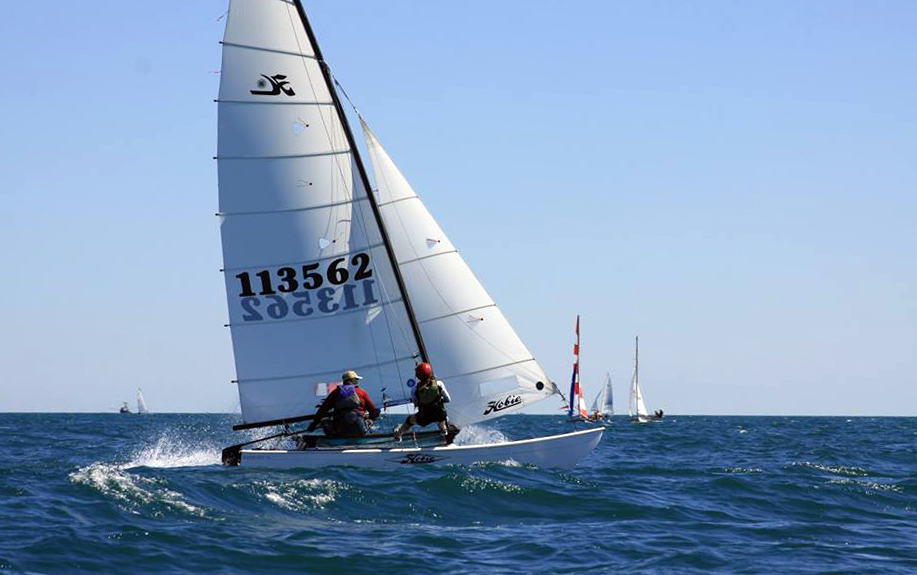
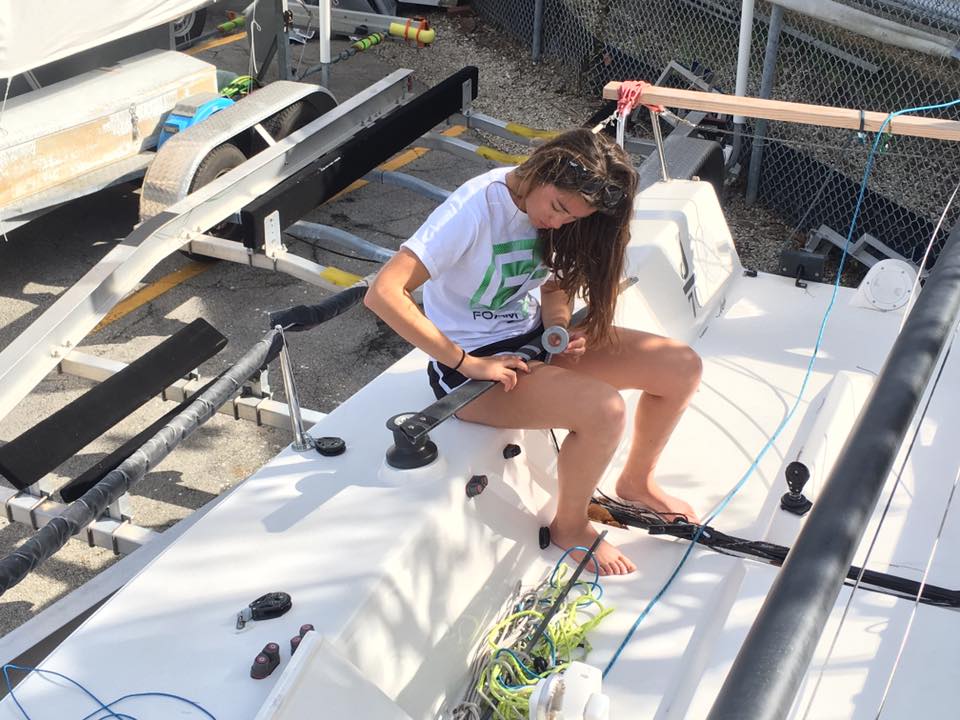
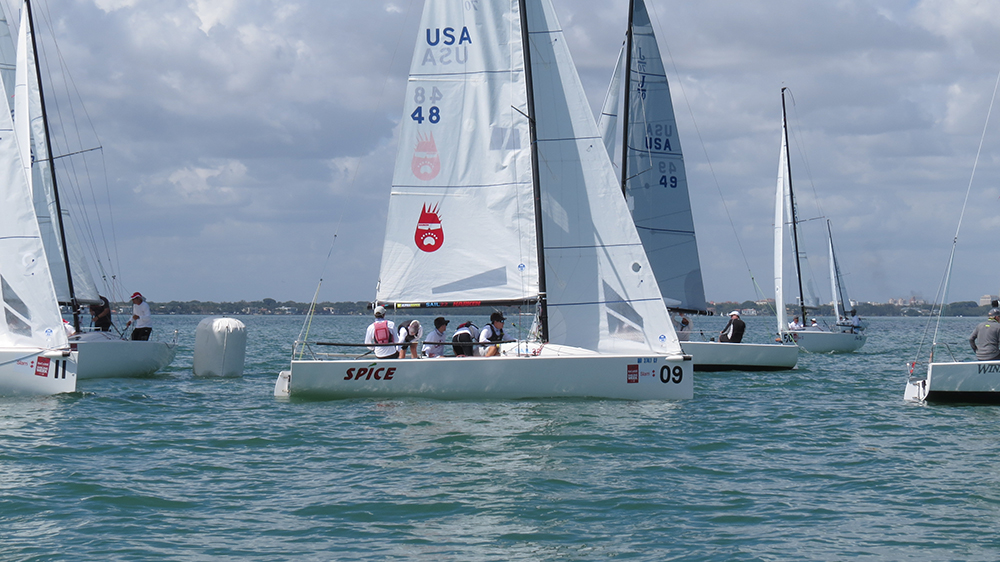
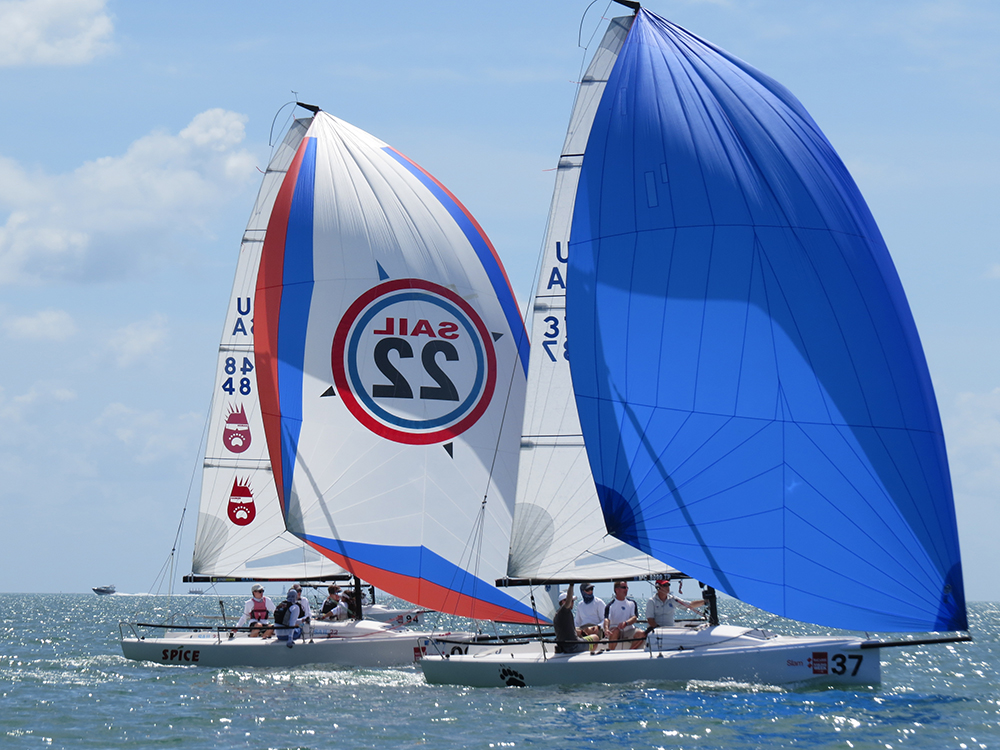
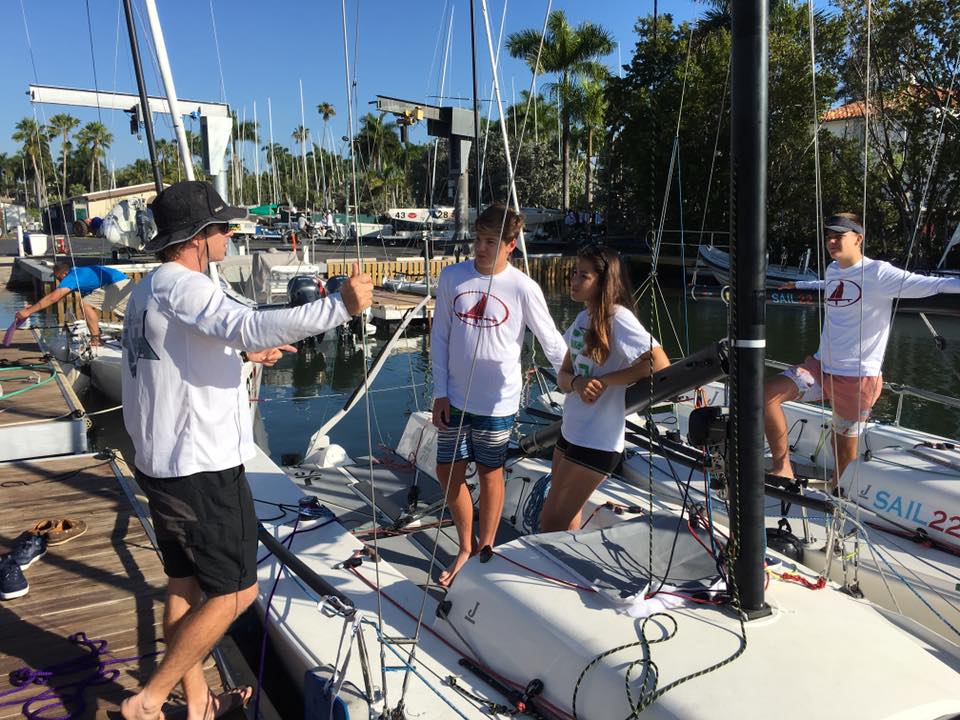
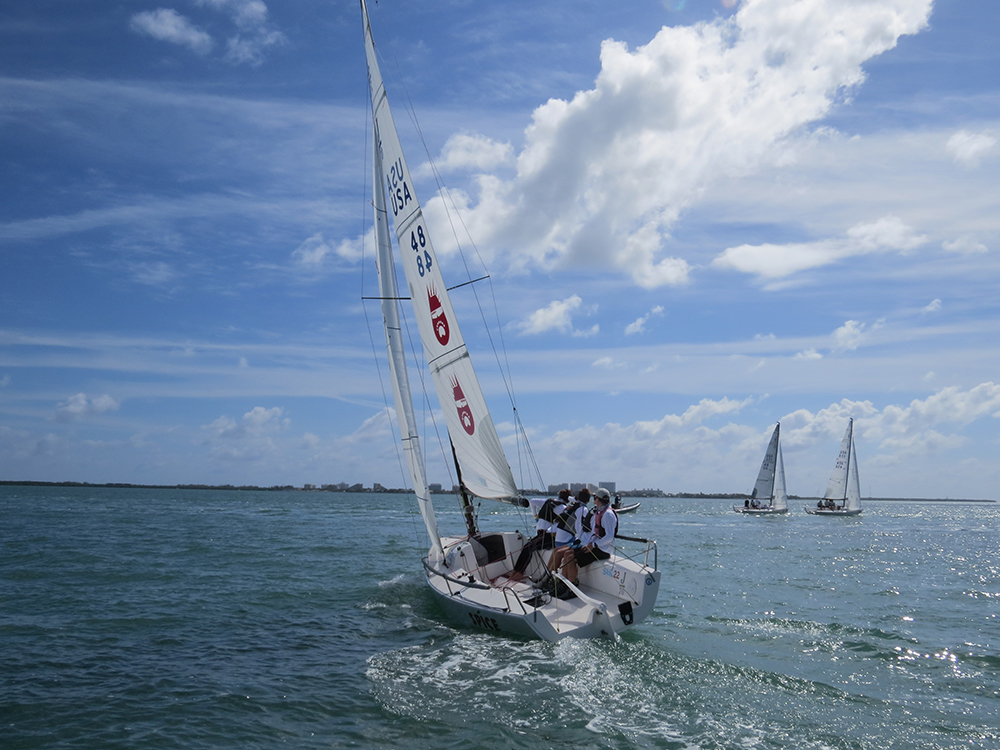
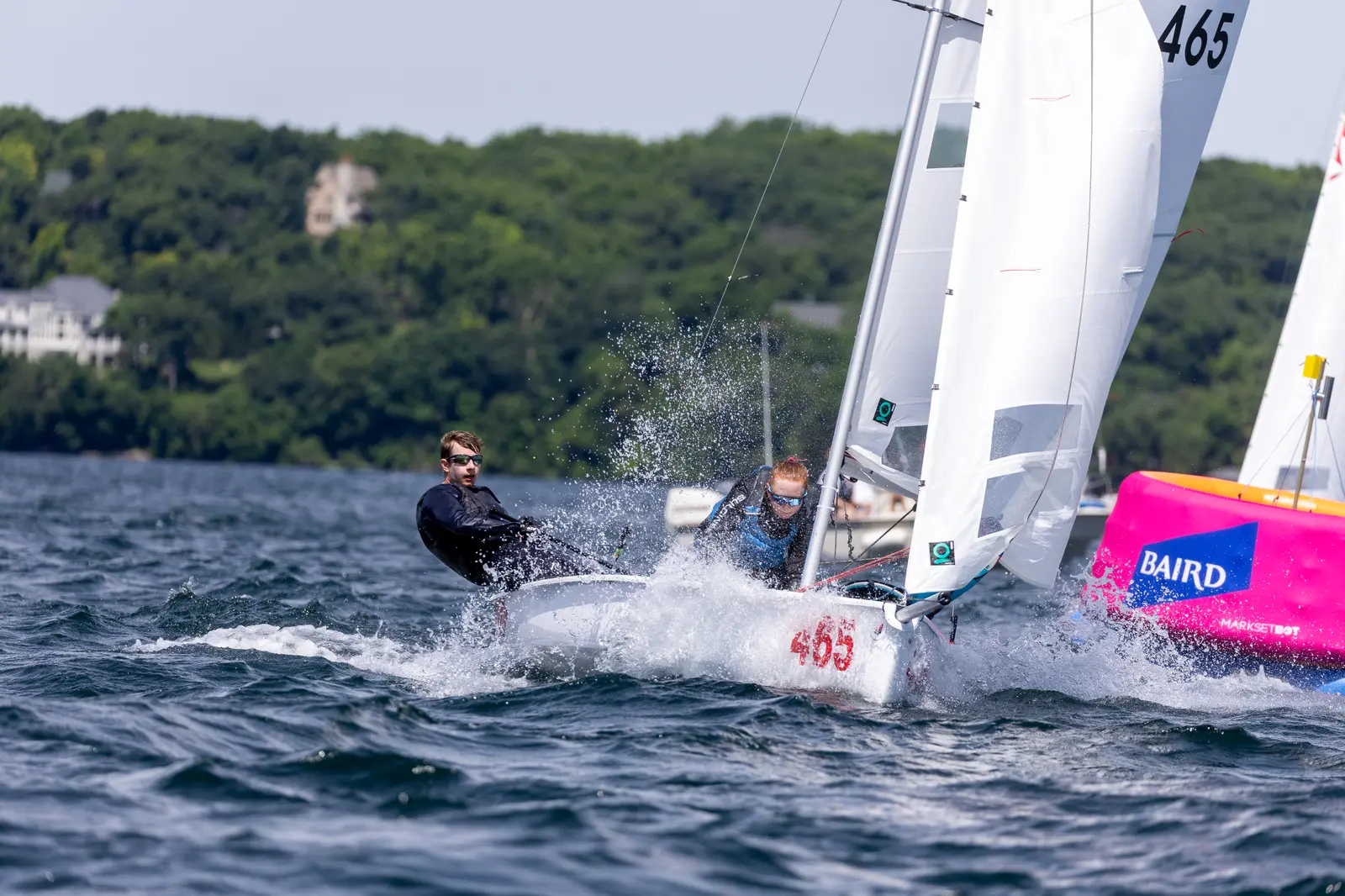
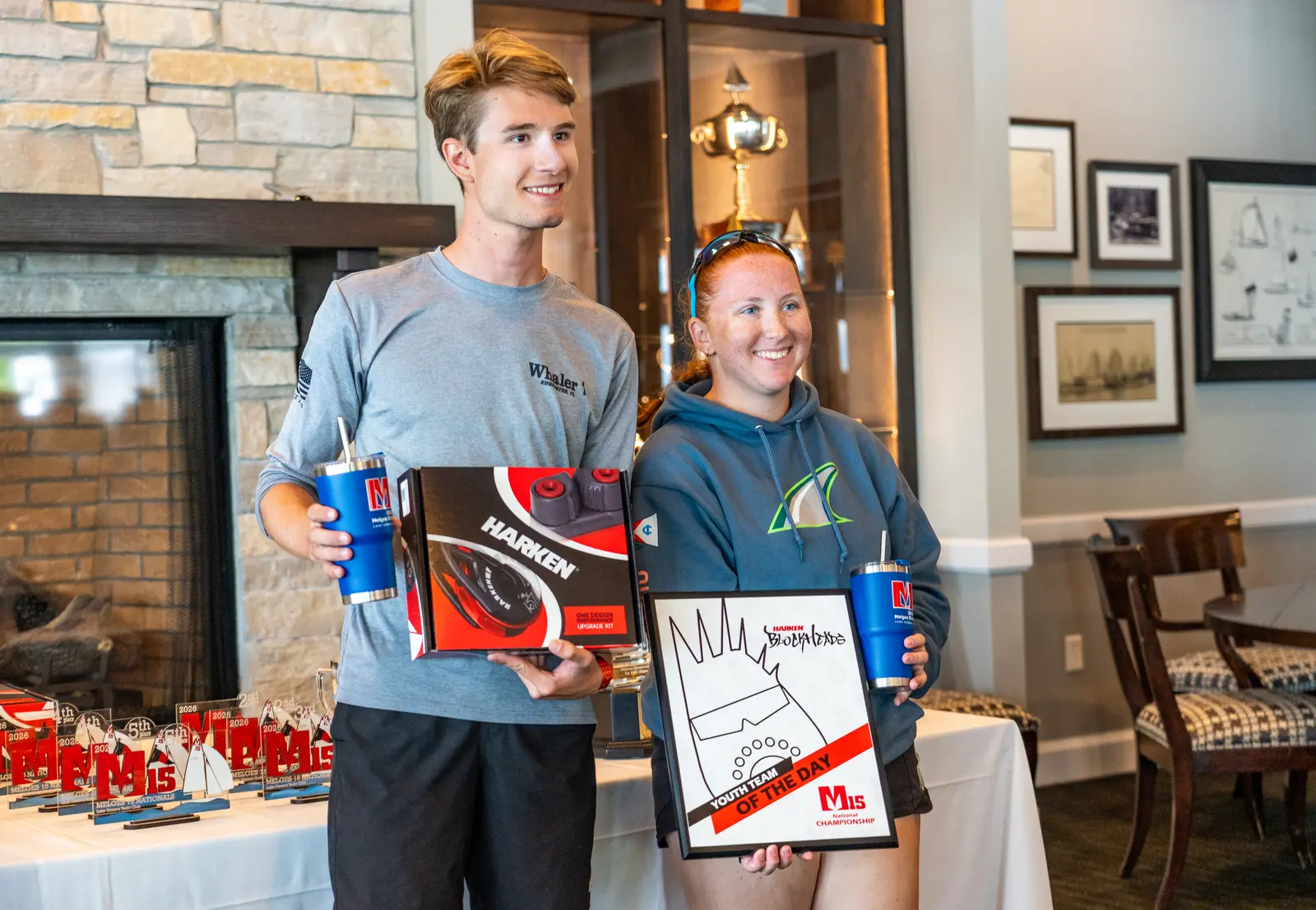
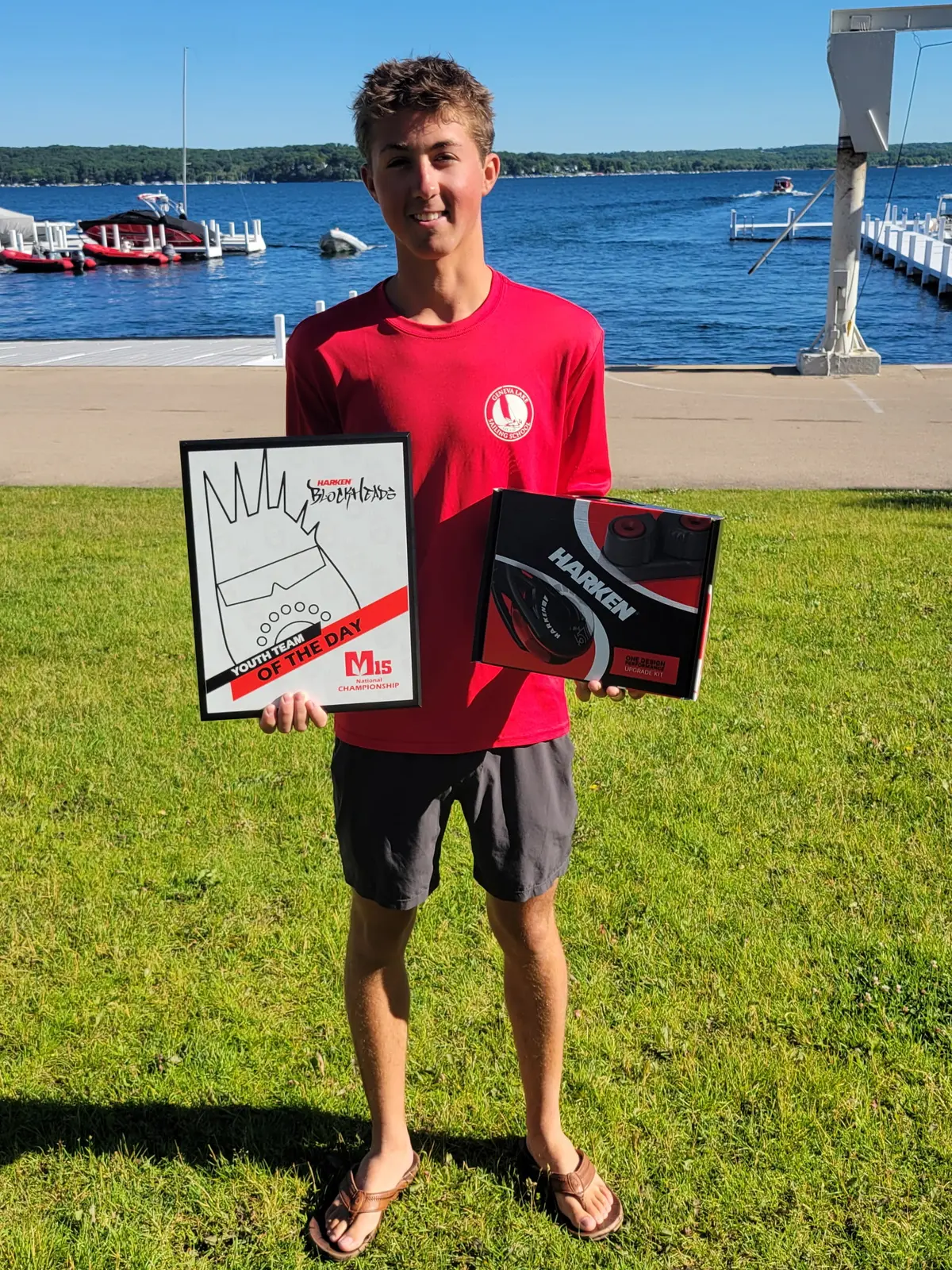
With over 20 youth teams competing in the 2026 Melges 15 National Championship, 3 teams were awarded Melges 15 upgrade kits and the daily prize plaque to sign. This event was held in Lake Geneva, Wisconsin, and had about 70 total participants from around the United States.

The breeze was ON! All three days dished out 15-15 knots of breeze… yes, it was epic!

Congratulations to:

🏆 Teddy Bower & Amelia Sulciner — Minnetonka Yacht Club 

🏆 Owen Kohut & Mason Keane — Lake Geneva Yacht Club 

🏆 Ryan Keenan & Mollie Wood — Coral Reef / Indian Harbor Yacht Club 

Harken Blockheads looks forward to showing up and supporting youth sailors next year. See you there!

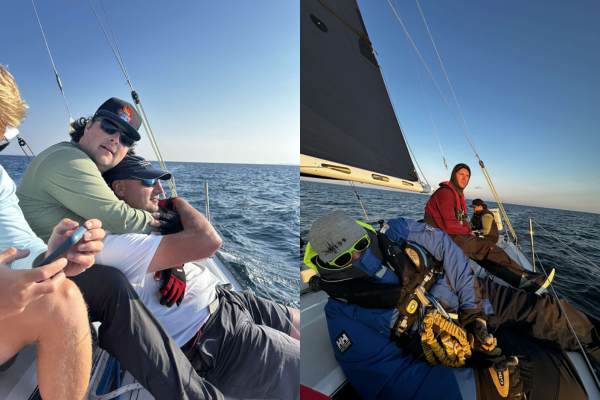
Solo offshore sailing is a full-blown test of endurance, problem-solving, and how long you can function on short naps. In La Rochelle, France, Ollie Hill and Ellie Driver share what it’s really like racing alone across oceans with no outside assistance: fixing everything yourself, preparing for anything that might break, and somehow squeezing rest into tiny bursts on a bean bag or pipe cot while the boat keeps moving.

Between the chaos, there’s a joy to it all. Sailors rely on preparation, a wide range of skills, and surprisingly comforting onboard snacks like rice crackers and sugar waffles drowned in salted caramel sauce. Boats carry personality as much as equipment, with names as fun as “Rockhopper” and “Avocado,” but underneath it all is a simple truth: solo offshore racing is brutally hard, deeply addictive, and ends with a feeling of achievement that keeps pulling them back out to sea.

Hear it from Ellie and Ollie themselves:

Calling all Chicago Mackinac Youth racers!

Are you under 25 and sailing the 2025 Chicago Mac Race? Simply sign up for the contest below, and you’ll be eligible for the ‘First Blockhead to the Island’ Award. The first one to the island wins! We’ll call the winner up onstage and present you with a plaque during the Sailors’ Celebration and awards on Mackinac Island after the racing. Exact date and time to be confirmed.

The Chicago Yacht Club Race to Mackinac® is an iconic freshwater offshore race — 289.4 nautical miles up Lake Michigan, starting in Chicago, Illinois, and finishing on Mackinac Island, Michigan.

This could be you!

Last year saw not one, but THREE first Blockheads to the Island, Jack Reiske, Murphy Roszak, and Torston Thiel were sailing aboard Vogue, a C&C 41 in the cruising division. It was a light upwind race for the entire fleet last year, with the entire fleet trying to avoid the holes scattered around the lake! They finished the race on July 21st at 7:37:46 AM with an elapsed time off 3 days, 1 hour, 36 minutes, and 13 seconds.

Two British sailors navigate the French offshore system, transitioning from double-handed partners to individual Figaro competitors, while aiming for the highest level of ocean racing.

Meet Ellie Driver and Oliver Hill!

Hear from North American WASZP Class Manager, Tyler Bjorn, on where the WASZP class is headed as foiling gains traction in Pensacola, Florida.


Are you an Inland lake sailor but don’t own a boat? Or perhaps you crewed for an E Scow last summer and instantly fell in love and want to take the helm, but owning a boat and registering for regattas is…EXPENSIVE?

Current Opportunities Through the E Scow Class

Youth Regatta Participation GrantK

The National Class E Scow Association wants to help and encourage skippers under 30 years of age to participate in championship events. If grant monies will make the difference between going and not going to one of the following regattas, you should APPLY HERE!

Development Grant:

The Island Heights Sailing Foundation (IHSF) created a bold initiative to put two E Scows in the hands of young skippers for an entire season. These young people will be E sailors for life and possibly our future class leaders.  Grant proposals are submitted to the NCESA Grant Committee for recommendation to the NCESA Board of Directors for funding. Learn more HERE.

Youth Charter Program on Lake Minnetonka, MN

Just five hours west of Harken HQ, Minnetonka Yacht Club supports youth sailors through its E-Scow Youth Charter Program. MYC offers charter access to a variety of scows and dinghies. This year’s youth fleet includes one E-Scow and one Melges 15. Each charter comes with a boat lift, sails, and seasonal storage at the club — MYC covers the boat, lift/dolly, and slip.

Eligibility & Requirements:

Charter recipients must hold Regular or Intermediate MYC membership for the 2026 season, carry valid third-party liability insurance at or above MYC’s required minimums, and pay a $750 deposit. Boats are in good condition but may require upkeep — recipients are expected to maintain their charter in good working order and report any repairs needed to the Club Manager.

From a Past Recipient:

“The pricing was insane — $700 for the whole summer. That made it possible.”

For Rakesh Dhiman, affordability was just the start. The program pairs sailors with mentors, offering hands-on coaching through rigging, maneuvers, and on-water situations. “We’d follow behind them and get coached through it,” he said. The community showed up in other ways too — members donated sails, and the culture of helping made entry into the class approachable.

The application process matched that ethos. “Super easy — fill out a form and you’re in. They’re trying to get people sailing.”

Dhiman is candid about the realities of older boats. “They’re temperamental. We had things break — a vang blew up, the traveler car exploded. There’s a lot of upkeep.” Maintenance costs exceeded the charter fee, though splitting expenses with crew helped. For sailors motivated to put in the work, the value is still there. “If you’re motivated, people are excited to support you.”

Apply HERE


APRIL 2026 CONTEST

Show us your #EpicSend moment for a chance to win FREE Harken swag!

👇 How to enter 👇

1. Dig up your best #EpicSend photo. Big breeze, full send, total wipeout—we want it all.
2. Submit your photo through the online form or email blockheads@harken.com
3. That’s it. BOOM. You’re in!👊

🏆 The best 3 entries win free Blockheads gear. ⏰ Entries close April 30 at midnight (CST) 📣 Winners announced May 4 on Instagram and HarkenBlockheads.com 📩 Winners will also be contacted directly

You must be a member of Harken Blockheads to have a valid entry … it’s the only way to win!


2026 GL52 Southern Showdown © Anna Suslova


Meet Sara Stone

Sara Stone is a professional sailor competing at the top level of the sport, both inshore and offshore. Inspired by the all-female Team SCA in the 2014–2015 Volvo Ocean Race, she shifted her career path from epidemiology to pursue sailing. After officially transitioning away from her previous career in 2018, she slowly began to get opportunities with different teams, saying yes to everything.

In 2022, she put together her own offshore project as a skipper for the Newport–Bermuda Double-Handed Return Race and went on to win overall, earning recognition as a 2022 U.S. Rolex Yachtswoman of the Year finalist. In 2024, she was named skipper and port-side trimmer for the American Magic women’s team in the first Women’s America’s Cup, and in 2025 became the first female navigator to win the TP52 World Championship.

Sara races in a variety of positions depending on the boat and the team. Sometimes she races on the bow, in the middle of the boat, as a trimmer, or as the navigator. Sara has previously raced with teams including RC44 Team Aqua, the Ocean50 trimaran Upwind by MerConcept, the U.S. SailGP Team, and the U.S. Olympic Nacra 17 program.

So, How Did Sara Get into the Navigator Roll?

Recently, she shared her pathway and gave advice on Instagram, inviting her followers to ask her anything and everything to do with navigation. Read on to learn from Sara and gain the confidence to step into the roll yourself. Take it away, Sara!

How to Start Navigating

Doing offshore deliveries is a great way to get time on a boat while sailing, and to explore the software on board while getting real-time data into the system. Plus, having someone on board with you will give them time to explain things!

If you’re racing inshore but in a different position, bring a spare hard drive and ask if you can take a voice recording of the navigator. Then, you can rewatch drone or onboard video with the audio and start learning the comms—what is being said, when it is being said, and who the info is directed to.

If you’re interested in offshore, investing in software like Expedition or Adrena, and then following a race like the Transpac or Newport to Bermuda while running your own routings and comparing them to what happens in reality is a cool way to practice.

If you’re not on a boat, taking online classes and watching YouTube videos on things like weather, basic marine systems, intro to electrical systems, and calibrations are great ways to start learning how the pieces fit together.

Go sailing as much as you can—in any position! Even with a tablet, you need to contribute to boat handling, especially when something goes wrong. The more you understand every position around you and what they need to do, the better you will be as a navigator.

Real questions from sailors interested in navigating!

Q&A with Sara:

Q: What mistakes taught you the most in your development as a navigator?

A: Don’t trust that the instruments will always work—or that they’re always accurate. You need to filter everything through your own sailing knowledge. More importantly, the entire system can crash, so you have to be prepared to navigate manually at any point. That means tracking your headings on port and starboard, both upwind and downwind, knowing your tacking and gybing angles, and understanding current and wind shear so you can still get around the course without electronics.

Q: What advice do you have for novice navigators?

A: Check, double-check, and triple-check everything—and then have a backup plan ready.

Make sure you’re constantly confirming the course axis, start time, and mark locations. Compare your boat computer heading to a handheld compass and any other systems you’re using, like Vakaros. Just as important, ask yourself if the numbers actually make sense. Compare what you’re seeing on the screen with what you’re seeing and feeling on the water, and encourage your team to speak up if something looks off.

Often, one bad number is the first sign that the rest of the system can’t be trusted—and that you may need to switch to manual navigation.

Q: How do you approach communication while on board? 

A: A lot of navigation communication is shorthand and timing.

In the pre-start, I’ll say things like:
“5 under pin lay” — we have 5 boat lengths until we’re on the pin layline, including the tack
“30 kill boat” — we’re 30 seconds early to the boat end and need to burn time

Around the course, it shifts more into timing and strategy:
“3 and 4” — 3 minutes on our current tack and 4 minutes on the other tack to reach the next mark

“Run square 325” — the downwind leg has an axis of 325°. If the true wind is also 325, both gybes should be equal, but if the wind shifts, one side becomes longer and the other shorter

Just as important as what you say is when and how you say it. Managing tone and volume—especially in the pre-start—is huge. The goal is to give the team exactly the information they need, at the right moment, so they can make the best decisions.

Photo: Uptop Media

Q: Recommendations for learning offshore strategy, fleet management, and weather?

A: One of the best ways to learn is to do weather routing at home while a real race is happening, then compare the routes you chose to what actually plays out.

Most routing software has sample polars, so you can simulate different boats like an IMOCA 60 or TP52 and practice real decision-making. It’s especially useful during transatlantic or long-distance races, where you can follow how the fleet positions itself over time. You can also use Virtual Regatta offshore to practice in real time.

If you want to go deeper, there are structured resources like Marine Weather University (paid), along with books like Modern Marine Weather that are great for building a foundation.

Q: Why did you choose navigation over other roles?

A: I started out on the bow and mid-bow, learning the mechanics on a variety of boats. At the time, I didn’t have a strong understanding of tactics or sail trim, but I was detail-oriented and picked up the systems and processes quickly.

As I kept racing, I moved into the pit and then trimming, and my understanding of boat handling and tactics improved. Offshore sailing pushed that even further, since you have to do everything—including navigation—so I started learning the software and electronics.

Eventually, I got an opportunity to step into an inshore navigation role with American Magic and Quantum Racing, and I went for it.

Q: For inshore navigation, what do you focus on most?

A: Starts are a huge priority, so I focus heavily on communication and accuracy in the pre-start, along with time-to-layline and layline precision during short courses.

But before calling a layline, you always need to look at the bigger picture. Consider wind shear, potential shifts, and where the pressure is on the course. If conditions are changing, they can significantly impact whether a layline call is actually correct.

3 Key Takeaways

  • Learn while you are not navigating—virtually or during offshore deliveries with real-time data
  • Learn from those around you—ask questions, record a navigator during a race, and re-listen (with permission, of course!)
  • Say YES – sail anything and everything, in any position.

Looking for more?

Learn more from Sara HERE
Follow Sara on Socials HERE


Foiling for All Ages: Blockheads at the 2026 WASZP Games

The 2026 WASZP Games marked the largest foiling regatta in North America to date, with Pensacola Yacht Club hosting over 60 sailors from around the world on Pensacola Bay. Competitors ranged from 11-year-old first-time foilers to seasoned sailors over 50, racing on 8.2, 7.5, and 6.9 rigs.

Before racing officially began, the WASZP class hosted a pre-Games event where 15 sailors were selected to battle it out for the “All-Stars” title and a $10,000 prize purse. More than just a tune-up, the event served as a launchpad—giving rising foilers a chance to show they’re coming in hot to the professional sailing scene and high-performance foiling community.

The official Games kicked off shortly after the All-Stars event wrapped up—but guess what? The 60 experienced WASZP sailors weren’t the only ones on the racecourse.

First-time foilers took part in the Green Fleet, sailing alongside the main course as they learned the fundamentals of foiling. Ranging in age from 10 to over 50, these sailors brought a unique energy to the event—proving that foiling is for everyone and is the future of sailing. Green Fleet coaches supported these newcomers both on and off the water, helping them rig, build confidence, and take their first flight.

Missed us at the event? Check out our content below!

Social Media Coverage

WASZP Sailing in Pensacola – VIDEO

Photo Gallery


Dave Perry is perhaps the country’s leading authority on the rules. He’s so good, he even wrote the book… Racing Rules of Sailing. And he’s willing to help you.

Got a rules question? Or just want to go into the protest room unscared? Ask Dave! Fill out the form. Submit it. You’ll get the answer in a video by Dave himself!


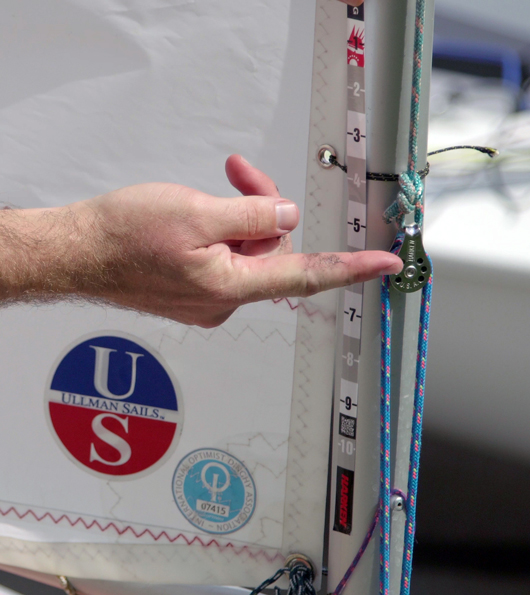
Briggs Kossman — also known as @SailBriggs on social media — spent time with Harken Blockheads to share his fine-tuned Opti rigging and setup for racing. His current rig setup has taken years to perfect. In this video, Briggs walks through his complete Optimist dinghy setup, breaking down how to OPTIMIZE performance in your Opti.

Briggs dives into the small details that can make a big difference — helping you unlock that extra knot of boat speed…because it every second counts.Whether you’re looking to level up your racing performance or are just getting familiar with the Optimist class, this walkthrough offers practical tips for sailors, parents, and coaches alike.

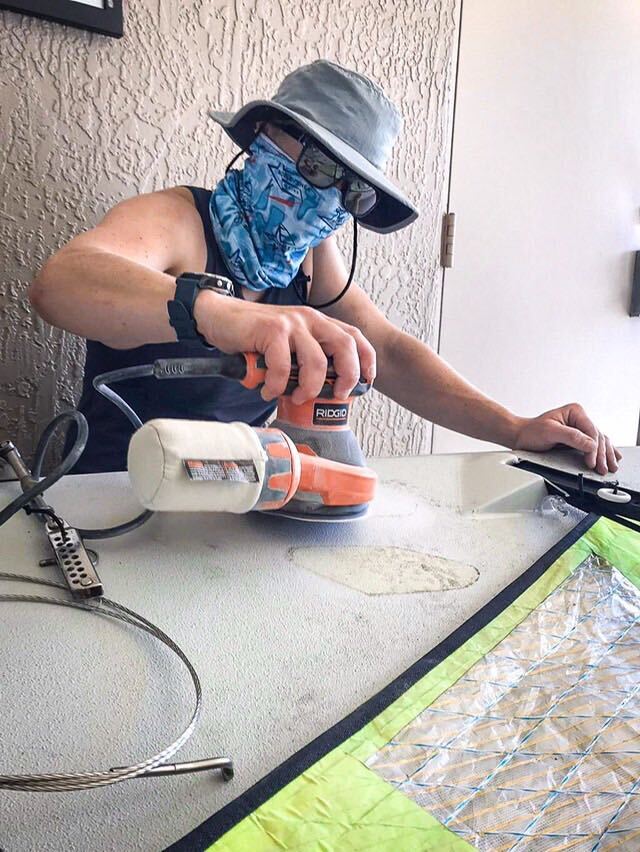
Harken Blockheads Ella Bowers, Maggie McGary, and Lily Olson show how to sharpen iceboat runners to get ready for winter iceboating. In this video, they explain when to sharpen your runners, how often to maintain them, and what tools are most useful to get the job done right.

You can hand sharpen runners or you can use a sanding belt if you have access to one. Don’t miss out — the ice waits for no one!

December 2025 Contest: Test Your Iceboating Knowledge

The deadline to enter is December 25th. You could be the one lucky Blockhead to win some Harken Blockheads gear! Take a stab at our short quiz to be entered. Winners will be chosen based on accuracy, and then at random should there be a tie.

Make sure you’re a member of Harken Blockheads – it’s the only way to win! Learn more here.

WHAT’S YOUR FAVORITE BOAT MAINTENANCE?

Contest Closed!

Make sure you’re a member of Harken Blockheads – it’s the only way to win! Learn more here. 

The 2025 E Scow Nationals were not for the faint of heart. Little Egg Harbor Yacht Club hosted 50 boats for this year’s championship. Never seen an E Scow? Picture a 28-foot planing surfboard with an asymmetrical kite—and no “off button.” From the moment you leave the dock until the boat is back on the lift, sailing an E Scow is full-throttle, physically demanding, and relentless.

Photo by Anna Suslova

Day one saw two races, including a strong youth turnout with eight skippers under the age of 25. The fleet battled up and down a 1.3-mile course in breeze that built from 15 knots to nearly 20 by the end of race one. With winds holding at 20–25 knots and 1-3 foot waves, the race committee stretched the course to 1.7 miles. On the edge of class limits, both boats and sailors were pushed to theirs. The result? Pure chaos: broken masts, capsized hulls, snapped rudders, and blown shrouds filled the second race.

After racing, the fleet gathered for the annual class meeting, where the Blockheads Youth Boat of the Day Award was presented to Finn Rowe, Malcom Lamphere, Madison Whitehead, and Will Huerth. Harken is proud to sponsor this recognition each year, celebrating the next generation of sailors!

Photo by Anna Suslova

Day 3 picked up right where Day 2 left off—breeze on! With part of the fleet sidelined from damage the day before, those still standing were thrown back into the windy arena. The day began with 20 knots on the course, again pressing the limits of the E Scow class. This time, the Race Committee wisely called it after one race, locking in Kyle Navin and team as the top youth boat of the day. After racing, sailors rinsed off the salt and shifted gears for the regatta party—an evening of dancing, mingling, and cocktails (for those of age). The Blockheads Youth Boat of the Day Award was presented to Kyle Navin, Quin Frazier, Norman Berge, and Dave Navin, just before the highly anticipated raffle for a brand-new North Sails jib.

The final day of racing kicked off with a 10:30am start. Conditions were the lightest of the regatta, with 8–12 knots of breeze and a minimal wave state. Blockheads award winners in boat I-11 closed out strong, posting a 3rd and a 1st on the day. Awards commenced at 3:30, with the third honor going to the youngest youth skipper and team in boat MA-13. West Walker, Max Naseef, and Victor Larimer showed determination all weekend, making a big effort to get their boat on the starting line and into the mix.

Photo by Anna Suslova

Contest closed! Thanks for participating, see you next contest!

CAN YOU UNSCRAMBLE THE LETTERS?

lyf FsOt – cAthat Kcolb”

Correct answer: Fly Soft-Attach Block

The winner will be randomly drawn from the list of correct answers. Make sure you’re a member of Harken Blockheads – it’s the only way to win!

Learn more here. 

DID YOU SIGN THE BLOCKHEADS FLAG AT THE ILYA DINGHY CHAMPIONSHIPS?

Lots of Blockheads asked who gets to keep the flag—now’s your chance! Take home the official 2025 ILYA Opti & X-Boat Championships Harken Blockheads Flag. It’s easy—just fill out the form below to enter and the flag could be yours! Where will you hang it?

Raffle closed – thanks for participating!

WHAT IS THE CAMDEN CLASSICS CUP?

“Sailing Classic Yachts Where the Mountains Meet the Sea”

1 & 3 – Carol Chu Photography / 2 – Nathan Pablo Photography

For the past nine years, the Camden Classics Cup has welcomed sailors to the picturesque harbor of Camden, Maine. This annual regatta features two days of racing and a spirited “junior regatta” in 420s. Presented by Lyman-Morse with support from the CYOA, it’s a celebration of classic yacht racing and boatbuilding.

The youth regatta introduces young sailors to skippers’ meetings, rating discussions, and the vibrant town of Camden. They gain hands-on experience with sailing, enjoy a variety of boating activities, and learn the finer details of how regattas work.

Harken Blockheads joined in by providing Blockheads kits to the youth sailors, hoping to see them in action during the junior regatta. Unfortunately, the wind never arrived that Friday, and no races could be held.

On Saturday, however, several young sailors from the junior fleet found themselves crewing aboard stunning wooden classic yachts—an unforgettable experience that embodies the down-east charm and camaraderie that make the Camden Classics Cup so special.

Have you ever sailed on a classic boat or in Maine? Take a look at the beautiful boats and scenery!

Carol Chu Photography

Harken Blockheads headed to Lake Minnetonka, Minnesota for the Paragon Insurance and Auto-Owners Group Dinghy Championship Week, presented by Helly Hansen. Also known as the Inland Lake Yachting Association (ILYA) Dinghy Championships, this event brings together ILYA clubs for an exciting week of competitive dinghy racing. Harken Blockheads were proud to support the Opti and X-Boat events, held July 26-28th!

The memories made at the ILYA last a lifetime, and we’re thrilled to be part of it! More than 60 sailors signed up for the Harken Blockheads program, where they discovered everything we have to offer, tackled fun and challenging contests, and connected with sailors. We engaged with 270 junior sailors to proudly share the mission and core values of Blockheads, and educated the Opti sailors (and sometimes their parents) on what the proper terminology of hardware on their boats: the first step in gaining knowledge to become and independent sailor. 

Onshore, we hosted three exciting contests, one during the Opti regatta and two during the X-Boat regatta. During the Opti event, sailors voted for their favorite Opti boat name. We spotted plenty of clever, funny, and creative names around Lighthouse Island. Sailors were so passionate about their entries that they paraded around the island rallying votes from friends and competitors!

The winner of Contest #1 was “Shark Bait”, sailed by Kyle Connor.

This boat holds special meaning for Kyle as his older brother sailed it before him, a true family legacy. Check out his opti and his new Blockheads buff! Doesn’t he look like SCHMICHTER????!!! Watch his reel here

Honorable Mentions: “Fast Freddy”, “’Lil Smurfette”, “Breakin’ Wind”, “Nauti Dog”, and “Flip me!”

We were lucky to watch two days of racing for the Opti fleets! While the wind conditions varied, but overall the breeze remained light. Still, the Opti sailors hit the water with big smiles, looking forward to a day on the water alongside friends and family.

Pictured above is the overall Opti winner, Mathias Urban. Without winning a single race, Mathias finished with 14 points—an impressive reminder that consistency is key in sailing. His hard work paid off, and post regatta moments like this make all the effort worth it!

THE X-BOAT CHAMPIONSHIPS (DAY 1):

BREEZE? NONE. VIBES? HIGH.

The momentum carried throughout the weekend, and Harken Blockheads kicked things off bright and early during the X-Boat breakfast on Monday morning. While the breeze didn’t cooperate for racing, sailors made the most of their time, signing the Blockheads flag, participating in TWO Blockheads contests, and jumping into the ILYA X-Boat volleyball tournament.


Contest 1: HOW FAST CAN YOU TIE A BOWLINE???

Harken Blockheads challenged sailors to a timed knot-tying contest, both a traditional bowline and a flying bowline. And it got intense. We were pleasantly surprised when the very first sailor pulled off a flying bowline on their first attempt, so we knew we had to include it in the contest! The fastest flying bowline was tied in just 1.26 seconds, and the fastest traditional bowline in 1.56 seconds.

Not everyone knew how to tie a bowline, so we took time to teach and share some helpful tricks. Want to see bowline demos or other knot-tying videos from Harken Blockheads? Email us–we’d love to share!

After the contest wrapped up, many sailors who had also competed in the Opti regatta asked, “When’s the boat naming contest?” So, we delivered!

Contest 2: WHAT IS THE BEST X-BOAT NAME???

With over 80 creative boat names to choose from, the competition was fierce. The winner? Dialed In, pictured here after Minnetonka’s post-volleyball tournament celebratory swim. That’s two wins for Dialed In! Coming in a very close second was the Vegetarian Snake.

Wan to view results and more photos from the Inland Championships? Visit ILYA.org


DID YOU SIGN THE BLOCKHEADS FLAG AT THE ILYA DINGHY CHAMPIONSHIPS?

Lots of Blockheads asked who gets to keep the flag—now’s your chance! Take home the official 2025 ILYA Opti & X-Boat Championships Harken Blockheads Flag. It’s easy—just fill out the form below to enter and the flag could be yours! Where will you hang it?

ENTER TO WIN!

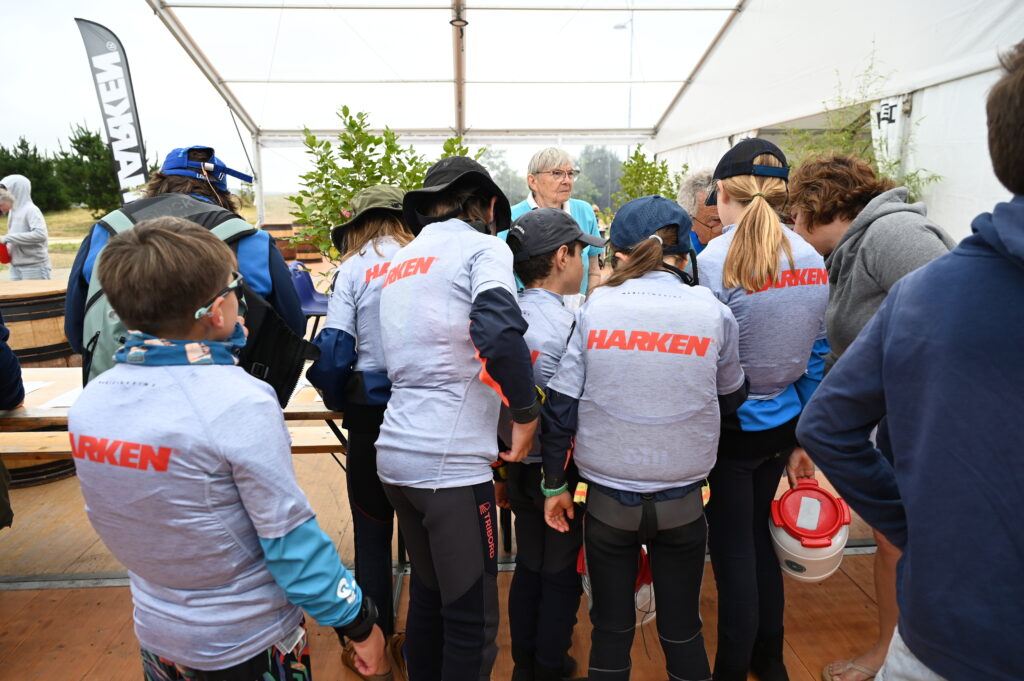
Harken was proud to be present at the Optimist International Summer Cup (CIE), a global event for youth sailors, held over July 12-18 in Brest, France. A key event of the season, it brought together nearly 400 young sailors from all over France – and beyond!

As a loyal supporter of youth sailing, Harken was excited to support this regatta by providing all the participants with shirts to wear over their life jackets throughout the event!

LOOK AT ALL THOSE BLOCKHEADS IN THEIR SWAG! Look good. Feel good. Do good. Race like a Blockhead—shop here!

We also rewarded the winners of the Raid Harken with a number of prizes in recognition of their performance and sportsmanship.

A big thank you to the organizers for a successful event, and well done to all the young sailors for their energy and passion!

In 2025 THREE Blockheads made it to the Island first during the Race to Mackinac.

Jack Reiske, Murphy Roszak, and Torston Thiel were sailing aboard Vogue, a C&C 41 in the cruising division. It was a light upwind race for the entire fleet this year, with the entire fleet trying to avoid the holes scattered around the lake! They finished the race on July 21st at 7:37:46 AM with an elapsed time off 3 days, 1 hour, 36 minutes, and 13 seconds.


116th CYC Race to Mackinac presented by Wintrust / Chicago Yacht Club


After racing, we met up with the Blockheads from Vogue to hear about their race.

Q: What’s your experience sailing the Race to Mackinac?

“This was my (Murphy) third, Jack’s fifth, and Torston’s first Chicago Mac Race.”

Q: Any unique challenges this year?

“Just keeping the morale up during the lulls and being able to focus on speed and tactics.”

Q: What were your roles on the boat?

“We all mainly work on the bow, but everyone gets wheel and trim time during the race.”

Q: What makes racing together special?

“I think not racing together for the majority of the season but being able to work cohesively as a team when it matters most is pretty special.”

A total of 21 Blockheads entered the contest, sailing across 14 different boats—a fantastic turnout! Great representation from Harken Blockheads—congratulations to Jack, Murphy, and Torston!

WASZP FRENZY IN FRANCE!

It’s a summer full of foiling and Blockheads are jumping around from regatta to regatta getting their fix in. Most recently, Harken France stopped by the 2025 French Waszp Nationals in Carnac, France.

Twenty-nine competitors from seven different countries gathered at Yacht Club de Carnac, France for five days of intense racing. During the event, Harken met up with Harken France Ambassador, Louise Metenier. Metenier was racing in the U19 division and showed us her Waszp set up upgraded with Zicron (check out what Riley Gibbs has to say!) and Fly blocks. Louise secured second place in her fleet—check out the full results here!

This event also acts as a SailGP WASZP Season 5 Grand Final Qualification. Conditions gave sailors a little bit of everything and it was nothing short of a great event. The sailors stopped by the Harken tent for breakfast (petit déjeuner), to try to top the leaderboard on the grinder, and to check out the Harken Waszp Kit


Watch some highlights & learn more about the Harken Waszp Kit!


2024 First Blockheads to the Island are BACK for 2025 on Andrews 70 “Illuminati”

John Sullivan, along with crew member and fellow-Blockhead Charlie Burris, were the First Blockheads to the Island 2024 AND the First to Finish in the Racing Division. John and Charlie were crew members aboard Sanford Burris, William and Ward Kinney’s Maverick, an Andrews 80. They also broke the race record, finishing in 22 hours, 24 minutes, and 23 seconds.

Almost one year later, we talked to John about this year’s Mac Race:

“This year has been a full court press to get our new boat ready for the Macs since Maverick is still undergoing a refit. We were lucky enough to get an Andrews 70 (illuminati) for the season so it has been 10-12 hour days getting it up to our race ready standards.”


“The biggest change is definitely switching from the Andrews 80 to the Andrews 70, but we also had to cut some of our crew since it’s a smaller boat. We will be sailing with 13 instead of 18.”


“Before I go offshore, I like to get a good night’s sleep and not stay up super late. I also like to have a healthy meal the night before. The morning of the race I will usually get a good healthy breakfast but no coffee!”


“Favorite snack? Peanut butter pretzels. I can live off these when I’m offshore! But my favorite freeze dried is by far the homestyle chicken and noodles with some Old Bay seasoning.”


Think you can beat John and Charlie to the island this year? Enter the contest!

Calling all Chicago Mackinac racing Blockheads!

The Chicago Yacht Club Race to Mackinac® is an iconic freshwater offshore race — 289.4 nautical miles up Lake Michigan, starting in Chicago, Illinois and finishing on Mackinac Island, Michigan.

Are you under 25 and sailing the 2025 Mac Race? Simply sign up for the contest below, and you’ll be eligible for the ‘First Blockhead to the Island’ Award. The first one to the island wins! We’ll call the winner up onstage and present you with a plaque during the Sailors’ Celebration and awards on Mackinac Island after the racing. Exact date and time to be confirmed.


This could be you! Last year saw not one, but TWO first Blockheads to the Island, John Sullivan and Charlie Burris! They also broke the race record, finishing in 22 hours, 24 minutes, and 23 seconds onboard Maverick, an Andrews 80.


Have fun, sail safe, and good luck! See you on the Island. ️

Featured image: Barry Butler, Chicago Yacht Club Race to Mackinac presented by Wintrust

Meet the team behind the Harken 13ft Skiff, Heidi Bates (16, skipper) and Orlando Sadlik (18, crew). Heidi and Orlando are just off the back of winning the 13ft Skiff Australian Championships! Last year, they finished third and they have been working hard this season with their eyes set on the podium again – it paid off!

Watch as Heidi and Orlando Walk us through their 13ft skiff and show us how it’s rigged and what gear they use!

Heidi Bates (16) and Orlando Sadlik (18) are into their second season together on the 13ft skiff. They are currently sitting in first in their club championship, which runs over the course of several weekends.

Last year, the team finished third at nationals, with their eyes on the podium again this year.

Check out the team here on Instagram and Facebook and stay tuned for more from Heidi and Orlando!

Photo by SailMedia

Like a lot of successful organizations Spectrum Sailing was born modestly—out of necessity in Charleston, SC. Founder Scott Herman was looking for a sailing program for his son who is on the autism spectrum.

Like a lot of successful organizations Spectrum Sailing was born modestly—out of necessity in Charleston, SC. Founder Scott Herman was looking for a sailing program for his son who is on the autism spectrum. None of the local programs were equipped to provide him instruction. So, Scott started his own camp. That first local camp in 2017 had a capacity of 10 sailors. Seventy applied. This pointed out that the Herman family was not alone.

“From the very start, I wanted to build a program where we really do hold a camp,” said Herman. “These kids aren’t the ones who get picked to be on the school team. They don’t have drawers full of team shirts. These kids spend almost every day with their parents who are constantly looking for new things for them to try. So, for three days, these kids spend time with camp friends. They tie knots. They laugh at stupid camp jokes. And while they do that, maybe their parents get a break.”

The camps are staffed by a combination of Spectrum Sailing leadership and sailing instructors from the host clubs who receive advance training in working with kids on the spectrum. On each boat there’s a second adult volunteer, some of whom travel long distances to provide the help. Local sailors sometimes lend their boats to take parents out to watch. It’s more than a boat ride. By the end of the third day the kids are sailing the boats. The instructors are riding along.

In 2024 ten camps have been held from Newport Beach, CA to Portland, ME and from Holland, MI, to Houston, TX—each one was fully-subscribed. More than 400 campers experienced sailing this year. Over 100 volunteers pitched in. In 2025 more growth is planned. The biggest challenge continues to be how to scale the camp initiative to fill the demand. For every camper accommodated, at least three must be turned away.

“Harken joined as a national sponsor of Spectrum Sailing in 2023. We’ve watched how Spectrum Sail campers come in on day one as halting first timers sometimes not wanting to leave their parents, and leave after the camp picture on day three feeling like they’ve discovered something they didn’t know they had inside,” said Harken CEO, Bill Goggins. “The expression on these campers’ faces is precisely the same one you see from any first-time sailor old or young who has experienced sailing’s magic. ‘I can do this. I got in a boat; I did this and it was really fun.’ That expression shows how, being exposed to sailing can be life-changing,” said Goggins.


Harry Melges IV welcomes us to Barcelona!

Harken Blockhead Harry Melges IV gives us an inside look at life in Barcelona as part of the American Magic America’s Cup team. He walks us through the AC40 simulator, explaining its purpose and sharing the boat he finds most similar from his sailing experience. Recently selected as one of seven on American Magic’s Youth America’s Cup team, Harry shares his excitement and learnings from being a part of the team.


American Magic Youth Team

The 2024 Chicago-Mackinac was one for the record books. Not only were there TWO Blockheads who were first to the island, they also broke the race record, finishing in 22 hours, 24 minutes, and 23 seconds.

John Sullivan and Charlie Burris were crewmembers aboard Sanford Burris, William and Ward Kinney’s Maverick, an Andrews 80. We talked to John about his race. Read below to hear all about it.

Q: When was the first time you had ever done the race?

John: This was my second Chicago Mac.

Q: When were you first aware of the overall monohull course record and when did you start thinking about beating it?

John: I was first aware of the record when I started working on the boat over a year ago. The whole goal of the boat and the team was to se the record and become part of the history book. The boat definitely had its ups and downs when it came to getting it to sail fast and learning the boat, but everyone on the team couldn’t have done a better job this season.

Q: Did you see the Expedition Run Estimate for Maverick before the race and did it predict the record?

John: Team Maverick had a quick meeting inside of Chicago Yacht Club with our navigator (Stu Johnstone from J Boats)and the first thing he said was that we should have no problem beating the record as long as we get to our waypoints and average 15 knots. Some guys on the crew thought this might be an impossible feat, but Stu was spot on. After the meeting, Charlie and I started stripping everything off of the boat that we might not need since we knew weight would be a huge factor.

Q: When did you officially find out that your team had set the record?

John: We were fortunate enough to find out right away since we had a slew of camera boats following us at the finish and they made sure we knew we just set the record!

Q: Knowing you’d set the record, was it harder to sail right through the straights of Mackinac and keep sailing in the SuperMac?

John: It was really hard to keep sailing for the first 10 minutes, because we knew that we were going to miss a great party at the Pony. But our long-term goal was to also set the SuperMac record, which we did by more than 10 hours.

Q: Did you jump in the car when you got to Port Huron and drive up to the island to get your prizes?

John: When we got to Port Huron, my car was the only car there so the Burris family, myself, and Rodney Keenan (Evolution Sails founder) hopped in my car and drove to the island. We got there at 3:00am and took a fishing charter over to the island. None of it really set in until the next day at breakfast when everyone started coming up to us and congratulating us!


Calling all Chicago Mackinac racing Blockheads!

The Chicago Yacht Club Race to Mackinac® is an iconic freshwater offshore race — 289.4 nautical miles up Lake Michigan, starting in Chicago, Illinois and finishing on Mackinac Island, Michigan.

Are you under 25 and sailing the 2024 Mac Race? Simply sign up for the contest below, and you’ll be eligible for the ‘First Blockhead to the Island’ Award. The first one to the island wins! We’ll call the winner up onstage and present you with a plaque during the Sailors’ Celebration and awards on Mackinac Island on Tuesday, July 16 2 p.m. to 5 p.m. EST at the Mission Point Resort.

(Are you reading this article in 2025? The form below is updated for the 2025 race, so go ahead and join the contest – good luck!)


This could be you! Last year’s winner was Megan Geith, who sailed on the Beneteau 47.7 ‘Dakota’ from Chicago Yacht Club.

You read that right—Harken Blockheads are sailing in the America’s Cup! One of them is Riley Gibbs, a self-proclaimed ‘advanced Blockhead.’ We caught up with him and Andrew Campbell, both crew members on American Magic at their base in Barcelona, Spain.

What do these two do on the team? Well, they do a lot! “You have to know the ins and outs and what’s happening with every role. The boats are developing fast, so you need to be flexible and able to do any job on the boat at any point,” said Andrew Campbell.

That’s the mark of a good crew member, even when the boat isn’t a foiling AC75.

Like many youth sailors, Riley dreamed of representing his country in the America’s Cup. He reflects on making it to this point in his career, “I would push any youth kid out there to invest time and understand their equipment and what the potential of improving your equipment may have a play on your results at the end of the day.”

Once a Blockhead, always a Blockhead.

So, what are you waiting for? Understand your gear, learn about maintenance, and gain access to thousands of tips by becoming a Blockhead! Join here.

Learn more about their roles, the boats, and their roles with American Magic!


Do you need to replace or upgrade a part on your boat? There can be a lot of options to choose from, but we’ve got a resource to help you out! This infographic shows you exactly what part goes where on the Opti. The red numbers show the Harken part numbers of the blocks and other equipment. Use this tool whenever you’re curious about where parts go or if you need a replacement.

Want to learn more? Explore other One-Design Deck Layouts here:

www.harken.com/en/support/one-design-deck-layouts/

Optimist Systems:

CARBO T2BLOCK

Reeve Spectra® line through a snap clip to attach this trick block to the bridle. Use the same line to form a becket on which to deadend the mainsheet.

OPTI HOOK-IN HALYARD BLOCK

The Opti hook-in block allows sailors to precisely adjust halyard tension. Glass-filled nylon shell saddles mast to keep block aligned. Free-rolling 16 mm sheave with stainless steel balls handles high loads.

AVAILABLE THROUGH YOUR OPTI PARTS DEALER

Harken Hook-in Halyard Block available through an Optiparts dealer. Dealer listings at www.optiparts.com

About the Optimist:

program because of the city’s flat terrain, they looked for a sailing alternative. In 1947 Clark Mills designed the Optimist Pram, a home-built plywood dinghy that cost less than $50. It caught on quickly. In 1958, Axel Damgaard brought the trainer to Denmark where it was modified and renamed the International Optimist Dinghy. Today, this eight-foot, sprit-rigged boat is the only International Sailing Federation approved dinghy for sailors under 16 years of age.

Boat Specifications

Length: 7 ft 61/2 in (2.31 m)
Width: 3 ft 8 in (1.13 m)
Weight: 77 lb (35 kg)
Sail Area: 33 sq ft (3 sq m)

Learn more:

Viva La Future!

Harken has provided equipment At The Front since 1967. But designing and building world-class hardware is only part of what we do. As a company of sailors, we want to pass our love of the sport to the next generation. Supporting new sailors so they bond with the sport is one of our most important jobs.

World-wide. Absolutely Free. And Now, In France.

We launched Blockheads to give young sailors the tools, skills, and confidence to take charge of their own sailing. In the process they learn the pumped-up-self confidence sailing provides. The end goal is to turn our complex, crazy fun sport and its accompanying friendships, teamwork, leadership, mathematic, and weather insights into a passion that grows for a lifetime. Over 2,000 young sailors from 20 countries have become Blockheads.

And this Spring, France becomes country number 21! To commemorate this event there is even a new Team Blockheads entry in the 2024 Foiling BirdyFish season circuit. Learn more HERE!

“We’ve been wanting to introduce Harken Blockheads to kids in France for a few years. Our new partnership with BirdyFish gave us the perfect opportunity to not only launch this program, but also a really neat way to start Blockheads in France. Partnering with a boat designed to get everyone foiling is very much the Harken spirit. We must never forget where we come from, and dinghy sailing is in our DNA,” says Pierre Masse, Harken France Managing Director.

Team Blockheads from the first BirdyFish event in Quiberon, France. Photo: BirdyFish

Join Blockheads Now!

Meet Zac West, winner of the 2023 Harken Youth International Match Racing Championship that was held out of Royal Prince Alfred Yacht Club in Australia. Zac and his team of Jameson Prescott, James Hayhoe, Emily Keg, Brooke Wilson represented Royal Sydney Yacht Squadron.

Have you thought about getting into match racing? Zac breaks down the basics, highlights what is important on the course, and tell us what’s next on his schedule!

Renowned sailing expert Dave Perry visited the Inland Lake Yachting Association (ILYA) at Harken HQ in Pewaukee, Wisconsin, with his extensive rules knowledge and latest book, Understanding the Racing Rules of Sailing, where he taught valuable lessons to Harken Blockheads from the area. Those in attendance were welcomed by Harken CEO Bill Goggins, enjoyed a tour of the Harken factory, and walked through several situations they could find themselves in on the water as Dave broke down the rule scenario. 

Biggest takeaway – everyone has more fun on the water when they know the rules!

Watch part of Dave’s presentation and learn about when the rules come into play at the finish line. Do you know who should be penalized?

On our Instagram stories, we asked the Harken Blockheads what they would do coming into the leeward mark on the outside of two boats. We got a lot of great responses and different strategy ideas!

British Sailing Team’s ILCA 7 sailor Sam Whaley looked at the situation and gave us some great options and tips for what to do! Here’s what he has to say:

If you don't already follow us on Instagram, make sure to head over to our page to keep up to date on everything going on! @HarkenBlockhead 

When Olympic sailors are in Wisconsin, we hope they stop by. When they were born in Wisconsin, we wondered why it took so long!

Blockheads was on site supporting the ILYA X Boat Championship this week giving 200 young sailors the tools and confidence to take care of their own equipment. Over 80 sailors signed up for Blockheads this week and now have access to hundreds of skills-building videos about rigging, tuning, and boat maintenance.

Harken sponsored the event, including taking a photo of every single kid — Harken photos can be found here:

C’mon along with Phil Hodgkins of Ginger Boats for a Blockheads Boat Tour of the Merlin Rocket, filmed at the 2023 RYA Dinghy Show.

And the First Blockhead to the Island winner is…

ᴍᴇɢᴀɴ ɢᴇɪᴛʜ ‼️

Megan sailed the Chicago Yacht Club Race to Mackinac® aboard the Beneteau 47.7 ‘Dakota’ from Chicago Yacht Club. Megan and her team finished the legendary freshwater distance race in 2 days, 3 hours, 40 minutes, and 39 seconds. She was the first one out of all the under-25-year-old Blockheads entries to cross the finish line. She’s the very first repeat winner in five years of running this contest.


Calling all Blockheads!

The Chicago Yacht Club Race to Mackinac® is a legendary race — 289.4 nautical miles up Lake Michigan, starting in Chicago and racing to Mackinac Island, Michigan.

Are you under 25 and sailing the 2023 Mac Race? Simply sign up for the contest below, and you’ll be eligible for the ‘First Blockhead to the Island’ Award. The first one to the island wins! We’ll call the winner up onstage and present you with a plaque during the Sailors’ Celebration and awards on Mackinac Island on Tuesday, July 26 2 p.m. to 3 p.m. EST.

To be eligible to win, register right here:

The annual Harken Optimist Challenge came to a close recently at St. Francis Yacht Club of San Francisco, California. Now in its 19th year, this four-regatta series features two regattas in NorCal and two in SoCal, attracting nearly 50 Optimist sailors from across all of California.

The series culminated in glorious fashion at the Heavy Weather Regatta hosted by St. Francis Yacht Club. Thursday’s racing was a special Slalom course that the kids loved, followed by a more traditional windward-leeward course Friday, Saturday, and Sunday.

A full round of congratulations is in order for Miles Gordon from California Yacht Club on taking home the perpetual Harken Optimist Challenge trophy.

Alexander Montagu and Harrison Doyle from St. Francis Yacht Club rounded out the podium. The series leaderboard is determined by each boat’s top three regatta scores — the total number of entries at the regatta minus the boat’s final position plus 1.


Photos courtesy of Chris Ray and Felix Weidling


2023 Harken Optimist Challenge Series


Harken #1 @ California Yacht Club

February 25-26


Harken #2 @ San Francisco Yacht Club

April 1-2


Harken #3 @ Cabrillo Beach Yacht Club

May 20-21


Harken #4 @ St. Francis Yacht Club

June 17-18

At Last!  4 Free Harken Parts Right Here—Just for Being a Blockhead.

(Yep. They really are free. And yep, there is a catch…in fact, there are lots of them!)


We Harkenites have bunches of new ideas for equipment to help your boat work better and your sailing results improve. But over time we’ve discovered there’s occasionally a big difference between a really good idea and a really successful product. Around here, we’ve got lists of ideas we’ve been working on that for one reason or another will probably never make it to a store.

Recently, we designed a few line guards. These are designed to prevent other lines from sliding in there and SNARLING up your sheet blocks. In boats where there is a lot of sheet on the floor and not very much foot room, like the Laser or the Sunfish, this can ruin your whole race. You never really get over that!

We found out that these guards need a lot of customization to make them work perfectly—more than people like to confront when they buy something. We know these guards fit Harken ratchet blocks perfectly. They snap on and they stay on until you want to take them off. But sailors are different heights. Some hike harder than others. All this variation results in the need to customize the guards to meet individual situations.

So rather than scrap these ideas, we’re giving ‘em away.

Watch the video to see what’s involved. If you have a 3D printer, you can output a couple and try them out. We know they can help you get around the course faster—if you’re willing to put in the time to master them.

And they’re free! So, check out the video. And do yourself a favor: Don’t go printing these out without permission!


DOWNLOAD 3D PRINTING FILES

DOWNLOAD INSTRUCTIONS

Blockheaded Advice from Hattie Rogers:

  1. Especially when you’re starting out, say yes to every opportunity.
  2. Keep enjoying your sailing. Otherwise, what’s the point?
  3. Remember: You have time! There’s no rush. Build a good foundation in your technical knowledge first.

Hattie Rogers is a foiling fiend — Find her on a Moth, Waszp, SailGP F50, ETF26 with the Athena Pathway, and hopefully soon the AC40 with the Women’s America’s Cup. Watch our interview with her, filmed at the RYA Dinghy Show, to find out how her engineering degree and technical background has helped her grow and carve out a rockstar career in the sport.

Put on your spikes and step up to the starting line with us at the DN World Championship!

He’s a great sailor! If it foils, Riley sails it. Moths. A-Cats. Nacra 17s. SailGP F50s. He’s an Olympian. And now he’s Helmsman with American Magic.
Over the years, Riley has become a critical part of the Harken/Sailor new product collaboration cycles. He’s very technical and loves to talk rigging…Enjoy!

Consisting of four days of match racing, youth teams (under 23) compete each year for the Rockin’ Robin Perpetual Trophy — They race on the Royal Prince Alfred Yacht Club’s Elliott 7 performance keelboats with a crew of four or five, supported by perennial title sponsor Harken Australia.

Australian Ethan Prieto-Low took top honors at the 2022 Harken International Youth Match Racing Championship, held November 17-20 in Pittwater, Australia. Too much wind on the final day kept the ten teams ashore, with final placing based on the team’s Round Robin results and placings in the Semifinals.

Second place went to Max Paul (AUS) and third to Max Brennan (USA) and his crew Peter Sangmeister (a certified Blockhead), Morgan Pinckney, and Mark Murray.

2022 Results
1. Ethan Prieto-Low (AUS) — $1300 in prizes money (!!!)
2. Max Paul (AUS) — $750 in prizes money
3. Max Brennan (USA) — $550 in prize money
4. Marcello Torre (AUS)
5. Josh Hyde (NZL)
6. D’Arcy Kemp (AUS)
7. Brayden Hamilton (NZL)
8. Daniel Kemp (AUS)
9. Chelsea Williams (AUS)
10. Kevin Le Dreau (FRA)

Presented by the Chief Umpire, the ‘Umpires’ Award is new for 2022  — This year, the team with the youngest skipper, Kevin Le dreau (FRA), took home the special award and $400 in prize money.

Established in 1992, the Harken International Youth Match Racing Championship has grown into a world-renowned international youth event. The event has proven to be a fine training ground for outstanding young sailors who have gone on to sail in the America’s Cup, World Match Racing Tour, Volvo Ocean Race, World Championships and Olympics.

Ice waits for no one. Harken Marketing Intern Samuel Bartel is obsessed with ice sailing. To him, hard water yachting is the pinnacle of fun. Candidly, he’s more than a little bit obsessed. There’s one thing he really regrets: not getting into it sooner!

Why make the same tragic mistake Samuel did? Don’t let another winter go by sitting on the couch. Get involved in this outrageously fun sport now! If you wait any longer, you might miss out on the best experience of your life—or at least the best used equipment of the year. The time to start is NOW, while you’re sweating.

Watch this video series to learn how to get into it THIS YEAR:


Want more iceboating videos? Check out the Harken iceboating video playlist! https://youtube.com/playlist?list=PLVKzKD5m_w-V3bu5Tf-CSm0e-EDx-VXLy 

Photo by Bronny Daniels

Harken Blockheads took to Junior Sabot Nationals to give sailors the tools, skills, and confidence to take charge of their own sailing. We learned all about the leeboard lifestyle and the Southern California phenomenon that is the Naples Sabot Class.

When you look at the trophies, it’s impossible to overlook the names of famous sailors who came from the Sabot Class and have gone on to do amazing things in our sport. We ran into foiling guru, Olympian and America’s Cup sailor Riley Gibbs on the first day. He grew up sailing Sabots and speaks with pride when he says it’s “totally a cult.”

There’s one thing that’s very clear: Every sabot sailor adores the sabot. When we walked the docks, we asked sailors what they love most. Some say they like the leeboard, some enjoy sailing alone, but overwhelmingly, everyone loves the community. They recognize it’s a special thing to race a regional boat; most of these sailors live only an hour away from each other. When there are 150+ Sabot sailors spilled across the docks for a week, everyone’s making lifelong friends. That means they’ll be sticking with the sport for life.

While we were there, we welcomed 80+ new Blockheads to our community of young sailors obsessed with rigging, tuning, and boat maintenance. They tell us sailing is just more fun when you don’t have to rely on a coach or parent to help you rig or supervise your every minute ⤑ Tell a friend: Join 1,700 Blockheads from 23 countries who have signed up and gotten faster at HarkenBlockheads.com. Join here.


Want more Sabot content from the event?

· Where can I find Harken’s photo gallery and download photos?

· I want to watch the Instagram Story from Nationals! Tap in.

· Tour a Sabot! Watch the video.

· Why is Riley Gibbs obsessed with the Sabot? Read the story.

· What gear goes where? See the infographic.

C’mon along with Mesa Uliasz for a Blockheads Boat Tour of the Naples Sabot!


Want more Sabot content?

· What’s the Sabot class like? Watch the video.

· I want to watch the Instagram Story from Nationals! Tap in.

· Where can I find the Harken photo gallery and download photos?

· Why is Riley Gibbs obsessed with the Sabot? Read the story.

· What gear goes where? See the infographic.

· Can I tour a Sabot? Watch the video.

Hey MTV, welcome to our crib! We thought you blockheads would enjoy seeing where the magic happens. C’mon in….but HUSTLE!

We took tons of photos. And we’re making them available to you. We have no plans for them other than that. Open the gallery. Find your sailor(s). Download. Print. Send to Grandma. Simple. Open the gallery right here:


Want more Sabot content?

· What’s the Sabot class like? Watch the video.

· I want to watch the Instagram Story from Nationals! Tap in.

· Where can I find the Harken photo gallery and download photos?

· Why is Riley Gibbs obsessed with the Sabot? Read the story.

· What gear goes where? See the infographic.

· Can I tour a Sabot? Watch the video.

by Riley Gibbs

Alamitos Bay Yacht Club’s junior program started at age six. They wouldn’t let me in early, so my parents brought me to a traditional summer camp. When the camp counselor brought out the crayons and told us to draw, I drew my Sabot. When she brought out the beads and string, my four-year-old self burst out of that gymnasium and hid in a locker for the rest of the day. I just wanted to sail. Sick of hearing me, my dad strong-armed the junior program director, and the yacht club let me in.

My first sabot was a hand-me-down from a family friend – a boat builder here in Long Beach. That thing lived many lives. It was originally pink! But my dad sanded it all back and had it completely reglassed. We lived close to Dennis Choate’s speed shop, and my whole family was really quite into it. We reworked the blades, realigned the keelson, and completely refaired the thing. It really did need to get refaired. Those hulls are like 3 mm of fiberglass, so over the years the bottoms get quite wavy and warped from the UVs. Obviously that refairing was well above my pay grade (I was 6), but I developed a huge appreciation for all the intricacies. The Sabot is a very technical boat. It was a hugely formative experience.

Sabot sailing here in California is definitely a phenomenon. Sabots come in two kinds. North of Marina Del Rey, they sail the U.S. Sabot, and everywhere south of there, it’s the Naples Sabot. In terms of complexity, the Naples Sabot is the Finn and the U.S. Sabot is like the Laser. The U.S. Sabot has a centerboard, it’s much more simplified, and the rules are more strict. My brother and I sailed the Naples Sabot.

Those Gibbs boys and their infamous ‘banana’ boom

The Naples Sabot has a leeboard, which requires you to sail the boat completely differently from one tack to the other. The leeboard is on the starboard side, so on starboard tack you sail the boat completely flat. If you heel up, you’ll slip completely sideways. On port, it’s faster to sail a 10-15 degree heel to get maximum inversion of the leeboard in the water. The hull is like a Snipe bottom; it’s got two flat sides that come to quite a hard chine angle. My dad made molds for the foils too, so we did runner & leeboard testing for different thicknesses.

This was more than a junior program thing. We were optimizing the performance of this boat within the rule from a very young age. We had such a tight, competitive group at Alamitos Bay YC that we unintentionally almost killed the class. I’m sure there were sighs of relief when we departed that scene.

I’m telling you guys, this was full-on. There was basically a mini America’s Cup campaign going on. In Naples Sabots.

What was the fast setup? Well I had a custom-made LaFiel bronze-alloy mast and a super bendy aluminum tube boom. Originally we just retrofitted used windsurf masts, but as everyone got better, we started searching for those 2% gains and eventually switched over to carbon. We worked really closely with Dave Ullman to develop the fastest sails. Yes, as a 7 year old. He was like a god to us! It was so cool to be involved in something like that. I had no idea what I was talking about! I just liked the color of my sail numbers! (Actually, we really did optimize that too. My brother and I would get different colored numbers and cut them in half. Our numbers were 9339 and 9507. We switched colors on the 9s and the 7. He had a green & black setup, and I had a red & black setup.)

I don’t think I could’ve had a better upbringing. We were so fortunate to be so competitive along with other kids at that age. We’re all still super tight – You’re never going to lose that bond with your training mates. It’s totally a cult.

The Senior Sabot Nationals is on my bucket list of regattas. I’m always checking my calendar waiting for the stars to align. But conflicts always seem to come up. This year, I think there’s a SailGP event or something in the way. But mark my words: I will get there eventually.


The most recent time I sailed a Sabot was on a Tuesday night at Alamitos Bay YC doing battle with the kids. The day before, I was blasting around on Comanche. They’re both really fun.


Riley is a member of SailGP USA and American Magic. He is a Pan-American Games gold medalist in the Nacra 17, competed in the Tokyo 2020 Olympics as a member of Team USA, and is a 505 North American champion.


Want more Sabot content?

· What’s the Sabot class like? Watch the video.

· I want to watch the Instagram Story from Nationals! Tap in.

· Where can I find the Harken photo gallery and download photos?

· Why is Riley Gibbs obsessed with the Sabot? Read the story.

· What gear goes where? See the infographic.

· Can I tour a Sabot? Watch the video.

Ever wonder how to replace a part on your boat? We’ve got a helpful resource for you! This infographic shows you the ins and outs of Naples Sabot equipment. The red numbers show the Harken part numbers of the blocks and other equipment. This is a tool you can use next time you’re curious about how something works or need to get a replacement.


Want to learn more? Explore other One-Design Deck Layouts here:

www.harken.com/en/support/one-design-deck-layouts/


Interesting Sabot Systems:

VANG

The 4:1 vang uses a combination of the lightest blocks Harken has ever built. The double-ended vang leads aft through a pair of 29 mm T2 blocks at the mast partners. The 2146 29 mm T2 easily ties or splices onto control lines which lead to a pair of 470 Micro cams with X-Treme Angle Fairleads. You can ease and cleat the vang while sitting on the rail without looking at the cleat.


MAINSHEET RATCHET

The mainsheet is the Sabot’s throttle and must stand up to the constant trimming needed to get this dinghy moving. The 57 mm Carbo ratchet fits the bill. Light, strong, and grippy, the ratchet can easily be switched to free-spinning mode—even with a gloved hand!


About the Naples Sabot:

Developed during WWII by Roy McCullough and R.A. Violette on Naples Island in Long Beach, California, the Naples Sabot has stood the test of time. First raced by adults in Alamitos Bay (where it often doubled as a tender), it wasn’t long before this 8-foot pram, with its flat front, leeboard, and simple cat rig caught the eye of junior sailors who made it their own. Sixty years later, the Naples Sabot is still the primary dinghy used to teach young Southern Californians how to sail.

Today, the Naples Sabot has an ageless appeal, with kids, teens, moms, dads, and grandmas and grandpas racing this maneuverable one-design. Junior competitors are separated into divisions according to ability and experience, while senior racers are divided according to age—except for the Clydesdale division which has a weight minimum…of 220 pounds!


Boat Specifications

LOA: 8 ft 10 in (2.44 m)
Beam: 4 ft 10 in (1.17 m)
Sail Area: 38 sq. ft (3.53 sq m)
Mast Length: 13 ft 8 in (4.17 m)
Approximate Weight: 68 lb (31 kg)


Want more Sabot content?

· Can I tour a Sabot? Watch the video.

· What’s the Sabot class like? Watch the video.

· I want to watch the Instagram Story from Nationals! Tap in.

· Where can I find the Harken photo gallery and download photos?

· Why is Riley Gibbs obsessed with the Sabot? Read the story.

· What gear goes where? See the infographic.

Megan Geith is the ‘First Blockhead To The Island’ in the 2022 Chicago Yacht Club Race to Mackinac®!

Megan is 20. She sailed aboard the Beneteau 47.7 ‘Dakota’ from Chicago Yacht Club. They finished in 1 day, 17 hours 34 minutes and 55 seconds. Her boat was the first one out of all the Blockheads entries to cross the finish line in the 2022 Mac Race! Congratulations, Megan!

The first-year sailors of the Inland Lakes Yachting Association gathered on Lake Beulah on Monday for the ‘No Tears’ regatta — This is an event for the most inexperienced sailors in the region. For many, it’s their first regatta! Forget the scorecard: the emphasis is most definitely on fun. Trophies have varied over the years – painted rocks, ceramic hand-fired candy jars, clocks, gumball machines, heck, even live goldfish. This year, everyone was psyched about the lava lamp prizes. When one sailor hit the windward mark and did his penalty turn, he yelled out, “But I really wanted a lava lamp!!!!!” (You’ll be delighted to know that he did indeed get his lava lamp.) The rules of the regatta are few:

  1. Have fun
  2. Port-starboard
  3. There IS room at the mark
  4. Windward boat keep clear
  5. You must ask permission to swim off your boat


We get it: The first regatta is a big deal. That’s why we made sure we took a photo of every sailor. And we’re making them available to you. We have no plans for them other than that. Open the gallery. Find your sailor(s). Download. Print. Send to Grandma. Simple. Open the gallery right here:

Thank you, No Tears sailors, for joining Blockheads! You can watch the skills-building videos on boat maintenance, rigging, and tuning right here.

45 blockheads from all over the world duked it out on the freshwater race course of Sheboygan, Wisconsin this July. Harken Blockheads was on site spreading the good word about rigging, tuning, and boat maintenance as well as providing media coverage and hosting Harken Night. Watch the Instagram story here: www.instagram.com/stories/highlights/17898218111558452/ 

We sat down with the newly crowned Harken Blockheads Lightning Youth World Champions to find out their keys to success:

• Inspect your boat every day with a checklist so you can avoid breakdowns.
• Friendship matters.
• Follow your plan on the water. Do what you’ve trained to do.
• When something bad happens, keep fighting. When you’re in last place, take it step-by-step and do what makes sense tactically.
Congratulations to Nicolas Bernal, Mathias Reimer, and Felipe Fonseca 🇧🇷, the new world champions! We are excited to follow these young sailors throughout their careers. We hope they will be the first ones to win the Youth Worlds, the Worlds, and the Masters Worlds! ⚡️
View the photo album: medoramedia.pixieset.com/harkenblockheadslightningyouthworlds2022/

Calling all Blockheads!

The Chicago Yacht Club Race to Mackinac is a legendary race — 289.4 nautical miles up Lake Michigan, starting in Chicago and racing to Mackinac Island, Michigan.

Are you under 25 and sailing the 2022 Mac Race? Simply sign up for the contest below, and you’ll be eligible for the ‘First Blockhead to the Island’ Award. The first one to the Island wins! We’ll call the winner up onstage and present you with a plaque during the Sailors’ Celebration and awards on Mackinac Island on Tuesday, July 26 2 p.m. to 5 p.m. EST.

To be eligible to win, register right here:

by Gordy Bowers

The following checklist and suggestions should get you started thinking about what it means to be a great leader in school and on the water. Rate yourself on a scale of 1–10. Leadership is a life skill that will improve with thought and practice.


1. DISCIPLINE

Have a plan then follow your plan. Be determined to outwork everyone.


2.  ASK QUESTIONS

Who, when, what, where, why, how and how much. Start with questions to become aware of your sailing environment. Ask general and specific questions. If you don’t ask the right questions you won’t get the right answers.


3.  LISTEN

Your teammates will give you answers. Show respect by listening carefully, then rephrase or repeat what you hear to make sure you both have understood.


4.  BE POSITIVE 

Enthusiasm, hope, bravery, and optimism are great motivators. A positive attitude is the first step towards gaining confidence and concentration.


5. BE KNOWLEDGEABLE

Knowledge is power. Find answers to your problems: teachers, books, parents, video—anything. Welcome feedback from coaches and teachers.


6. RESILIENCE

When things go bad, hang in there. Remember mistakes are part of the learning process. Take personal responsibility, be persistent, and show determination. 


7.  SELF CONTROL

Self control is the ability to stay calm and courageous under pressure – not angry, frustrated, fearful, or depressed. After adversity, relax and just move forward.


8.  BE GRATEFUL

Reward your team for effort and skill. Delegate responsibility. Share the credit when successful. Thank your parents, grandparents, teachers, and coaches for the advantages you have received.


9.  SET HIGH GOALS

Learn and be disciplined to push past your comfort level. SMART goals are: Specific, Measurable, Adjustable, Realistic, and Timely. Work for excellence.


10. HONESTY

Be honest with yourself when evaluating personal progress. Admit your mistakes then take responsibility. Address team goals honestly in order to improve.


In conclusion, believe in yourself and your personal values—first discipline then curiosity, learning, hope, effort/work, courage, responsibility, persistence, resilience, awareness, loyalty, and respect. Good luck—Sail fast and smart.


Gordy Bowers was the Head Coach for the United States Olympic Team at the 1988 Games when the U.S. had one of its most successful Olympic performances to date, taking home one gold medal, two silver, and two bronze. Gordy is also a two-time winner of the O’Day Singlehanded National Championship, Finn North American Champion, a 5.5 Meter World Champion, and two-time member of the US Sailing Team (68-70/78-80). He has also won a dozen national and ILYA championships in various scow classes and served as Head Coach of the United States at the Pan American Games and Goodwill Games.

“The Harken,” as it is known in youth match racing circles worldwide, stands out as one of the premier events for youth sailors on the international match racing calendar. For 29 years, it has served as a launchpad for a number of sailing stars including Jimmy Spithill, Phil Robertson, Josh Junior, Michael Dunstan, Steve Jarvin, Torvar Mirsky and more.

After battling torrential downpours, gale force winds and 13 other eager youth match racing crews, the Cruising Yacht Club Of Australia’s Finn Tapper joined the greats with an excellent 4 days of sailing in incredibly testing conditions to capture this year’s title and $1,000 prize winnings.

Enjoy the after movie by Live Sail Die / Adam Mustill Photography:


Read the full report:


TAPPER CONQUERS THE CONDITIONS AND NEW ZEALAND’S BEST AT HARKEN YOUTH INTERNATIONAL

By Billy Woodworth / RNZYS

Following on from his 2022 Hardy Cup victory last weekend, Finn Tapper and his Cruising Yacht Club of Australia team of Will Sargent, Cole Tapper, Ryan Ewings and Jess Tavener have won their 2nd event in 2 weekends with their victory in very testing Auckland conditions at the 2022 Harken Youth International Match Racing Cup.

For the first time in 2 years, the Harken Youth International allowed New Zealand’s youth sailors to test themselves against international competition with 5 Australian squads crossing the Tasman. With 14 teams competing in one of the largest match racing regatta’s we have seen on New Zealand shores in 2 years, the regatta had plenty of competitive matchups and tight match racing throughout the 4 days on the Waitemata Harbour.

“It’s awesome to have won the Harken Youth International, it’s a really important event for us and winning it is super exciting for us going forward” said a stoked Tapper.

Finn Tapper and a relieved Cruising Yacht Club of Australia team after winning the Harken Youth International – William Woodworth/RNZYS

“Finals day was tough racing, and the tide had a huge effect on the racecourse as it always does in Auckland. Having the quarters, semis, and finals all in one was a big day on the water but to come away with the win is exciting.”

Tapper came up against the RNZYS’s Robbie McCutcheon in the regatta final, who had both ended the round robin racing with records of 12-1. The two teams will be seeing a lot of each other throughout the 2022 youth circuits, with the teams both travelling to the 2022 Youth Match Racing World Championships later this year in France.

“It’s been a tough week for all the teams,” said McCutcheon. “We had a really nice performance in the round robin and the finals day today – conditions were very breezy, and it was quite a one-way track with the tide, but all in all a tough day and we couldn’t quite get the job done.”

“It’s been fantastic having the international teams coming over from Australia, and to line up with them on home water and get their opinions on what’s going on out there.”

Lucas Day and Maeve White battling into the wind, rain and tide on Day 1 – William Woodworth/RNZYS

Day 1 saw Auckland live up to its ‘4 seasons in 1 day’ reputation, and the teams had to deal with consistent banks of changing weather while the Waitemata tide played havoc with the upwind legs. The AP flag saw a quite a lot of use with marks being pulled by the tide and the boat change-overs having to be done in the cover of the Westhaven Marina sea-wall. However as the day progressed, the stormy weather passed over and the final few flights of the day were raced under sunshine and blue skies.

Despite being new to the Auckland conditions, the Cruising Yacht Club of Australia team Jack Littlechild handled the changeable weather better than many of the local teams and enjoyed an unbeaten Thursday through 8 flights alongside Tapper and McCutcheon.

Day 2 on Friday saw torrential rain and 40 knot gusts that closed the Auckland Harbour Bridge to traffic during the day which meant the race committee abandoned racing for the day. This meant Saturday became crucial for all of the teams to ensure their places were booked for Sunday’s finals racing, as only one flight could be competed due to the sailor’s safety being paramount.

Day 2 saw little sailing but plenty of carnage across the field – William Woodworth/RNZYS

“The Hardy last week was light wind which made it difficult” said Tapper after the regatta, “but this week had wind, rain and really tough conditions working us hard physically so that was a great change”.

The Saturday racing started early with the remaining round robin flights to complete, and although the skies threatened a repeat for Friday’s washout the rain mostly held off. The wind and rough seas still led to plenty of exciting racing and a few close calls for crews. The kites especially were a test for those on the bow throughout the day, with unpredictable gusts flowing through the Auckland Harbour Bridge causing havoc on downwind legs. Darcy Kemp’s Royal Prince Albert team had 2 crew members fall off their boat within one downwind leg, however due to decisive action from other crew members both were hauled back aboard quickly.

The final race of Saturday decided the top ranked crew as Tapper and McCutcheon faced off. McCutcheon was the only remaining unbeaten team at the regatta while Tapper was one race behind after losing to his bogey team, 2022 New Zealand Youth Match Racing Champion Josh Hyde – who had also beaten Tapper throughout round robin racing at the Hardy Cup. However, Tapper was able to beat McCutcheon to the line on the final leg with a better use of the deeper water and faster current on the north side of the Harbour, and leapfrogged his way into being the top qualifier.

The teams that didn’t make the top 8 all had incredibly competitive races with each other throughout the weekend, which ultimately led to Darcy Kemp unfortunately being knocked out on a 3-way countback due to his losses to the other 2 teams with 5-8 records. The incredibly well-contested round robin saw none of the races being surefire wins for any teams, which is hugely credited to the competitive spirit and fantastic depth in sailing skill in the crews of Rory Sims, Xavier McLachlan, Noah Malpot, Braedyn Denney and Maeve White

Braedyn Denney crashing through the swell on a downwind send – William Woodworth/RNZYS
Robbie McCutcheon headed into the wind in the middle of one of many wintery squalls throughout the weekend – William Woodworth/RNZYS

Sunday saw the best conditions of the weekend, with the winds and swell calming down overnight to a consistent if cold sou-westerly. Tapper decided to take on and dispatched of Royal Port Nicholson Yacht Club’s Jono Barnett in the quarter-finals in 2 races, while McCutcheon knocked out 2022 Harken Secondary Schools Keelboat Champion Lucas Day in a Westlake Boys High School derby after an impressive regatta from the high school crew primarily made up of dinghy sailors.

The RNZYS’s Max McLachlan caught Jack Littlechild by surprise in their first race in the quarter-finals, however ended up falling in 3 races to the Australian crew in a valiant effort. The biggest upset of the quarter-finals was Royal Sydney’s Jed Cruickshank beating Josh Hyde in 2 races, getting revenge for his earlier losses in round robin racing and at the 5th/6th sail-off in the Hardy Cup.

Max McLachlan leading Jack Littlechild off the start line – William Woodworth/RNZYS

The semi-final matchup between McCutcheon and Littlechild had some real hype behind it and lived up to the expectations, with the teams having to go to the full 5 races to be split. The boats were never more than 3 boat lengths apart and the starts proved to be crucial with McCutcheon squeaking home on a downwind sprint. Tapper saw cross-town rivalries resume on foreign water with his semi-final against Cruickshank, after the two teams saw each other at the same stage of the Hardy Cup. Cruickshank noticeably improved in the tough conditions all weekend and stormed up the rankings on Saturday, but wasn’t able to knock off Tapper and was sent to the petit final by the CYCA crew for the 2nd weekend running.

The 5-match slog in the semi-final seemed to take the wind out of Littlechild’s and McCutcheon’s sails as Cruickshank was able to take 3rd in two races, and Tapper’s crew showed more energy in the final with cleaner sailing to add his name to the plethora of world-class sailors that have won the Harken Youth International.

Tapper keeps McCutcheon at bay in their Sunday final – William Woodworth/RNZYS

“The whole week has been great, and to have 14 teams is something we haven’t had in a while ’cause of Covid,” said Tapper. “Having a big round robin and to race a whole lot of new people while getting the whole schedule in made it a great week”.

“We couldn’t have been happier with how this regatta has played out,” said RNZYS Training Manager Reuben Corbett. “Getting the best of Australia’s teams back over here and allowing our teams to sail at an incredibly high level is something we’ve been waiting to do for 2 years”

“It gives our Kiwi crews a great benchmark to measure ourselves against on the water going forward, but being able to reconnect with our friends across the ditch and seeing the great spirit everyone had throughout the last 4 days shows what a fantastic community that sailing builds.”

However, after a tough battle against fellow sailors and Mother Nature for 4 days, Robbie McCutcheon summed it up best: “It’s been a long week, and we’re ready for a good night’s rest.”

The RNZYS and all the competitors would like to give a huge thankyou to all of the umpires and race officials for running a fantastic 4 days of sailing, and ensuring the full schedule of racing was able to be run despite the Friday wash-out. With a few of the teams heading down to Wellington for the CentrePort Youth Regatta this weekend, we look forward to seeing how these youth sailors continue developing their skills and perform throughout their upcoming regattas around the world.

Final Results

1st – Finn Tapper – Cruising Yacht Club of Australia

2nd – Robbie McCutcheon – RNZYS/GCH Racing

3rd – Jed Cruickshank – Royal Sydney Yacht Squadron

4th – Jack Littlechild – CYCA

5th – Josh Hyde – RNZYS

6th –  Max McLachlan – RNZYS

7TH – Lucas Day – Murray’s Bay Sailing Club/Westlake Boys High School

8th – Jono Barnett – Royal Port Nicholson Yacht Club

9th – Darcy Kemp – Royal Prince Albert Yacht Club

10th – Rory Sims – RNZYS

11th – Xavier McLachlan – Royal Sydney Yacht Squadron

12th – Noah Malpot – Nelson Yacht Club

13th – Braedyn Denney – RNZYS

14TH – Maeve White – RNZYS

Hello. My name is Schmichter (when I say it, it sounds like “Shmik-ter”) and I’m a Blockhead. Guess you could say I’m THE Blockhead since Harken dreamed me up in Pewaukee and reverse-engineered my likeness into the Blockhead logo. Gotta confess, I don’t entirely understand how that happened. They tell me I’m equal parts historical figure and a figment of imagination. But I’m real too. Or else, who’s typing this?


Anyway, this is not about me. This is all about my favorite boat. He’s called “Once Upon a Blue Moose” and is owned by a friend of mine who loves sailing more than anyone I know. He’s (yep, Moose’s pronouns are he/his) a trimaran, 31 ft long and 22 ft wide. He was designed by a man named Dick Newick to be capable of crossing oceans. Mr. Newick was famous for designing some of the most famous small ocean-going tris of all time. Moose is a brother ship to the famous yellow “Third Turtle” that the legendary Mike Birch sailed in the 1976 singlehanded OSTAR race across the Atlantic. Google the OSTAR.


Why I like him:

I like “Moose” because it’s both fast and remarkably easy to sail fast. Those two things don’t normally exist together. I’ve sailed a foiling Moth that may be a little faster, but you have to live through a whole bunch of crashes learning how to deliver that speed potential. On the other hand, I have literally seen someone who has never steered a sailboat in their life, take Moose’s helm and in five minutes, be going faster then 20 knots. They don’t even realize how amazing that is…because Moose doesn’t make it seem remarkable. He has a gigantic speed sweet spot. I guess I respect his design for that. The boat is really dry because it has a lot of deck space as all the area between the amas (the side hulls) is decked rather than netted. The cockpit is deep and you can be blasting along in seas and not get splashed.


Why he’s my favorite:

He takes care of the people who come aboard.

There are a lot of safe boats. But you won’t find many that go 15 knots all day long and have reached 26.4 knots—without even really heeling. He has a cabin, but it’s really only big enough for two people to stay overnight. So, when I said he was designed to be sailed across oceans, he was designed to sail across those oceans keeping one or two crew members sailing at a high level. You should see how relaxed first-time sailors are out there. The way he makes them feel confident and in control…that’s why he’s my favorite.

Video by Live Sail Die

The 2022 Harken New Zealand National Secondary Schools Keelboat Championships after movie is here! This year’s event was a fantastic 3 days of sailing out of the Royal New Zealand Yacht Squadron, showcasing the talented next generation of Kiwi sailors in high school and exposing them to larger Keelboat sailing competitions.

Congratulations to Westlake Boys High School Red and skipper Lucas Day for taking home Westlake’s 3rd National Keelboat title in four years, and to King’s College and skipper Sam Scott for taking out the Silver Fleet on Finals day.

This event has gone from strength to strength, with a full 20 boat fleet this year – and each and every sailor had a great time learning new skills aboard the Elliott 7s, creating connections with their fellow sailors, and enjoying a few beautiful days on the Waitemata Harbour.


Read the full report:

A third Harken National Secondary Schools Keelboat Championship in four years is heading to Westlake Boys High School.

Westlake Red and Nelson Colleges Combined in Race 2 – © William Woodworth – RNZYS


The winning Westlake Red team © William Woodworth – RNZYS


However a new skipper’s name will be on the title with Lucas Day and his Westlake Red crew of Robbie Woolridge, Levi Jenkins, Josh Hilder and Sam Clarke taking out the weekend over 19 other teams, including last year’s champions in the Westlake Green team.

The Red crew is made up of younger students, so beating out their older counterparts was just that much sweeter for the crew thrown together a week before the event.

“We had some challenging conditions all weekend, so we just kept things simple and consistent for Finals and performed when it counted” said a stoked Lucas.

The Gold Fleet racing was almost wrapped up after two races, with the Nelson College Combined team taking out two victories in the first two races to put them in prime position. However, a mid-fleet finish in Race 3 and a disqualification for crossing the start line too early opened the gap that Day and his Westlake Red crew were more than happy to jump into to take this year’s title back to its familiar home on the North Shore.

With 200 high school sailors taking to the water over the weekend, there was plenty of exciting racing and many close finishes, especially in the final races of both fleets with many of the final placings being decided by mere centimeters.


Harken NZ National Secondary Schools Keelboat Championships - Royal NZ Yacht Squadron - April 2022 - photo © William Woodworth - RNZYS
© William Woodworth – RNZYS

Westlake Red and the runners up Saint Kentigern College team stayed within touching distance going into the final race, with both teams tied on 10 points while the Nelson Combined team sat with a 2 point lead. However, with their disqualification from the final race alongside the Kerikeri Blue ream, both boats were put into a one race sprint that decided the champion. Day and his crew were able to manage the nerves and the light winds to claim only their second win of the weekend, but the one that mattered the most in the end.

Both of the top seeds from the qualification racing, Kristin School and Auckland Grammar School, had tough starts to the day with a 7th and a 8th respectively to start off their championship campaign. Kristin was able to find their consistency again, posting a 2nd and 3rd place in the finals to claim 3rd overall. The Grammar crew, coming of an Auckland Teams Racing Championship last weekend in double-handed dinghy’s, seemed to struggle with the lighter conditions. However, they found their form from Saturday to claim a win in the 3rd race when the breeze was strongest on finals day.

The Silver Fleet finals showed some excellent racing throughout the afternoon, with plenty of tight races and huge improvements from across the crews. The Silver Fleet title was won by King’s College, helmed by Sam Scott, who didn’t live up to their own expectations on day 1 but returned with a vengeance for finals. The Whangarei Boys High School team won three out of the four races but hamstrung themselves with a last place finish and their worst performance of the weekend to start their Sunday campaign, losing out by one point to the incredibly consistent King’s crew.


Harken NZ National Secondary Schools Keelboat Championships - Royal NZ Yacht Squadron - April 2022 - photo © William Woodworth - RNZYS
© William Woodworth – RNZYS

“We weren’t happy with our performances on Friday in the light winds, and we had a few incidents where we were stuck on the pin” said Scott. “However, we put that behind us and came out with more energy and found our consistency, which carried us through the day”.

“I couldn’t be happier with how the weekend has gone – for many of these kids coming from single or double handed dinghy sailing this is the only chance they get to sail for their school in a boat this size”, said RNZYS Head Coach Reuben Corbett. “It’s always encouraging to see fresh faces travelling from across the country and a full competition – this is the first time we’ve had a full 20 teams and we even had to turn away a few which is unheard of!”.
Day 1 saw a search for wind to start the day – with the forecasted light breeze not eventuating and falling off after one race was completed, race 1 took an hour to complete with two teams unable to finish within the time limit. However, waiting after an hour on the water only light zephyrs teased the race committee and crews alike. More consistent breezes was found inside of the Harbour Bridge, and the Kristin crew continued where they left off, with consistently excellent boat handling in the light wind and were able to take out the first two races with relative ease while other crews had to work out the shifty conditions blowing in from the southwest. Race 1 saw the young Westlake Red squad and Michael Park School’s crew have excellent light wind performances, with Race 2 seeing Kristin challenged by a Takapuna Grammar Yellow crew that showed flashes of brilliance throughout the day.


Harken NZ National Secondary Schools Keelboat Championships - Royal NZ Yacht Squadron - April 2022 - photo © William Woodworth - RNZYS
© William Woodworth – RNZYS

After an unexpectedly slow start to the day with two 4th place finishes and being beaten by their younger Westlake Red counterparts in both, the defending champions Westlake Green came to life in Race 3 and were able to keep the fast-finishing Sacred Heart boat at bay. However, normal service resumed as Kristin started brilliantly off the pin side of the racecourse and were able to run away from the rest of the field by the time they reached the top mark for their third win of the day and essentially booking their ticket into the Gold Fleet.

The Westlake Green crew were able take second, from another good Takapuna performance and a Whangarei Boys crew that gained in confidence and consistency throughout the day. A divide in the teams eventuated, with the Kings College, Michael Park and both Diocesan crews using their Day 1 racing as an opportunity to work on their communication, boat handling and sailing techniques for their Sunday racing as part of the Silver Fleet. However, each of the crews were able to find much more consistent sailing and were able to find their way up the pecking order towards the end of Day 1.

Misjudgments in tactics in the shifty conditions saw leaders tumble down the fleet for the final two races of the day, turning them into crucial openings for the chasing pack to try and stake their claim to the coveted final spots in the Gold Fleet. Westlake Red held their nerve and sailed one of the best races of the day in Race 5 to book their ticket, while Whangarei Boys had their best result of the day with a big 2nd place that gave them a shot at snatching one of the final two spots in the top five.


Harken NZ National Secondary Schools Keelboat Championships - Royal NZ Yacht Squadron - April 2022 - photo © William Woodworth - RNZYS
© William Woodworth – RNZYS

However, it wasn’t to be for the Whangarei team as Sacred Heart pulled out all the stops to win the final race and secure 4th, while Takapuna just did enough to tie with Whangarei on points and qualify due to their second best result on the day being a 3rd, compared to Whangarei’s 4th.

The Silver Fleet winning King’s College team in hiking action, keeping Kerikeri High School behind their stern – William Woodworth/RNZYS Day 2 saw 10 brand new crews take to the water for their qualification day, and the Auckland Grammar crew sent a message early and matched Kristin’s Day 1 feat with three wins and a 3rd place in the first four races. However, the rest of the crew’s had some excellent battles, with Glendowie College, Nelson Colleges Combined and Kerikeri Blue emerging as the chasing pack. A few early tough starts for Otumoetai College, Whangarei Girls, Nelson Colllege Girls and Takapuna Blue saw them fighting from behind. The Otumoetai and Whangarei crews were able to find some good pressure and made their way up the field in Race 2 as Nelson Colleges Combined, Kerikeri Red and St Kentigern stumbled.

However, the Nelson Colleges Combined team were able to get off to a flying start in Race 3, and the Glendowie and Grammar crews couldn’t get close enough to strike as they picked up their first win of the day. However, the consistency of Grammar, Glendowie, Nelson Combined and a race 5 victory for Kerikeri Blue saw these four teams qualify before the final race of the day. The Saint Kentigern crew found form throughout the middle of the day, with a 4th and two 3rd’s catapulting them into the final available spot for Gold Fleet qualification.


Harken NZ National Secondary Schools Keelboat Championships - Royal NZ Yacht Squadron - April 2022 - photo © William Woodworth - RNZYS
© William Woodworth – RNZYS

However, disaster struck for the Nelson College for Girls and Saint Kentigern crews in the crucial final race of the day, where they were called for being over the line at the start. The Saint Kentigern crew had a 6 point buffer over a consistently improving Kerikeri Red crew, and with a good result they could jump into the 5th Gold Fleet spot. Very tight racing around the at the final turn saw a few protests green flagged, and a mistake with the spinnaker for the Grammar crew opened the door for Otumoetai to emerge from a drag race and take the final win of the day – an incredible result for a stoked crew and supporters on the water. The Kerikeri Red team came home in 3rd, with Saint Kentigern finishing 9th. Just like Day 1 with Takapuna and Whangarei however, St Kent’s qualified with having a better 4th result on countback over the Kerikeri Red crew.

All of the crews were able to develop as sailors, be exposed to larger keelboat sailing and take some incredible lessons away – with many of the sailors including champion skipper Day able to have another go at the Harken National Secondary Schools Keelboat Championship this weekend couldn’t have been more of a success.


Harken NZ National Secondary Schools Keelboat Championships - Royal NZ Yacht Squadron - April 2022 - photo © William Woodworth - RNZYS
© William Woodworth – RNZYS

A huge thank you from the RNZYS to all of the sailors, Race Committee, volunteers, coaches and parents that helped make this weekend a resounding success – the last two weekends of high school sailing in Auckland have been fantastic to see and seeing the continued expansion of Secondary Schools sailing around the country is a incredibly hopeful sign for the sport in New Zealand.

“We’ll definitely be back to defend our title next year and try bring home a threepeat to Westlake” says Day – and they will take some beating to wrestle the title away from them in 2023.

Results – Gold Fleet

1st – Westlake Boys High School Red
2nd – Saint Kentigern College
3rd – Kristin School
4th – Glendowie School
5th – Nelson Combined
6th – Westlake Boys High School Green
7th – Auckland Grammar School
8th – Takapuna Grammar School Yellow
9th – Sacred Heart College
10th – Kerikeri High School Blue

Results – Silver Fleet

1st – Kings College
2nd – Whangarei Boys High School
3rd – Takapuna Grammar School Blue
4th – Diocesan School for Girls White
5th – Nelson College for Girls
6th – Otumoetai College
7th – Whangarei Girls High School
8th – Kerikeri High School Red
9th – Michael Park School
10th – Diocesan School for Girls Red

Blockheads Boat Tour with Sam Whaley

25-year-old Sam Whaley is campaigning full-time to represent Great Britain at the Olympics in the ILCA Dinghy. He’s also a Waszp National Champion and chairman of the UK Waszp Class. He brought Blockheads along for a virtual tour of his WASZP — Watch the video to learn which Harken blocks Sam uses.

The ‘unknown’ is something we often fear and are wary of. We often find the familiarity of our comfort zone safe and secure, but what happens when you step outside of the lines and stretch what you thought you were capable of? Sometimes you can do it on your own, but other times you need a little, and sometimes a lot, of support to learn how to navigate uncharted experiences.

The support I needed to pursue my goals that exist in ‘the unknown’ was shared with me thanks to Diversified Marine Services (DMS) and the generous opportunity they gave me to become an apprentice through the Marine Trades Association of Maryland (MTAM) On-the-Job Training program.

While I have several years of experience working on snorkel and dive charter boats, I didn’t possess the knowledge of how to maintain, restore, and fix boats. My love of the water and its wildlife has drawn me to positions that are typically on or underwater, as a diver or working with marine animals in the wild or at an aquarium, not in the engine rooms or working with carpentry or fiberglass.

Now my aquatic passion inspires me to chase my dreams of owning my own sailboat and sailing the world as a singlehanded, queer, Asian-American, female sailor. As much boating experience as I have, I do not have experience sailing on long passages or deliveries, and I haven’t singlehandedly sailed anything larger than a Dyer dinghy in sailing school when I was 11.

Marine service mentoring at Diversified Marine Services off Back Creek in Annapolis, Maryland, on the Chesapeake Bay. Photo by Ashley Caitlin Photography.


Pair an out-of-practice sailor with a lack of mechanical, electrical, and structural know-how, and I may not seem like the ideal candidate for a global solo sailing circumnavigation; but that is exactly what I have set my sights on.

I am determined to learn how to independently operate and maintain my own sailboat, crossing oceans and raising awareness for underrepresented communities of womxn, Asian-Americans, and LGBTQ+ in marine industries.

I discovered this apprentice program thanks to Rob Sola, the president of DMS, who was the only person to respond positively when posed with my proposition of, “I honestly don’t know much about marine systems, but I am incredibly motivated to learn all of it!” It’s a hard sell, but when Rob answered that he had just the place for me, I truly couldn’t believe my luck!

The author learns boat maintenance at Diversified Marine Services in Annapolis. Photo by Ashley Caitlin Photography

The apprenticeship program is quantified at six weeks or 210 hours of participation, whichever comes first. DMS has three divisions: restoration, technical, and maintenance. Each department encompasses an amazing collection of skilled individuals from different backgrounds, who were all extremely warm and willing to share their knowledge with me as I shadowed a variety of DMS technicians throughout the program.

A characteristic that truly stands out to me about the DMS team is their humility to know that every day brings a new lesson to learn. Even after extensive time in the industry, they always see something for the first time and devise a unique way to tackle it.

Matt Jones, the leader of the restoration division, was assigned as my point person. With 21 years of experience in the marine industry and a soft spot for nurturing incoming talent, he always made sure that I comprehended the wealth of information he shared with me through demonstrations and hands-on opportunities.

As a sailor, this on the job experience gave Co insights into how to maintain her own boat, when she has one! Photo by Ashley Caitlin Photography.

From my time spent with Matt and the restoration team, I learned how to identify and restore rotten cores, do yacht carpentry and brightwork, and work with fiberglass, gel-coat, and a variety of tools and materials used on a daily basis. I couldn’t believe how if you weren’t careful, a mixed container of epoxy can smoke and even burst into flames!

As a naturally creative person, I savored the craftsmanship and finesse involved in restoration work, as well as the wealth of understanding it gave me about the construction of boats. When the time comes to buy my sailboat, I will have a more trained eye to structural issues that might be overlooked.

I also had the privilege of shadowing the technical team, particularly Colleen Moore, the lead of the mechanical division. Witnessing her mechanical prowess, her friendly humor, and undeniable ability to show the boys how it’s done continues to inspire me to continue rising above the status quo that the marine industry, especially for mechanics, is a man’s realm.


The author also learned about how engines work and how to maintain them. Photo by Ashley Caitlin Photography.

Collen patiently taught this very non-mechanically inclined individual a great deal about engines, how they work, the different parts, and how to fix all the ways they can fail, which are far more than one should be able to imagine.

I learned how to do spring commissioning on a variety of power and sailboats, which helped me garner a better understanding about how marine systems operate and are designed on each boat. I also spent time learning skills involved with stepping a mast and electrical wiring.

There is an air of the wild west throughout the marine industry, but companies such as DMS are on the forefront of including and uplifting women and interested newcomers. There is a definite need for incoming talent in the marine industry; young and not-as-young are welcome to fill the demand for more technicians.

If your instincts are calling you towards the water, even if it may be a completely new industry than your previous careers, with the right support and guidance, you can make your passions into reality, no matter how uphill the journey may seem. Just remember that everyone started learning something for the first time before they were able to gain the experience and know-how that they have now.

I have a lot of planning, projects, and preparation ahead of me to be ready to take on this challenge, but I’m determined to fulfill my dreams of sailing the seven seas and developing connections with other like-minded individuals trying to inspire the next generation of marine technicians.

Learn more about MTAM’s On-the-Job Training Program here.


Reprinted with permission from Spinsheet Magazine. Article published August 3, 2021.

About the Author: Keep up to date with Chelsea Co as she prepares for her journey sailing around the world to empower underrepresented communities in the marine industry: Instagram @deepbluechelsea

Blockheads Boat Tour with Olympian Luke Muller

Like most Finn sailors, Luke Muller is a tinkerer and a hard worker. The athlete representing the US Sailing Team in the upcoming Tokyo Olympics brought Blockheads along for a virtual tour of his boat.

Watch the video to find out what the Finn feels like to sail, why he’s sailed with over 15 different masts, and most importantly (?) what he named his boat.

When you take care of your equipment, your equipment takes care of you. Laser Radial sailor Paige Railey from the US Sailing Team is headed to the Olympics for the third time this summer. Come on along for a tour of the vang system coming with her to Tokyo.

In less than a month, the curtain opens on the Tokyo 2020 Olympics. We sat down with 470 World Champs Silvia Mas and Patricia Cantero of the Spanish Sailing Team to discuss the venue. What are the conditions like? Does it feel like home?


Photo © Pedro Martinez / Sailing Energy / World Sailing

Every quad, Cup, round-the-world race, and major world championship, Harken is listening — We’re on the docks chatting with the athletes about what’s working and what’s not. We want to know: How are the systems performing and underperforming? We ask smart sailors, and we listen.

Sometimes the improvements we find are major. Sometimes they’re tiny. But when you’re At The Front like Stephanie Roble & Maggie Shea, those 1% or 2% performance gains can mean all the difference. So we keep chasing them.

At a recent 49erFX World Championship, we were walking through the boat park and caught up with Steph and Maggie. They showed us a frustrating jib sheet cleat. We listened and went to work chasing those small gains. So we made the new Harken 9051 Adjustable Angle Swivel Cam Base. It’s just a tiny piece of equipment, but it’ll be one less thing for teams to worry about when aiming for the podium in Tokyo.

Ever wonder how to replace a part on your boat? We’ve got a helpful resource for you! This infographic shows you the ins and outs of Club 420 equipment. The red numbers show the Harken part numbers of the blocks and other equipment. This is a tool you can use next time you’re curious about how something works or need to get a replacement.


Want to learn more? Explore other One-Design Deck Layouts here:

www.harken.com/en/support/one-design-deck-layouts/


Interesting Club 420 Systems:

LIMITED HALYARD SWIVEL BLOCK

This special block allows your spinnaker the necessary rotation but prevents your halyard from twisting.

MAINSHEET SYSTEM

The 57 mm Carbo® ratchet block’s lightweight, strength, and great grip ensures heavy-air holding power, while providing that soft touch for light-air trimming. Like its International 470 cousin, a lightweight bridle has replaced the traveler to handle the mainsheet. When fully sheeted in, the bridle pulls the boom to centerline without tightening the leach, ensuring optimum sail shape when sailing upwind. 90-degree fixed-head blocks are shackled to the boom.

VANG

T2™ Carbo blocks make the ultimate lightweight, Gucci set-up. Use low-stretch Dyneema® line and splice the T2s in a cascade system. To add a becket, simply tie around the center of the block. The 16:1 vang system is led to the top of the centerboard trunk, through the clam cleat with a fairlead behind it. The tail can be reached from the rail while hiking.


About the Club 420:

The Club 420 is a spirited but durable double-handed one-design that forms the base of active local, high school, and collegiate sailing programs throughout North America. Used as a stepping stone to Olympic class racers, the C420 not only allows youth sailors to master the spinnaker and trapeze, but teaches them how to race as a team. Currently there are over 5,000 class-compliant boats on the water. The Club 420 has three approved builders: Laser Performance, Zim Sailing, and Sturgis Boatworks.

Boat Specifications

Length: 13.90 ft (4.24 m)
Beam: 5.50 ft (1.68 m)
Mainsail Area 79.65 sq. ft (7.40 sq. m)
Jib: 30.14 sq. ft (2.80 sq. m)
Spinnaker: 95 sq. ft (8.83 sq. m)
Hull Weight: 230 lb (104.33 kg)

When was the last time you clocked in at 100 mph in your sailboat when the breeze was a steady 20 knots? Not recently? Let’s chat with Harken Director of Engineering Steve Orlebeke. He brought his freaky fast Class A Skeeter and brand new DN into the factory to give you an inside look.

Slipping is no fun. You’re going to perform better if your feet stay where you put them. That’s where Harken Marine Grip comes in. It’s a thin, nonabrasive grip tape used to prevent slipping on deck or on dock. This durable grip tape stands up to harsh marine conditions and won’t get hot in the sunlight. Here’s a video we made to show you how to apply it:

Oli Hale, a Blockhead from the UK, put Marine Grip on his Club 420. Here’s what he had to say about it: “The design of the tape and the patterns you are able to lay out look really good. My crew Tom has told me that the tape is nice and grippy and does not rub on your wetsuit when you slide over it. Many thanks for a great product, here are a couple of photos of it installed on my 420.”

You can learn more about it here.

Header photo by George Yeoman

Until this very moment, the spiky-haired, cool glasses, big attitude Blockheads face man has not had a name. We thought…Darn it, he deserves better! So we asked you!

Thanks to all of your wonderful ideas, we found one that fits PERFECTLY. We’d like to introduce you to…

Schmicter!


Also known as Schmict-meister. The Schmictivator. Schmicts. Schmicty. And The Schmict.

Schmicter is a man of few words. In fact we’ve never heard a peep out of him—so far anyway.

Stay tuned for more adventures with Schmicter the Blockhead. And congratulations to Blockhead Susie R. for her perfect idea; there’s a swag pack in the mail headed your way!

Blockhead Samuel Bartel is brand new to the DN class. He’s a twenty-something university student that got a ride on a friend’s Nite and was instantly hooked. He wanted in.

It didn’t take long for Samuel to find a group of iceboaters to help him get started. He learned that it doesn’t have to be expensive. All you gotta do is tell an iceboater you’re interested, and you’ll be amazed what can happen.

Blockheads love DIY projects.

Over the years, we’ve seen some creative takes on bailers. You know what gets us excited? Not the $20 red bailers you can buy from the store (yawn!), but the duct-taped, painted, stickered-up, and completely customized Arizona Iced Tea and bleach bottles — especially the ones with the custom thingamajigs to keep them secured on your boat, not slipping under your foot while you’re mid-roll-tack.

We want to see yours! Show us your custom bailer: Submit a photo of your custom bailer by filling out the form below. The most useful, creative, fun, handy, or inspirational bailer will win a Blockheads Dry Bag and buff! Judges will be looking to see how individual your bailer is to your personality & boat and also how you keep it away from your feet. Make it quick! The deadline to submit a photo is June 28, 2022. Must be a Harken Blockheads Member under the age of 25 to win. Not a member? Join here.

Just don’t blame us when your teammates get stomach aches from drinking an entire gallon of Arizona Iced Tea in one afternoon…


Questions? DM us on Instagram or email us.

Photo by Matias Capizzano

Here at Harken, we’re facing an ENORMOUS CHALLENGE. The spiky-haired, cool glasses, big attitude Blockheads face man-who-shall-remain-nameless…remains nameless. And darn it, he deserves better!

Let’s not overthink this: Within the next two weeks (by Midnight, January 28) we’re slapping a name on him. Send in your best suggestion by filling out the form below (it literally takes 4 seconds). If we pick what you send, you win a bunch of Harken SWAG. There are no random drawings. There is no legal language. We pick your suggested name. You get the stuff. Oh, and sorry, someone just sent in Sherm. So Sherm is already off the table.


Update: He’s got a name!

Cullen Zelenka joined the 11th Hour Racing Team for eight weeks as an intern from Oakcliff Sailing.

Led and co-skippered by American offshore sailors Charlie Enright and Mark Towill, 11th Hour Racing Team’s mission is to win The Ocean Race. The team places sustainability at the core of all operations and is currently training out of Port-La-Forêt in Brittany, France. 11th Hour Racing Team partnered with Oakcliff to establish an internship program offering young adults like Cullen the opportunity to build their skillset as they work towards a career in sailing. Oakcliff Sailing is a youth and adult training center for athletes who have progressed beyond traditional coaching methods and want to take the next step in their career. Learn more here.

Video by 11th Hour Racing Team

The deadline to enter was January 28, 2021. One lucky sailor, Eli, was drawn randomly from the list of correct answers and won a Blockheads Dry Bag and Brandana.

👉 Question:

In 1983 Australia II ended the New York Yacht Club’s unbeaten streak of successfully defending the America’s Cup for ___ years. The boat was designed by Ben Lexcen. Ben was earlier known by a completely different name. What was it? And why did he pick Ben?

👉 Answer: 

Ben Lexcen is famous for the winged keel design applied to Australia II which, in 1983, became the first non-American yacht to win the prestigious America’s Cup in 132 years.

Ben was born with the name Robert Clyde Miller. Robert Miller teamed up with Alan Bond and built a boat building partnership named ‘Miller and Whitworth.’ When Robert left, the company kept his last name in its title. To avoid any confusion with his former company, he now wanted to change his name. So he asked a friend who worked for Reader’s Digest to find out the least-used surname within their membership. The result was “Lexcen.” And “Ben” was the name of his dog. So, Robert Miller continued his career in the sailing industry under a new name: Ben Lexcen.

Follow INEOS Team UK Grinder Graeme Spence through the team’s base as they attempt to be the first to return the America’s Cup back to where it all began.

Watch more episodes of Spence Sense.

You’ve probably heard of McLube. Maybe you use it on your Opti because Coach tells you to. But what does it actually do?


When it’s lubricated, almost anything that moves on your boat works more efficiently, runs more smoothly, and lasts longer. That goes for sails, hulls, rigging, deck hardware, and more. Lubrication is the process of applying a substance (such as oil, grease, or McLube) to a moving component in order to minimize friction and allow smooth movement.

It’s why you wax your skis and grease your bicycle chain. It’s also why you’re more likely to slip when you’re walking on a wet dock.


At Harken, we use McLube Marine products for lubrication. Harken has been distributing McLube products for a long time. In the beginning, there was McLube® Sailkote™ dry lubricant spray, and we merrily sprayed everything to make it more slippery! With the success of Sailkote, McLube got to work developing new products specifically tailored for different applications.

The original Sailkote works best on everything that slides. Try it on your spinnakers, luff tapes, and sliding battcars. You’ll be amazed at how it reduces friction. It sprays or wipes on, dries in seconds, and unlike oils, silicones and waxes, will not attract dirt and water contaminants. Here’s another neat trick: Spray a little Sailkote on your telltales, and they won’t stick to your wet sail!

OneDrop™ ball bearing conditioner is specifically formulated for things that roll: ball and roller bearings in blocks, traveler cars, and Harken Battcars. Make sure things are clean first, or you’re defeating the purpose of lubricants. Use OneDrop in very small amounts (one drop in each bearing race), and you’ll see a significant reduction in friction under load. But use too much and the bearings may skid rather than roll. So please curb your enthusiasm!

Hullkote™ Speed Polish was introduced as an improved solution for people who were previously polishing their hulls with Sailkote. The result is a hard, lustrous, slippery finish that’s very, very fast! Hullkote is easy to apply – one cloth with polish, one to wipe it off – in a classic “wax on, wax off” technique. There is no wax involved though! It also has a delightful whiff of citrus about it. Hullkote is principally used by dry-sailed boats and typically lasts for around 20 days of hard sailing. You’ll see Hullkote onshore at regattas all around the world – kids, adults, professionals, world champions, and Olympians alike. We saw Blockhead Madeline using it at the USODA Midwest Championship last year.

For boats that are sailed for longer periods or moored, McLube introduced Antifoul Alternative – a speed polish with all the same benefits as Hullkote, plus foul-release properties to prevent marine growth and slime from adhering for weeks. All winners and podium finishers used it over the past three consecutive around-the-world Volvo Ocean Races.

So, to summarize:

  • Sailkote for things that slide (including telltales)
  • OneDrop for things that roll (bearings in cars and blocks)
  • Hullkote for fast hulls
  • Antifoul Alternative for long-term events


Now you know!

For any sailor, catastrophic hull failure is bad enough. But when you’re in the middle of the ocean in rough seas—sailing alone—with no help around for miles….it’s life or death. On November 30th, 24 days into the 2020 Vendée Globe around-the-world race, Kevin Escoffier’s 2009 IMOCA 60 was sailing along in strong winds and big seas 840 nautical miles SW of Cape Town when suddenly…

“The boat folded up on a wave at 27 knots. I heard a bang, but to be honest, I didn’t need to hear that to know what had happened. I looked at the bow. It was at 90°. In a few seconds, there was water everywhere. The stern was under water and the bow was pointing up to the sky. The boat split in half in front of the mast bulkhead. It was as if she folded up. I promise. I’m not exaggerating. There was an angle of 90° between the stern and the bow.”

Kevin had only moments to act. His first move was to send a message to his team: “I’m sinking… I’m not joking. MAYDAY.” Then he was alone in a survival suit in the middle of the ocean. The yacht, PRB? Sunken. “Like a shipwreck,” Kevin said.

Recently, we continued our ongoing conversation with Hubert Lemonnier, a part of the race management team that is essential to keeping the competitors as safe as can be managed from shore. In this fourth installment, we asked Hubert to detail the Vendée Globe Race Office’s reaction upon receiving word of the sunken PRB and Jean Le Cam’s sighting of Kevin in a life raft and survival suit.


PRB artwork by Vincent Hop (vincent-bd.com)

A CONVERSATION WITH THE INVENTOR OF MARKSETBOT, THE WORLD’S FIRST ROBOTIC SAILING BOUY

Kevin Morin is the first person to come up with the first fully automated sailing buoy. Now, he and the MarkSetBot team have gone even further and have introduced the first fully automated sailing race course. No race committee boats necessary.

As the pandemic was forcing change upon race committee teams around the world, Kevin had been poking at his invention and pushing his idea even further. We wanted to know about his process. What it’s like to come up with an idea, trust that it’s a good one, and eventually see it take off? Watch the video to learn how he revolutionized the way races are run.


If you’d like to cast your vote in the World Sailing 11th Hour Racing Sustainability Award, visit this link: www.sailing.org/news/11HRSustainabilityAwardVote. A fully automated race course means zero emissions from mark boats, zero damage to the seabed, and zero risk for fuel-related incidents.

Step inside the world of an America’s Cup grinder, Graeme Spence. In these exclusive interviews with Graeme Spence of INEOS Team UK, we learn what life is like as a professional sailor at the sport’s highest level.

Episode One

In this first episode, Graeme is halfway through his mandatory two-week quarantine after arriving in New Zealand for the America’s Cup. We wanted to know how their second boat is coming along and what life in quarantine is like.


Episode Two

Graeme is now out of quarantine in Auckland. What’s life like for him and his teammates? Does he hang out with other teams? What’s the base like?

Before most major international one-design class championships, competitors’ boats must pass a measurement check to ensure it complies with the Class Rules. This official measurement procedure is used by World Championship and similar-level regattas to enforce fair racing, where all boats are equal and no one has an equipment advantage.

Race organizers spend a day checking over everyone’s equipment. Hulls, spars, foils, sails, and other equipment are measured to confirm they fall within the standardized measurement ranges before the regatta begins.

If this measurement procedure wasn’t in place, it’s possible, for example, we might see rudders of different shapes and sizes at the Opti World Championship. Some competitors might use different lengths of masts in heavy wind vs. light wind. These one-design measurements make sure every sailor in the class is on an equal playing field with similar equipment. The measurement process might take only 15 minutes per boat at World Championships, but at the Olympics the sailboat classes have a very strict measurement process that can take one hour per boat.

The reason for doing these measurement checks is simple: It keeps racing fair and square, especially when the stakes are high. It’s the best sailor that wins the championship, not the best boat.

Enjoy this video from the 2020 Optimist European Championships in Portorož, Slovenija that shows some of the official measurement procedures for the Opti at this continental championship.


The deadline to enter was November 24, 2020.

👉 Question:

Who holds the circumnavigation record for the Vendée Globe? How long did it take this person to complete this legendary, around-the-world, solo, non-stop race? And just for fun, tell us: Who are you rooting for in the 2020-2021 Vendée Globe starting November 8th?

👉 Answer: 

French sailor Armel Le Cléac’h won the 2016-2017 Vendée Globe and a long-running battle with British skipper Alex Thomson for the top spot in the solo round the world race, regarded as one of the toughest sporting challenges known to man. He earned a place in the Vendée Globe history books – completing the course in 74 days, 3 hours, and 35 minutes. His time sets a new record for the race, beating the previous record of 78 days, 2 hours, 16 minutes set by French sailor François Gabart in the 2012-13 edition by nearly four days.

We were curious…We wanted to know what your absolute favorite boat maintenance task was…so we asked you! You had a lot to say! Here are the results:

Looks like Blockheads love splicing! Check out some of the responses on the Instagram Story here: .

What do you picture when you think about the skin of sailors a little older than you…say, over 30?

It might just be sunspots and wrinkles. Blockheads, you are at an age where, with the right precautions, you can prioritize your safety, avoiding cancer and sun damage. Since you know the importance of taking responsibility for your equipment, your learning process, and your safety, you might be interested in learning about how the sailor-specific sun protection line Harken Derm came into the world — with a little help from one of the sport’s most famous sailors, Jimmy Spithill.

Article reposted from Seahorse Magazine:

Minimizing sun damage when sailing has long been a major concern for sailors but a casual conversation with America’s Cup winner Jimmy Spithill highlighted the second part of the equation for dermatologist Edit Harken.

It was a beautiful breezy September morning in 2014 during the famous (or infamous) E Scow Blue Chip invitational regatta when I finally decided to start a skin care line for sailors. As a tradition, my husband Peter (Harken) and I hosted the mystery guest at our house every year. Pewaukee Yacht Club has always invited sailors that had an outstanding accomplishment the previous year and although it wasn’t the Rolex World Sailor of the Year Award, Peter, Olaf (Harken), and the rest of the yacht club gang somehow always managed to convince the sailors that competing in an E Scow invitational with the best of the inland sailors may just be the biggest honor and challenge of their life.

That morning I served breakfast to Jimmy Spithill, who, the previous year, had won the America’s Cup in the ‘biggest comeback of sport history’. I have had talks with him in the past about his white freckly skin and helped him out on occasions. Jimmy grew up in Australia on the water as a redhead, so he certainly was aware of the importance of sun protection and was very good at using sunscreen. As I have been regularly asked for my advice about sunscreens in the past, Jimmy’s question took me by surprise. He wasn’t asking about sunscreens, instead, he wanted my opinion about what to use to repair his skin after a long day of sailing. He, the consummate professional, wanted professional advice on how to mitigate the damage and keep his skin from aging as quickly as all his older mates’ skin.

I had been thinking about creating a sunscreen for sailors for a while, but this was my eureka moment and the inspiration for a comprehensive ‘two-step solution’ that not only includes a professional grade allmineral sunscreen but also has an after-sun antioxidant barrier repair moisturizer. As I regularly explain to my patients, sunscreen is the first line of defense and the antioxidants are the warriors of second-line defense. These two products are designed to complement each other to achieve the maximal cancer prevention and anti-aging efficacy. I realized that sailors don’t have time to see a dermatologist unless, unfortunately, they are forced to, due to skin cancer. They don’t have time to read, ask, or get advice although they need it the most. The triple threat of wind, water, and sun wreaks havoc on their skin due to those elements causing DNA, oxidative, and skin barrier damage; and repeated, cumulative exposure puts them at a very high risk not just for skin cancer, but for accelerated aging too. Sailors’ skin needs strong sun protection, antioxidant defense, and skin barrier repair as well as strong anti-aging, collagen stimulatory help.

I felt sailors were not the type that would want to use many different products, and therefore I needed to put all the necessary, but still appropriate ingredients, together in a high potency formulation. As I explained to Jimmy that morning, there was a trick about anti-aging products for sailors; dermatologists adore vitamin A-type ingredients (retinol, retinoic acid) for their strong anti-aging effects; however, those ingredients also increase the risk for sunburn. Therefore, I would always recommend them with caution to professional sailors and preferred other ingredients that are safe for use in the sun.

For professional racing sailors, staying out of the sun simply isnʼt an option. The triple threat of wind, water, and sun wreaks havoc on the skin causing DNA, oxidative, and skin barrier damage. Repeated exposure puts sailors at a very high risk of skin cancer and accelerated aging of the skin.


When I’m asked, I always credit Jimmy and his question for the final motivation for launching not just a super-sunscreen, but another antioxidant, hydrating barrier repair product as well, that in my mind was perfectly tailored to people who are on the water and exposed to the sun for an extended time. I was frustrated with going through the basket of sunscreens on boats we were invited to sail on and finding most of them expired or useless. On a typical daysail, whether it was a maxi or a small boat, by the end of the day I found myself giving advice to both men and women on the boat about sunscreens and other matters of skin care. I had my list of favorite sunscreens, and they were my favorites for good reason. Cutaneous photobiology, or in other words, the interaction of light with human skin, was always one of my major interests, and I have done research in that field. I talk about, recommend, and explain sunscreens to my patients every day. Sunscreens and various ways of cancer prevention have always been a passion of mine.

I did my homework and asked many sailors what they liked and disliked in sunscreens. I was told it couldn’t be thin and runny as it would drip on the boat and make the deck and their hands slippery. It couldn’t be greasy for the same reasons. It had to be very water and sweat resistant and of course could not run into and burn the eyes. No scent of vanilla and coconut, perhaps rum. Oh yes and please make one that lasts all day.

Back when I started, problems with the absorption of chemical UV filters by corals and humans were not in the press, nor on people’s minds. But I knew about those issues and decided to formulate a sunscreen that only had mineral filters. That turned out to be quite difficult. All the cosmetic chemists who I talked to in the process of formulation wanted to convince me to use zinc oxide and add chemical filters to it for several reasons; it was easier and cheaper to formulate and produced a more transparent sunscreen that led to more cosmetic elegance. Zinc oxide and titanium dioxide are non-soluble filters and their formulation is difficult and costly, especially for high SPF and very water-resistant preparations. That’s the reason that lots of the lighter, lotion-type sunscreen bottles with only mineral filters contain a tiny ball and need to be shaken before use, to resuspend the floating zinc oxide particles. If they are not shaken well, the sunscreen’s efficiency is drastically reduced. I am proud Harken Derm sunscreen has everything that the sailors asked for and I set out to do; it has no chemical filters and therefore it is safe for both reefs and humans. It has very high UVB and UVA protection (SPF50, the highest rating allowed in the US) and it’s very water-resistant – so much so that it does last all day without running into the eyes. It has added antioxidants that serve a second line of defense by reducing free radical damage. I often say this is not a sunscreen created for the guys on Wall Street, it is for athletes out in the elements all day. And when I am told it is difficult to wash Harken Derm off at the end of the day, my answer is: “Good, that means it kept you covered in the toughest conditions.” That became our motto written on our sunscreen tubes.

A conversation with two-time Americaʼs Cup winner Jimmy Spithill was the eureka moment for dermatologist Edit Harken. She realized that not only did sailors need a very effective sunscreen, they also needed an equally strong antioxidant, hydrating barrier repair product to combat the premature aging of their skin.

Originally, I wanted to name the products “Harken Block.” I thought it would have been cheeky and fun. Unfortunately, I was advised against it by my friends in the regulatory business. They warned that if our company becomes “big,” somebody may alert the FDA as the name “sunblock” is not permitted in the labeling regulations due to its misleading meaning. Nothing blocks the sun out completely, even SPF50! Although SP50 screens about 98.5% of UVB rays, it allows about 1.5% through and even more UVA rays if the filters are not broad spectrum (SPF only measures UVB protection).

In the end, the name of Harken Derm was born from a marriage of a man, Peter Harken, with a trusted name in the sailing industry and a practicing dermatologist – me, with a research background and expertise in the skin cancer prevention and aesthetic fields. As an academic dermatologist, my passion is in educating, giving advice, and treating my patients, and now in helping sailors. I realize that there are many choices out there for sunscreens and skin care products. My aspiration with Harken Derm was to make it easier for sailors to decide what’s best to protect and keep their skin healthy in the toughest conditions.

Safe sailing,
Edit


Dr. Edit Olasz Harken

Co-Founder Harken Derm

Board-certified Dermatologist


For more information about Harken Derm, visit harkenderm.com.

For more safety-related content from Harken Blockheads, check out the Safety Is No Accident series with Shelly Galligan, RN.

Pure happiness. That’s what happens when a group of Blockheads gets a chance to sail on a VO65 that raced in the Volvo Ocean Race 2017-2018.

Harken Blockheads Polska and Sailing Poland came together to give these young sailors the chance to steer, grind, sail, and experience this incredible boat on Gdańsk Bay. The kids also got the chance to learn from Sailing Poland’s skipper Maciej Marczewski and two Olympic 49er teams: Przybytek & Kołodziński and Buksak & Wierzbicki.

Harken Blockheads Day 2020 was a memory they will never forget!

Hi Blockheads,

You are in one of the most physical and brain-challenging sports including patience and perseverance, but most of all, FUN sports in the World!

To become a good racing sailor you need to be equally good at all 4 PPPB (Physical, Patience, Perseverance, Brain). Nothing comes easy, others will beat you, but in time if you work steady and hard at all 4 PPPBs you will get to the top.

Inside, it’s frustrating to lose. It’s okay to get mad at yourself, but you must never give up! Outside, you need to wear a smile and have FUN!! That’s what it is all about!!

Thank you for being a part of this community. Have fun, Blockheads!

Peter

Peter Harken
Chairman, Harken USA

Meet Riley Gibbs and Anna Weis. The pair will be headed to the Tokyo Olympics next year. Come take a tour of their Nacra 17 and learn about the different systems onboard.


Blockheads, you are the ones on a sailing team who keep an extra shackle and a roll of tape inside your life jackets in case something breaks on the water – not just for your own boat but your teammates’ boats too. We love this about you. You take responsibility for your gear.


The Harken Blockheads program is all about making good decisions about your equipment. But there’s one piece of equipment that you’ll have your entire life (both on the water and off) that often gets forgotten: your skin. Taking responsibility for it is every bit as essential as any other equipment. And a little bit of protection now will go a long way later in life. After all, we sail in a VERY challenging and potentially damaging sea/sun environment that’s just as tough on cheeks as it is on cheek blocks and other boat parts. Harken has brought what we’ve learned about the unique sailing environment to Harken Derm.


Excessive sun exposure and burning at a young age will:

  • Increase the number of moles that develop throughout your early years.
  • Increase your risk of melanoma at a younger age.
  • Increase your risk of another skin cancer called basal cell carcinoma at a later age.
  • Increase your freckles and sun damage.
  • And sunburn hurts! It will jeopardize your race performance.


Did you know that when scientists compared the amount of sun exposure people received until age 60, they found that about 40-50% of total UV exposure happens before age 20?


Why? Because young people spend a lot more time outdoors and have more time off in the summer.


What if you could drastically decrease that 40-50% of cumulative sun exposure? What if you consciously worked to keep your skin safe? We call this “Sun Smart.”


Sun Smart people lead by example. Become Sun Smart now, and you will do yourself a huge favor as you age. You will have fewer freckles on your shoulders and fewer moles on your body. You will spend less time at the dermatologist’s office as an adult. And most importantly, you may save your life. People who are the most Sun Smart lead by example; they share their values and influence their friends to take responsibility as well.


So how do you know if you have a high risk for skin cancer? If any of these sounds like you, it’s especially important to be very careful while out in the sun and sailing.


  • When you have fair skin, blue eyes, and red or blond hair.
  • When you cannot tan and always burn or you can tan only if you burn first.
  • When you already have freckles on your shoulders and face.
  • When you are born with moles and you have moles on your arms and legs.
  • When somebody in your family had melanoma.


One last piece of advice. The safest sunscreen for your body and the environment contains only mineral filters (like zinc oxide and titanium dioxide) and has no chemical filters. You can find those under “Active Ingredients” on your sunscreen label.


Think about sunscreen as an important “weather gear” for your sailing!


Safe sailing,
Edit


Dr. Edit Olasz Harken

Co-Founder Harken Derm

Board-certified Dermatologist

With help from Columbia Yacht Club Sailing School, this group of high school sailors is learning the skills needed to take increased responsibility for their equipment.

At first, the program was mandatory; if you damage a boat, you must do community service. Then, as time passed, the same group of seven kids started volunteering to fix the boats. These Blockheads choose to show up, slip into a Tyvek Suit, pull on a respirator mask, and get the power tools humming. And they love it. There’s no turning back.

Meet the Fiberglass Team.

Calling all rigging nerds! Remember our friends at Oakcliff Sailing Center in Oyster Bay, New York? They have a fleet of Swedish Match 40s and host a dozen match race regattas every year. In this video, they walk us through how to rig a Swedish Match 40. If you mostly sail dinghies, there’s plenty to learn about how boats like this are set up.


Hungry for more Oakcliff content? Check out the Harken Blockheads series made at Oakcliff Sailing Center:

  1. Oakcliff: A Blockheads Documentary
  2. Advice for making a living in sailing
  3. Two Oakcliff Pathways
  4. Meet the Fleet

Did you know that you can customize Harken Ratchamatic blocks to better suit your strength and sailing style?

The magic of ratchet blocks is they allow you to hold loads with little effort and ease loaded sheets with good control. On Ratchamatic blocks, it’s all automatic; these load-sensing blocks roll freely in both directions under low loads and automatically engage the ratchet as loads increase. Shifting between ratchet and light-air modes is seamless. Unloaded main and jib sheets run out freely during mark rounding, and asymmetrical spinnakers free instantly during jibes.

What’s really cool is that you can customize the ‘engage point’ on your Harken Ratchamatic blocks; you get to choose if the ratchet engages at a high load, a low load, or somewhere in between. It all depends on how much holding power you desire. As a young Blockhead, you might want to set the block up to engage at a lower load level so instead of focusing on holding your line, you can focus on wind shifts, waves, puffs, lulls, or the fleet around you.

Watch the video to see how easy it is to adjust the engagement point:

Still hungry to learn more? Learn more about ratchet blocks in this article – Ideas that Click.

The deadline to enter is August 24, 2020. One lucky sailor will be drawn randomly from the list of correct answers to win a Blockheads Dry Bag and Brandana. Must be a Harken Blockheads Member under the age of 25 to win.

👉 Question:

How many ball bearings are there inside of a Harken Cam-Matic Cam Cleat (Harken Part #150)?

👉 Answer: 

There are a whopping 66 ball bearings inside a Harken Cam-Matic cam cleat! Learn more about the small & mighty cam cleat here: https://harkenblockheads.com/the-small-mighty-cammatic-150/

Dirt, sand, and grime can accumulate in your blocks over time. To prevent this, the best sailors keep their gear clean and in tip-top shape. Let’s show you how.

The brand new AC9F Youth America’s Cup yacht, Kōtare, is flying high in Auckland! Purpose-built for the event, the foiling monohull was up on the foils straight away and pushing speeds of up to thirty knots. Imagine that!

The Youth America’s Cup will be sailed by young crews ages 18-24. Unlike the America’s Cup, the Youth America’s Cup mandates mixed crews; each team will consist of two men and two women. Read more about the gender balance: newsroom.co.nz/lockerroom/2020/06/18/1236164/bridging-the-gender-gap-to-the-americas-cup

The Youth America’s Cup is on track for 2021 with seventeen confirmed teams. Some of the sailing world’s most notable rockstars, like Peter Burling, note the Youth America’s Cup as an important milestone in their sailing career.

Enjoy these photos by Yachting Developments / Georgia Schofield

In the America’s Cup, it’s mission-critical to maximize efficiency in the AC75 cockpit – both in aerodynamics (how the air moves around the boat) and ergonomics (how the boat’s design impacts the athletes’ performance).

How does a deck layout come together? How does it evolve? David ‘Freddie’ Carr from INEOS Team UK walks us through it in the latest video.

Want to dig deeper? Learn more about the role of the grinders in this Harken interview with INEOS Team UK Grinder Graeme Spence: harkenatthefront.com/grindhouse-rules.

Know your knots! A solid knowledge base for knot tying will help you rig better and sail safer.

There was a huge response to our most recent trivia contest about the sheet bend knot, so we thought you’d love this skills-building website about knot tying.

Animatedknots.com is an absolute GOLD MINE for teaching yourself how to tie better knots. Nail the basics like a double overhand and a cleat hitch, then get to know more complicated knots like a soft shackle and an eye splice. All of them will help you be a better sailor. When sailing school starts again, you’ll be ready to impress.

Check out the boating knots and mooring tips here:

www.animatedknots.com/boating-knots 

Blockheads visited the Chicago Yacht Club Sailing School to learn about their response to the COVID-19 pandemic. Hear from CYC On The Water Director Skip Dieball, Sailing Director Dave Gerber, and Sailing Programs Coordinator Sarah Sullivan. Learn about some of their strategies for keeping junior sailors passionate about sailing right now: virtual sessions on Google Classroom and Zoom, modifying 420s for singlehanded sailing, mock protests, book club, virtual pro sailor appearances, and more. How are these new ideas shaping their program for years to come?

The deadline to enter is June 25, 2020. One lucky sailor will be drawn randomly from the list of correct answers to win a Blockheads Dry Bag and Brandana. Must be a Harken Blockheads Member under the age of 25 to win.

👉 Question:

In all the world, there are very few dinghies capable of planing upwind without the aid of a trapeze. Which of the following are NOT in this exclusive club?

• Vanguard 15
• B14
• Contender
• Taser
• NS (Northbridge Senior) 14

👉 Answer: 

The answer is Contender, a very cool singlehanded boat that does plane upwind, but it has a trapeze.

Congratulations to Jack Murphy, the winner of the June Trivia Contest!

Paige Railey is one of the most accomplished Laser Radial sailors of all time. The two-time Olympian, two-time Pan American sailing champion and record five-time world championship medalist has her eyes on the 2021 Olympic Gold Medal for the US Sailing Team.

Paige invited Blockheads to ask her anything and took over the @harkenblockhead Instagram Story for a day. She brought us along for her day, starting with a bicycle training ride, going to a doctor’s appointment, then training on her home gym.

Blockheads came prepared with some great questions! Here was one of Paige’s best nuggets of advice:

“Enjoy what you do. Enjoy the sailing and being out with your friends on the water. Then next, enjoy getting closer to achieving your goals. Don’t focus on the end result. Look at the process and appreciate the steps that you’re making.”


Check out the Ask Me Anything on the @harkenblockhead Instagram Story:

www.instagram.com/stories/highlights/17883165298590652/

Have you ever tried to cleat a 420 jib sheet, only to discover you CAN’T because one of the cams is loose and spinning around? Or maybe you had a similar experience with your Laser vang cleat or your 29er mainsheet cleat? Most often, this is a simple case of a worn-out torsion spring inside the cleat. It’s probably one of the most common maintenance tasks in dinghy sailing. And it’s a quick, simple fix! Let’s show you how.

Rebuilding a cam cleat is a fundamental skill, and it is critical to maintaining your boat. It’s an easy project but a very important one! Watch this short Tech Team Express video to learn how to service your Harken Cam-Matic cam cleat using the rebuild kit (Harken Part No. 150KIT).

J.J. Smith was drawn randomly from the list of correct answers and won a Blockheads Dry Bag and Brandana. Congratulations, J.J.!

👉 Question:

What is the name of this knot? It ties two lines together. Unlike a square knot, this knot can be used to join two ropes of unequal size, and it is less likely to come loose when not under load.

👉 Answer: 

This is a sheet bend! Learn about the uses for this knot and how to tie it here: animatedknots.com/sheet-bend-knot

Lauren Topchik is a 20-year-old Blockhead from Portland, Maine with a goal of sailing around the world. She’s the proud new owner of S.V. Cita, a keelboat given to her by a stranger who heard about her dream and wanted to help her gain boat ownership experience along the way. Since she got Cita last summer, she’s been working on it nonstop, learning everything she can, and sailing at every opportunity.

“I have learned so much from Cita! Electrical work, rigging, upholstery, varnishing, and beyond. Maintenance is an important part of boat ownership, and, in my opinion, all part of the fun of sailing! I feel like I have learned skills that will help me achieve my dream of circumnavigation and will help me throughout non-sailing life too. Learning how to care for my boat has been a huge part of my journey so far,” said Lauren. “Never in a million years did I expect to be gifted a sailboat, but by voicing my goals and staying determined, things started to fall into place for me!”

How inspirational is she!

Watch the Harken Blockheads Instagram story to check out some of her boat maintenance projects:

https://www.instagram.com/stories/highlights/18059425780209111/


Most are not on the water right now, but Blockheads are a creative bunch who absolutely love sailing. There’s no stopping them. We’re getting reports of the many different ways Blockheads are staying active in sailing – Optis & Lasers in pools, at-home workouts, eSailing, Zoom calls with coaches, learning new skills on YouTube (and harkenblockheads.com!), and more.

Here are two of our favorites!


Blockhead Alden Durrell has been homeschooling since his school closed. His first lesson was Sailing and Geometry 101. With the idea from the US Sailing STEM teaching handbook, Alden’s dad Robert taught optimal upwind sailing angles, headers and lifts to the weather mark and upwind strategies including when to tack, press on for headers, and how to dial in for a lift. He found and made a wind indicator with materials found on the beach – a soda can, a feather, and a straw for tracking wind shifts. He used the reef marker about 50 yards off the beach (not shown) as the weather mark.


Skip & Max Dieball flexed their rigging skills & creativity by making a zipline. The look on Max’s face says it all:


View this post on Instagram


💡How are you getting creative with your rigging skills in quarantine? 📸 Skip & Max Dieball show us how it’s done ✅

A post shared by Harken Blockheads (@harkenblockhead) on

The Harken blocks in here have not been certified for human suspension. As a company, we can’t recommend this. It might even be dangerous. But we admit that it does look like fun.


Even better, add a winch! Elevated Safety, a Harken Industrial company, shows us how…

It’s a beautiful day in the boatyard! Welcome to Mr. Childers’ Boat House! Coach Chris Childers from US Sailing’s Seibel Sailors Program posts videos each week to introduce kids to the wonderful world of sailing with skills instruction and life lessons.

Here are the first three episodes. Watch more in the US Sailing Starboard Portal!


Dressing for sailing, knot tying, types of hulls, and types of sail plans:

Parts of a boat:

Measuring wind:

For more videos from Mr. Childers, tune-in to the US Sailing Starboard Portal. More videos are available there, and new videos come out each week! Check it out: https://www.ussailing.org/starboard-portal/#MCBH


At just 30 years old, Kyle Langford is an inspiring all-around sailor with a massive amount of high-end sailing under his belt. As a kid, he was named Australian Youth Sailor of the Year and won world championship titles at the Tornado Youth Worlds and in the Hobie 16 class at the Volvo Youth Sailing ISAF Worlds. Kyle has kept the momentum growing stronger and stronger and has since won an America’s Cup, lost an America’s Cup, completed the Volvo Ocean Race, earned an RC44 World Title, and won the inaugural SailGP Series – and he raced for several years on the match racing circuit and the Extreme Sailing Series. All in 15 years!


Harken Blockheads Ask A Rockstar Series:

  1. Introduction
  2. Jason Waterhouse
  3. Kinley Fowler
  4. Rome Kirby
  5. Kyle Langford
  6. Bianca Cook
    and more, coming soon!

Bianca Cook is a certified powerhouse. She’s logged over 70,000 offshore miles in recent years, racing all kinds of offshore boats and megayachts, most notably in the recent Volvo Ocean Race with the Turn The Tide on Plastic team. Now, she’s taking another huge step; she recently announced that she will be heading up a VO65 team for the next edition of the Ocean Race, New Zealand Ocean Racing. Just a few years ago, Bianca was a junior sailor. Maybe just like you.


Bonus content alert!

Watch this video about Bianca from the last edition of the Volvo Ocean Race:


Harken Blockheads Ask A Rockstar Series:

  1. Introduction
  2. Jason Waterhouse
  3. Kinley Fowler
  4. Rome Kirby
  5. Bianca Cook
  6. Kyle Langford
    and more, coming soon!

Since day one, we’ve filled this website with hundreds of tips and videos to help you build your skills. We ran the Think Like A Blockhead Contest to see what kind of advice you would give to other Blockheads.

Here’s what you had to say…

My coach always says “Anticipate,” so I think that predicting the shifts and the fleet is the best way to do well in dinghy sailing. I also think that using your time on the water wisely is really important. – Andrew Chisholm


Low-Density Starts — Have a clean start on the clean end of the line so you can do what you want. Something my dad taught me! – Cadance Oswald


Always arrive early for practices and regattas. Why? Because it gives me plenty of time to rig, make lunch, visualize the racing day, and help my teammates. – Cal King


Always clean and wax your boat. A clean boat is a fast boat. – Caleb Kinnear


Two pieces of advice: 1. Fix it RIGHT the FIRST time, so you don’t have to fix it again. 2. McLube it or lose it! – Grayson Rosenberg


Just send it! – Natasha Macklin


My coaches taught me to always take care of my boat. If I know how to maintain and fix my boat then if something bad happens on the water I can fix it and keep racing! – Quinn ODell


2 eyes. 2 ears. 1 mouth. (If you open your eyes close your mouth and listen you’ll learn a lot more.) – Sam Rosenbaum


At Cambridge Yacht Club Jr. Sailing School over the summer, my instructor always told me to look around, not just at my boat. – Sean Welker


It’s not about winning individual races. It’s about being consistent over the long run. – Will Burkhart


We randomly selected a winner out of all of the entries, and Cal King won the fabulous prize package! Congratulations, Cal!

👉 Question:

This month’s trivia contest is about team racing. Tell us what a Mark Trap is and why it’s used.


👉 Answer: 

Mark Trap is one of the most common maneuvers in team racing. Use one to allow your teammates to catch up. It involves slowing an opponent and temporarily preventing them from rounding the mark so a teammate can pass through and move ahead.

In her answer, Blockhead Gianna described it in terms of “predator” and “prey.” She also said, “a Mark Trap is used so that a sailor in the lead can bring their teammates into the lead with them — Because friends don’t let friends get last!” Hilarious! We love it. Thanks, Gianna!


🏆 Winner:

Randomly from the list of correct answers, the winner of the Blockheads Dry Bag and Brandana is Tryg Van Wyk! Congratulations, Tryg!

Still have the unscratchable itch to go sailing? It might be a good time to try eSailing. Play now on Virtual Regatta, World Sailing’s official platform. You can race offshore in boats like the Ultim, IMOCA, Class 40, the Beneteau Figaro 3. Try your hand at the Jules Verne Trophy record. Or race inshore in the F50, Day Boat Racer, Nacra 17, Star, F18, 49er, and more. Join a public race or set up a private race so your real-life sailing community can come together virtually.

Throughout the year, VR hosts special events where you can sail some of the most famous regattas in the world, competing in virtual versions of real regattas in real time against real boats with real weather data during events like the Vendée Globe, Route du Rhum, Sydney Hobart, Volvo Ocean Race, and the America’s Cup.

🎮⛵️ Play now on the Virtual Regatta app or on your computer here: www.virtualregatta.com

Stuck at home? Need a project? Ask your parents about this STEM learning project from INEOS Team UK, the America’s Cup Challenger from the United Kingdom.

These digital lessons on design, technology, and human performance investigate questions like ‘How do you design a winning America’s Cup boat?’ and ‘How has innovation and technology impacted performance in sport?’.

Check it out: https://www.stemcrew.org/resources/remote-learning-projects/

Rome Kirby is one of the best sailors of his generation. He’s leading a talented team of young guns on the United States SailGP Team competing for a million-dollar prize. On top of that, he’s raced in multiple Volvo Ocean Races, and he won the America’s Cup with Oracle Team USA in 2013. When he’s not sailing, Rome is a passionate surfer and hockey player and also enjoys golf and snowboarding.

Just a few years ago, he was a junior sailor. Maybe just like you. Harken Blockheads are a curious bunch, and they had some questions for him.


Harken Blockheads Ask A Rockstar Series:

  1. Introduction
  2. Jason Waterhouse
  3. Kinley Fowler
  4. Rome Kirby
  5. Kyle Langford
  6. Bianca Cook
    and more, coming soon!

Australian James Hodgson and his crew of Harry Hall, Louis Schofield and Nick Rozenauers, have been crowned HARKEN 2020 Youth Match Racing World Champions after defeating American Jack Parkin three-nil in the final.

The Semi-Finals were poised at one apiece when racing got underway on the final morning in very light and shifty winds, and it was Parkin and Hodgson who struck first, winning near drift off races in the which the wind shifted constantly throughout.

It was the regatta comeback king Jack Parkin who was first to qualify for the final, winning his third match in a row to defeat Finn Tapper (AUS) three-one. Tapper, who qualified in first after the round-robin, didn’t quite bring his A Game on the final day and the resurgent Parkin was an expert in the light conditions, and he made the Australian pay. Parkin qualified in seventh, after having to go through a repecharge to make the finals, so to end up in the final was quite a feat.

The second semi-final was much more exciting, with Egnot-Johnson striking back with a hugely dominant win to send the tie into a do-or-die final match, and it didn’t disappoint. There were plenty of lead changes throughout and it was the New Zealander who rounded the final top mark in front – but only by a whisker. Hodgson didn’t give up though, and after a tit-for-tat downwind leg it was him who had his boat in the better position in clean air. The race came right down to the finish, with Egnot-Johnson looking like he may just win it, but Hodgson was right there to dip over the line in front of the kiwi and secure a spot in the final –

“That fifth race was probably one of the best match races I’ve been a part of. He had us locked out heading into the first bottom mark but then we just managed to make it into the zone coming into the finish line and we probably only got him by a quarter of a boat length, if that. So it was super tight racing against Nick and a big congratulations to him he sailed really well in the series.”

Egnot-Johnson was disappointed not to win and make the final on his home patch –

“That was a hell of a semi-final. Really disappointed we couldn’t get over the line, in the heat of the moment we made a bit of a mistake on that final downwind and we have had our time back we probably would have done it a little differently. But that’s match racing, all credit to Hodgson and his crew they sailed incredibly well.”

The final was now set, with Hodgson taking on Parkin to decide the World Championship. The afternoon sea-breeze had now picked up and this worked in Hodgson’s favor as he has shown over the course of the last two weeks that he thrives in more breezy conditions. Hodgson was great in the pre-starts, forcing penalties on Parkin in two of the matches, and he was faster around the track too, not letting up at all and cantering on to win the final fairly easily without losing a race.

Hodgson and his crew were ecstatic, with all of them diving into the water just as they crossed the line for the final time. This is the second year in a row that a CYCA team have won the World Championship, and also the second year in a row that Hodgson – and his crew mate Harry Hall – have won the title, after they crewed for Tom Grimes winning team in Russia in 2019, and Hodgson couldn’t have been happier –

“We basically just said we need to keep it simple and do all the basic stuff right. We finally got our pre-starts together for the first time in this regatta. We sailed super clean around the track and did all the basic stuff right and we were super stoked to get the win three zero. I was main trimming for Tom Grimes last year when we won, so I’m just really stoked to win it for the second year in a row, and who knows, there could be a third year in a row coming.”

Story by Andrew Delves / RNZYS
Video by Live Sail Die

Results available HERE

Images from the 2020 Harken Match Racing Youth World Championship can be found on the RNZYS Facebook HERE

Olympic Medalist Jason Waterhouse seems to be everywhere these days. Last week, he was on the podium at the Nacra 17 World Championship. Now he’s in Sydney racing the flying F50 catamaran with the Australian SailGP team; they’re looking to defend their championship title this season and win another million dollars. He’s a real rockstar in the sailing world. But just a few years ago, he was a junior sailor. Maybe just like you. Harken Blockheads are a curious bunch, and they had some questions for him.


Harken Blockheads Ask A Rockstar Series:

  1. Introduction
  2. Jason Waterhouse
  3. Kinley Fowler
  4. Rome Kirby
  5. Kyle Langford
  6. Bianca Cook
    and more, coming soon!
The next generation of match racers is active, passionate, and ready for battle.
The Royal New Zealand Yacht Squadron is hosting back-to-back weeks of top-tier youth match racing. Sailors under 23 years old duked it out at the Harken Youth International Match Racing Cup last week in very breezy conditions. James Hodgson, Harry Hall, Louis Schofield, and Nick Rozenauers earned the Cup title for Cruising Yacht Club Of Australia. Results: matchracingresults.com/2020/harken-youth-international-match-racing-cup/
 
Coming up next is the Harken 2020 Youth Match Racing World Championship at RNZYS. The action starts Thursday!

Kinley Fowler worked his way up to rockstar status. After years of successful racing, his professional career was launched, starting as a volunteer shore crew member with Oracle Team USA. His hard work paid off and he earned himself a spot on the sailing team, going on to win the 2013 America’s Cup and rejoining the team for the 2017 edition. Fowler’s racing resume is extensive, with success in the Laser class, match racing, the M32 circuit, and a podium finish in the Sydney Hobart. This season, he can be found on the SailGP circuit as a Flight Controller and Grinder on the Australian team.


Harken Blockheads Ask A Rockstar Series:

  1. Introduction
  2. Jason Waterhouse
  3. Kinley Fowler
  4. Rome Kirby
  5. Kyle Langford
  6. Bianca Cook
    and more, coming soon!

Oakcliff Sailing Center owns 105 boats. Nacra 17s, 49ers, beautiful wooden boats, Waszps, Swedish Match 40s, Melges 24s, powerboats, turbo-charged Farr 40s, and more. Oakcliff’s mission is to develop leaders in the sport. One of the ways the organization instills those leadership traits is through boat maintenance. Harken Blockheads went there and met some of the key personalities involved.


This is the fourth and final video in the Harken Blockheads series at Oakcliff Sailing Center:

  1. Oakcliff: A Blockheads Documentary
  2. Advice for making a living in sailing
  3. Two Oakcliff Pathways
  4. Meet the Fleet

This special kind of fiber changes color when it’s under strain. Scientists are using it to study the stability of knots and how force is distributed.

👉 Listen for more details:

Want to see?

Strain On A Figure-Eight Knot

Today, they are some of sailing’s rockstars. At the front. Foiling, Skiffing, Podium—ing all over the world. But just a few years ago, they were junior sailors. Maybe just like you. How did they do it? What were they like when they were 11? Do they like sandwiches? Do they sing while they’re sailing? Harken Blockheads are a curious bunch, and they have a LOT of questions.


Harken Blockheads Ask A Rockstar Series:

    1. Introduction
    2. Jason Waterhouse
    3. Kinley Fowler
    4. Rome Kirby
    5. Kyle Langford
    6. Bianca Cook
      and more, coming soon!

There’s something for everyone at Oakcliff. Cat Chimney and Ethan Johnson came to Oakcliff in very different ways. Oakcliff is helping both of them chase their ambitions.


This is the third video in the Harken Blockheads series at Oakcliff Sailing Center:

  1. Oakcliff: A Blockheads Documentary
  2. Advice for making a living in sailing
  3. Two Oakcliff Pathways
  4. Meet the Fleet

In the Moth fleet, weight matters. Over the years, the Moth class has been a great testing ground for innovative new Harken products. It’s where the Harken Fly block was born. Designed to provide strength beyond mass, Fly blocks provide sailors with big power in a low-aero package. Designed specifically for high-tech line, these efficient blocks have an incredible working load for their small size. Fly blocks are common on foiling dinghies and sportboats and for vang cascades and backstay systems on Grand-Prix racers.

Take a peek under the hood of Tom Johnson’s ride, and see how he put the Fly blocks to use at the recent 2019 Moth World Championship in Australia.

The deadline to enter is February 18, 2020. One lucky sailor will be drawn randomly from the list of correct answers for the chance to win a Blockheads Dry Bag and Brandana. Must be a Harken Blockheads Member to win.

👉 Question:

Can you decode and unscramble the word depicted in this graphic?


👉 Answer: 

Decoded and unscrambled, the nautical flags read the word, “Starboard.” Congratulations to this month’s winner, Harry Prager!

This group of students is on a mission to make the world’s fastest sailboat. They aim to claim the world speed sailing record.
“SP80 is a team composed of EPFL (École polytechnique fédérale de Lausanne) students and alumni that passionately believe that through the combination of sailing, kitesurfing and engineering principles, they can significantly outperform the standing sailing speed record. Gathering members with strong experiences in high-speed sailing and engineering, the team has been working since then on the design of a pioneer kite-boat to take up this challenge.”

Follow their journey: https://sp80.ch/

WANTED:
BLOCKHEADED IDEAS

Since day one, we’ve filled harkenblockheads.com with hundreds of tips and videos to help you build your skills. It’s your turn to share. We’re in search of the best sailing advice ever. Enter your best tip in the Think Like a Blockhead Contest for a chance to win a fabulous prize package worth over $180! Everyone in sailing school will be envious of your new red ratchet block.

How to Enter:

  1. Become a Blockhead
  2. Fill out the “Think Like A Blockhead” online contest entry form here:
  3. Hit send. That’s it! On March 1, we’ll pick one entry at random from all those received. The contest is open to Harken Blockheads members who are 24 years old and younger. Good Luck.

Some of the best Optimist racing teams in the world just wrapped up the Monaco International Optimist Team Race. In this format, a team of four boats races against another team of four. The team with the lowest score wins the match. Team Racing is all about teamwork.

And you can be sure these top Opti sailors all maintain their boats to the highest of standards.

There might be nothing in the world that packs as many life lessons as the activity of sailing. It teaches teamwork, engineering, history, patience, oceanography, ecology…all in one fell swoop. Because of this, we believe every kid should learn to sail. Here are American Sailing Association’s 5 reasons why: https://asa.com/news/2017/10/03/5-reasons-why-all-kids-should-sail/

Even if you’re not an America’s Cup level tactician or grinder, there is a career path possible for you in the sailing industry. Oakcliff Sailing is a hands-on career development pathway, training sailors both on the water and off. In this video, the Oakcliff staff shares the lessons they’ve learned about making a career in sailing.


This is the second video in the Harken Blockheads series at Oakcliff Sailing Center:

  1. Oakcliff: A Blockheads Documentary
  2. Advice for making a living in sailing
  3. Two Oakcliff Pathways
  4. Meet the Fleet

Three months ago, Pep Costa left La Rochelle, France and begun his journey on the Mini-Transat. We interviewed him before he left (Watch Part One) and we showed you his vlog from the first leg of the race (Watch Part Two). Now, it’s time to watch Part Three – Pep’s final vlog – this time, from his Atlantic crossing. In the vlog, he documents some of his emotions and activities from the middle of the ocean, including…

  • Fear of equipment failure at 22 knots
  • How he keeps clean after days at sea
  • Feeling nauseous
  • Wrestling with tactical decisions
  • His response to storms and lightning
  • What the best moment of the day is
  • Hearing his friend on the VHF after days with no communications


Enjoy the show!


Take a swing at the monthly Harken Blockheads Trivia Contest:

👉 Question:

How is it possible for some sailboats to go faster than the wind?

👉 Answer: 

Sailboats can go faster than the ambient wind because of apparent wind. Once sailing, they essentially generate their own wind. Want to learn more? Watch this video:


👏 Winner:

Our lucky winner this month was Max Shiel! His name was randomly drawn from the list of correct names, and he won a Blockheads Dry Bag and Brandana.

Beau Geste, a MOD70 Trimaran, blasted to a new race record in New Zealand’s PIC Coastal Classic coastal race this year. Onboard — and in an important navigation role — was 16-year-old Carrington Brady.

“Offshore sailing. That’s what I’m drawn to, rather than the Olympic pathway,” Carrington says. “I find it really interesting and fun. It’s constantly a challenge, no sailing day is ever the same. And I love being part of a big team, where everyone has their role to play to make the boat go faster.” Once she’s 18, she hopes to link up with other sailing teams and do more coastal races. But her biggest goal, not surprisingly, is to sail in the round-the-world Ocean Race (formerly known as the Volvo). “There are a lot more opportunities in offshore sailing now, especially for girls.”


Read the full article about Carrington and her mentors:

https://www.newsroom.co.nz/@lockerroom/2019/11/04/890877/teen-navigates-her-way-with-the-help-of-sailing-stars

Beau Geste at the start of the PIC Coastal Classic in Waitemata Harbour on October 25. The team took almost 13 minutes off the race record. © Richard Gladwell, Sail-World.com

It’s a bird! It’s a plane! No, it’s the flying 10ft Pocket Foiler!

Some have called it the “Optimist 2.0” – it’s a boat designed for sailors who weigh about 80-180 lbs. With the ability to sail in displacement, planing, or foiling modes, the designers envision the 10 ft Pocket Foiler as the pathway to foiling for Opti & Open Skiff sailors. It’s for young sailors wanting to eventually move up to the next step of the Waszp, Skeeta, or Moth.

A number of teenage and adult sailors tested the new design recently on Garda Lake.

What do you think?

Oakcliff Sailing is on a mission to build American leaders through sailing. What is Oakcliff? A nonprofit, a sailing facility, hands-on job training, and an accelerated pathway for sailors aspiring to the America’s Cup, the Olympics, and the around the world races. It’s a program for sailors 15 and up who want to develop their sailing, both on the water and off. In the words of Program Director Ethan Johnson, it’s “living and breathing sailing 24/7.”

It’s an incredible concept; it seemed too good to be true. We went there. We were blown away. Watch.


This is the first video in the Harken Blockheads series at Oakcliff Sailing Center:

  1. Oakcliff: A Blockheads Documentary
  2. Advice for making a living in sailing
  3. Two Oakcliff Pathways
  4. Meet the Fleet

Take a walk through Harken Canvas with Mary Morgan, Canvas Products Manager, to learn what makes a boat cover last.

Take a swing at the monthly Harken Blockheads Trivia Contest. One lucky Harken Blockheads Member will be drawn randomly from the list of correct answers for the chance to win a Blockheads Dry Bag and Brandana. Submit your answer before Tuesday, December 10th for a chance to win. Good luck!


👉 Question:

The annual ____ mile saltwater classic Sydney Hobart Yacht Race starts on the day after Christmas each year. In Australia, this day is also known as ______.

👉 Answer: 

The Sydney Hobart Yacht Race is about 630 nautical miles. In Australia, the day after Christmas is known as Boxing Day.


🏆 Congratulations to the trivia contest winner – Max Balanevsky! 🏆

“The Harken,” as it is known in youth sailing circles worldwide, stands out as one of the premier events for youth sailors on the international match racing calendar. For 27 years, it has served as a launchpad for a number of sailing stars including two-time Harken winning skippers James Spithill (and America’s Cup back-to-back winner), Michael Dunstan, Steve Jarvin, Torvar Mirsky and more recently William Tiller who has since become a rising star on the world circuit.

Now joining the greats are the newly crowned champions, Alastair Gifford, Henry Angus, Chester Duffett, Hunter Gardyne, and Seb Lardies of the Royal New Zealand Yacht Squadron. They take home the $1,200 prize. It was a nailbiter of a final match; after starting 0-2, the Kiwis fought back to win the next three matches in the best of five to take the title, knocking out Matt Whitfield, Joe Burns, Emily Heath, Nathan Bryant, Isabelle Bergqvist of Penarth Yacht Club who were ranked 20th in the world.

“We knew it was going to be tight competition, so we’re very happy with how we went, especially coming up against the Welsh who are number 20 in the world,” said Gifford, whose team started the event world ranked 117.

Ten teams placed their hat in the ring for the Rockin’ Robin Perpetual Trophy. Each team was comprised of a crew of four or five, all under 23 years of age.

Full Results: www.matchracingresults.com/2019/harken-international-youth-championship

Photo Album: www.facebook.com/pg/RPAYCYD/photos/?tab=album&album_id=3260007174016368&__tn__=-UC-R

A few weeks ago, we introduced you to Pep Costa, a 20-year-old singlehanded offshore racer who raced in the Mini Transat across the Atlantic Ocean in his Mini 6.50 Class sailboat.

Well, Pep’s Mini Transat story has just come to a happy conclusion! He finished in 8th place overall — quite the feat for a 20-year-old with a Prototype boat from 2003. Pep was ecstatic about his performance, calling it “unimaginable.”

Pep vlogged his experience during the first leg of the two-stage regatta. He shows us his view from the boat, his daily routine, his reaction to both very heavy and very light winds, and what makes him happy while he is alone in the middle of the ocean. Watch the first half of his Mini Transat journey here:

Robert Scheidt, Olympic champion, shows us the Harken hardware and setup he uses on his Laser.

Dubbed ‘the toughest job in sports media,’ the Onboard Reporter (OBR) is a position that’s unique to sailing’s iconic race around the world, the Ocean Race (formerly the Volvo Ocean Race). OBRs are the storytellers of the race; they are dedicated multimedia reporters embedded with the teams and given unique access to cover every aspect of the event, round the clock, directly from the field of play.

Hop onboard this VO65 for a boat tour from the perspective of Jen Edney, an OBR in the most recent Volvo Ocean Race held 2017-2018. As an OBR, Jen documents the daily grind of life during the race and transmits the stories back to headquarters for publishing around the world. 

The next edition of the Ocean Race, scheduled to start in 2021, will be raced in two dynamic classes of boats: the one-design VO65 class that was raced in the last two editions and the high-performance, foiling IMOCA 60 class.


When the breeze drops to zero, a lot of sailors head for the docks, but Coach Willie McBride and the Skiff Squad have found that hours on the water can still be productive in super light conditions if they’re spent the right way.

That’s where Boat Yoga comes in. It’s a drill that forces sailors to feel the heel of the boat and work on balance & smoothness as they move from one position to the next. Boat Yoga has a special place in the hearts of the Skiff Squad. They invented a few poses. Enjoy these photos, courtesy of the Skiff Squad.

Remember, if you decide to try these on your own, be sure you have appropriate supervision and safety precautions in place.

Model Pose

The crew hooks in and hangs on the windward side of the boat
while the skipper maintains consistent leeward heel to keep
the crew out of the water.

Handstand

The crew performs a handstand on the side of the boat while the
skipper balances the boat using the mainsheet and body weight.

Chair Pose

The crew trapezes off of the boom while the skipper trims the mainsheet.
Try to sail around the course like this.

Racecar

The crew hangs off of the windward side of the boat and
assumes the “race car driver” position while the skipper
steers to make the boat respond to the crew’s motions
and sound effects. For example, the crew might say
“veeeeerrrooooommm,” and pretend to turn a steering
wheel right, so the skipper would turn the boat right.

Walk On Water

The crew hooks into the trapeze above the puck (as high as possible)
and heels the boat to windward so that they can “walk” with their feet
above the water. The skipper keeps the boat balanced for as long as possible.

Wheelie

Both crew members go to the back of the boat and cause it to pop a
wheelie. Try to get the centerboard out of the water without capsizing.

Article and photos by Willie McBride and the Skiff Squad. The Skiff Squad is a regional sailing program based in Southern California, that helps high performance sailors develop a process for improvement in sailing with implications far beyond the race course. The Squad aims to create lifelong sailors who fall in love with the sport by organizing and supporting training, clinics, and regattas in the 29er sailboat class, as well as working with Olympic hopefuls in high performance Olympic classes. As a partner in the Challenger Project, its aim is to develop leaders in and through the sport of sailing. To learn more about what the Squad alumni have accomplished, visit www.skiffsquad.com.

Check out last month’s answer to the monthly Harken Blockheads Trivia Contest:

👉 Question:

During the Age of Sail, mariners who had survived the treacherous Cape Horn rounding were allowed to wear this piece of jewelry. What could they now wear and where on their body was it worn?

👉 Answer: 

Traditionally, a sailor who had rounded the Horn was entitled to wear a gold loop earring—in the left ear, the one which had faced the Horn in a typical eastbound passage—and to dine with one foot on the table; a sailor who had also rounded the Cape of Good Hope could place both feet on the table.

🏆 Congratulations to the trivia contest winner – Emily Pytell! 🏆


Each month, one lucky Harken Blockheads Member is drawn randomly from the list of correct answers for the chance to win a Blockheads Dry Bag and Brandana.

Published October 28, 2019

Pep Costa is a singlehanded offshore racer who dreams of someday competing in the Vendée Globe. Right now, the 20-year-old is racing in the Mini Transat and testing his limits as he races across the Atlantic Ocean — alone.

What’s the Mini Transat? It’s a biennial solo race across the Atlantic. 87 men and women are in the middle of the race right now. They’ve just wrapped up the first leg of the race, which brings them 1350 nautical miles from La Rochelle, France to the Canary Islands (the Spanish islands off the coast of Northwest Africa). In this first leg, Pep finished in 13th out of 21 boats in his division after nearly 10 days at sea. The final leg of the race begins November 2; the fleet leaves the Canary Islands and sails to Martinique in the French West Indies. Due to the numerous islands, the second leg’s start can be tricky before reaching the famous tradewinds that offer a long downwind run to Martinique. The second leg will be 15-20 sailing days to complete the 2700 nautical mile course.

Map of Race

Photo by Scuttlebutt Sailing News

Pep Sailing

Photo by Breschi / Mini Transat La Boulangere

The race is sailed in the Mini 6.50 sailboat class. There are two divisions in the class: Production and Prototype boats. Production Mini 6.50s are built out of fiberglass, have alloy masts, and prohibit materials like titanium, carbon fiber, and epoxy resin. Prototype Mini 6.50s are free of restrictions. For many years, they have been a first laboratory for sailing innovations. Canting keels, daggerboards, swinging wing masts, and long poles for massive spinnakers have all been tried first on Prototype Minis. New hull shapes with very wide waterlines and foils are now the latest innovations. Pep sails a Prototype Mini 6.50 called Tip Top Too, originally made in 2003. It features a canting keel and water ballast; learn more about his boat in the Boat Tour video below.

The Harken Team met with Pep in La Rochelle last month as he was preparing for the start of the race. Watch the videos below to meet Pep and tour his boat.

Meet Pep Costa:

Tour Pep’s Mini 6.50 Sailboat:

Pep can be an inspiration to Harken Blockheads – Good luck to him as he crosses the Atlantic for the second leg of his Mini Transat journey!

Pep’s blog from the first leg

About Pep

Live Race Tracking

Check out last month’s answer to the monthly Harken Blockheads Trivia Contest:

👉 Question:

When was the very first Olympic women’s yachting event, and who won?

👉 Answer: 

Women’s yachting was first introduced in the 1988 Olympics with a doublehanded division sailed in 470s. It was in Seoul, Korea where Americans Allison Jolly and Lynne Jewell won the gold. Learn more about their story: www.470.org/default/news/new/text/seoul-1988-here-come-the-girls

The folks at Waterlust produced this video in 2015 on Lake Baikal in Siberia, the largest lake in the world. It’s a drone-footage guide for how an iceboat racecourse is set up and how the iceboats start, race, and finish.

Do you live in the United States and want to get involved in iceboating? Attend one of the annual meet-ups. Learn more.

Meet US and Canadian Olympic hopefuls in this new video from Oakcliff Sailing.

The Oakcliff Triple Crown Series is a three-stage circuit held in five Olympic classes – 470W, 470M, 49er, 49erFX, and Nacra 17. Up for grabs is a pool of $500,000 in prize grants. The event is an important step for US and Canadian sailors on the path toward representing their country in the Olympics.

The series just wrapped up. In this video, hear aspiring Olympic athletes speak about their campaigns, their training schedules, how their fleet develops skills over time — and their take on pizza with pineapple.

Learn how to prepare for success from the 2019 Youth Match Racing World Champions — Tom Grimes, Jess Grimes, James Hodgson, and Harry Hall.

Tom and his team traveled from Australia to Russia to race against the world’s top young match racers — and they came away with a W. Watch the video to hear more about their experience racing in a foreign country.

Blockhead Advice: Before every regatta, Madeline Torrey always does one thing. She cleans, polishes, and protects her boat with a fresh coat of McLube HullKote.

It takes a village to bring hundreds of Opti kids together for an event. What happens when a sailor forgets a critical piece of equipment? We caught up with the people in the trailers — supporting youth sailing. Why do they do what they do? Watch the video.

Mechanical Engineer Drew Kosmoski brings Harken Blockheads up to speed on what his job entails today: improving the America’s Cup traveler system.

The America’s Cup is a technology race.

Find out why the grinders will be so important and learn about the STEM principles behind the AC75 race boat in this video from INEOS Team UK.

What’s it like to get started in the Opti? USODA Executive Director Genoa Fedyszyn shows Harken Blockheads what the green fleet lifestyle is about: learning, friends, and just plain fun.

Meet Harken. She’s a dog. Harken knows what to do when she hits the mark. Watch her do a penalty turn. Her guardian, Graceanna Dixon from Lauderdale Yacht Club, has taught Harken some pretty cool tricks. What other sailing tactics should Harken should learn?

Check out last month’s answer and winner to the montly Harken Blockheads Trivia Contest:

👉 August Question:

Who is the youngest sailor to sail around the world solo and unassisted? Identify the sailor!

👉 August Answer: 

Jesse Martin is a german-australian sailor who successfully circumnavigated the globe alone and without help in 1999. He was 18 when he completed his journey. Want to learn more about youth sailors who have sailed around the world? Click here.

🏆 Congratulations to August’s winner – Grayson Bruss! 🏆

Harken Blockheads celebrates kids who are into rigging, boat maintenance, tuning, and using tools — for gains, both on the water and off.

“Sailing teaches you stuff you’ll use forever. I used knots I learned on the water to tie some lumber securely to the roof rack of my car recently, and I have a lifetime of familiarity with tools, paints, adhesives and the other stuff that kept my boats together and afloat. Sailing prepares kids for life.” Read the Sailing Magazine article about life lessons from our sport: http://bit.ly/2Mtz1O2

Greta Thunberg is an inspiration! The Swedish 16-year old crossed the Atlantic with Team Malizia II onboard their solar-powered and wind-powered IMOCA 60 foiling monohull and reached New York in August, after 14 days at sea. Greta described the journey like ‘camping on a roller coaster.’
See photos from their transatlantic crossing in this Team Malizia blog post from the halfway point through their journey: www.borisherrmannracing.com/news/so-far-so-good-2000-nautical-miles-to-go/

The Blockheads Team was boots-on-the-ground at the 2019 USODA National Championship dishing out rigging tricks & tips, getting to know what makes our Harken Blockheads members tick, and proudly displaying the ever-famous, fan-favorite ‘FREE STUFF’ sign.

Hear from sailors like Rider Elise (St. Pete Yacht Club, Florida), Kyle King (Fishing Bay Yacht Club, Virginia), and Coach Colleen Baumann (Columbia Yacht Club, Illinois).

We caught up with Gustavo Alonso, a Harken Blockheads member from Key Biscayne Yacht Club, during the 2019 USODA National Championship.

Gus has good advice for Opti sailors. He knows from experience.

Watch the video to hear the Gus Tip.

Step onboard with Aiden Martin, the first Harken Blockhead Member to the Island.

At age 14, Aiden is the first place champion in Section 1 (!!!) of the 2019 Chicago Yacht Club Race to Mackinac®. Aiden’s team finished in 1 day, 18 hours 29 minutes and 40 seconds.

Let him take you on a tour of the boat that got him there, the Nelson Marek 68 Sagamore.

…well, just because IT’S FUN!


Formerly known as the O’Pen Bic, this boat is long on great times…and short on the time it takes to rig. It’s so easy, we challenged sailors at the Pewaukee Lake Sailing School near Harken to see how long it took to get rigged up and ready to sail. We were amazed at just how fast these sailors moved!

Aiden Martin Is the ‘First Blockhead To The Island’ in the 2019 Chicago Yacht Club Race to Mackinac

More importantly, his team won Section 1.

Aiden is 14. He sailed aboard the Nelson Marek 68 Sagamore. They finished in 1 day, 18 hours 29 minutes and 40 seconds.

Congratulations Aiden!

Award presented by Harken’s Heather Robertson


Gdynia welcomes the world’s best youth sailors for the 2019 Hempel Youth Sailing World Championships 

For more info, check out the Events page

[smartslider3 slider=6]

Check out last month’s answer and winner:

👉June Question:

2019 marks the 50th running of the famous Transpac Race which starts on July 10th. One of the entries, the iconic black Spencer 63 Ragtime will be making her 17th Transpac trip to Hawaii. Ragtime is 55-year’s-old and is literally faster than when she was first launched. What was her original name?

👉 June Answer: 

Infidel

🏆 Congratulations to Junes’s winner – Annabelle Riggs! 🏆

Small Boat sailors think of Harken for parts like ratchet blocks and travelers and cam cleats. But we also build parts for boats that will be well over 100 feet long. Those parts can be as beautiful as they are strong.

An eye splice works just like an Asian finger trap, capturing the tail inside the cover. To be sure it works right, how long should you make the tail?

Pro tips for cutting line properly, use them to prevent unwanted core and cover unraveling.


Explore the ins and outs of ratchet blocks and how they work with Chuck Lob, Harken Senior Engineer. This is a follow up to our previous video: Ratchet Blocks Give Your Hands a Break.

Peak inside the tool kit of professional rigger Kristian Martincic, to learn about the essential tools of the trade.

Test your knowledge of all things nautical by taking a swing at the monthly Blockheads trivia question. If your answer is correct, you could be randomly drawn to win a Blockheads Dry Bag and Brandana! Join Harken Blockheads to start receiving the monthly Blockheads Bulletin newsletter for next month’s trivia question.

Check out last month’s answer and winner below.

👉 April Question:

What marine organism is responsible for producing nine times more oxygen than all the trees, shrubs, and grasses on the planet combined?

👉 April Answer: 

Phytoplankton (Plankton was also acceptable).

👉 April Winner:

🏆 Congratulations to April’s winner – Aled Llewellyn-Jones! 🏆

The Blockheads team visited Sarasota Youth Sailing‘s 32nd Annual SailFest regatta to spread the good word of rigging and repair self-reliance.


Hear about the journey of Polish 470 sailors and Blockheads Ambassadors Agnieszka Skrzypulec and Jolanta Ogar as they re-team in their attempt for gold at Tokyo 2020.

Watch part two and three of our interview below.

Part 2:

Part 3:

When should a line stretch, and when should it not? Join Kristian Martincic of Chicago Yacht Rigging to find out.

Test your knowledge of all things nautical by taking a swing at the monthly Blockheads trivia question. If your answer is correct, you could be randomly drawn to win a Blockheads Dry Bag and Brandana! Join Harken Blockheads to start receiving the monthly Blockheads Bulletin newsletter for next month’s trivia question.

Check out last month’s answer and winner below.

👉 March Question:

What is the last U.S. Navy ship to sail by wind?

👉 March Answer: 

USS Constitution / “Old Ironsides.”

🏆 Congratulations to February’s winner – Jeff Shabino! 🏆

Before long sailing season will be in full gear. Get ahead of the game by making plans to hydrate, nourish, and protect yourself from the sun!

I. Tips for Sailing Nutrition – Keeping energized and performing at your highest potential is all about planning, to put the right nutrients in your body at the right time.

II. 5 + 1 Tips for Hydration – Essential tips for keeping hydrated throughout long days on the water.

III. Sun Health: Protecting Your Eyes – Important tips for staying safe in the sunlight.

Learn more about Shelly on her website and Point 2 Point Nautical and Medical Services Facebook page.

Follow Shelly on Instagram @shellygalligan.

About this video series:

Harken Blockheads has partnered with Shelly Galligan, RN to bring you a new video series focused on safety for youth sailors, parents, and coaches. Each video takes an in-depth look at an important topic, offering essential guidance and tips for keeping Blockheads safe and healthy on the water. Shelly Is a USCG 100 ton captain and registered nurse with 25 years of emergency room experience. She holds certifications in emergency nursing, offshore medicine, trauma nursing, advanced cardiac life support, and pediatric advanced life support.

Content Disclaimer:

All content found on this page, including but not limited to: text, images, audio, external links or other formats were created for reference and informational purposes only. The content is not intended to be a substitute for professional medical advice, diagnosis, or treatment. Always seek the advice of your physician or other qualified health provider with any questions you may have regarding a medical condition. Never disregard professional medical advice or delay in seeking it because of something you have read on this website. You assume full responsibility for using the information on this site, and you understand and agree that Harken Inc., Harken Blockheads, Shelly Galligan/Point 2 Point Nautical and Medical Services LLC and any affiliates, are not responsible or liable for any claim, loss or damage resulting from its use by you or any user.

Learn about the job of a professional rigger, and how they turn rope into line using specialized tools and techniques.

Featuring Kristian Martincic of Chicago Yacht Rigging.

Not all rope is created equal. Learn about the different material types and methods used to construct the lines on your boat.

Featuring Kristian Martincic of Chicago Yacht Rigging.

Test your knowledge of all things nautical by taking a swing at the monthly Blockheads trivia question. If your answer is correct, you could be randomly drawn to win a Blockheads Dry Bag and Brandana! Join Harken Blockheads to start receiving the monthly Blockheads Bulletin newsletter for next month’s trivia question.

Check out last month’s answer and winner below.

👉 February Question:

Part 1: If an Opti experiences 18.1 kg (40 lb) load on the boom, and is rigged with a 3:1 mainsheet purchase, how much weight will the skipper end up having to pull when the sheet reaches their hand?

Part 2: In the same wind speed, the boom on a foiling Nacra 17, with a much bigger sail, will experience 72.5 kg (160 lb) of load. How much purchase will the Nacra 17 need in its mainsheet system, so the skipper only has to pull the same weight as the Opti sailor?

👉 February Answer: 

Part 1: 13 lbs / 6 kg

Part 2: 12:1 purchase

🏆 Congratulations to February’s winner – Kevin Dunn! 🏆

Learn what you can do to treat minor injuries on the water and when you should seek help and return to shore, with featured contributor Shelly Galligan, RN.

Learn more about Shelly on her website and Point 2 Point Nautical and Medical Services Facebook page.

Follow Shelly on Instagram @shellygalligan.

About this video series:
Harken Blockheads has partnered with Shelly Galligan, RN to bring you a new video series focused on safety for youth sailors, parents, and coaches. Each video takes an in-depth look at an important topic, offering essential guidance and tips for keeping Blockheads safe and healthy on the water. Shelly Is a USCG 100 ton captain and registered nurse with 25 years of emergency room experience. She holds certifications in emergency nursing, offshore medicine, trauma nursing, advanced cardiac life support, and pediatric advanced life support.

Content Disclaimer:
All content found on this page, including but not limited to: text, images, audio, external links or other formats were created for reference and informational purposes only. The content is not intended to be a substitute for professional medical advice, diagnosis, or treatment. Always seek the advice of your physician or other qualified health provider with any questions you may have regarding a medical condition. Never disregard professional medical advice or delay in seeking it because of something you have read on this website. You assume full responsibility for using the information on this site, and you understand and agree that Harken Inc., Harken Blockheads, Shelly Galligan/Point 2 Point Nautical and Medical Services LLC and any affiliates, are not responsible or liable for any claim, loss or damage resulting from its use by you or any user.

This next video in our Safety Series is recommended viewing for Blockheads AND parents, so you’re prepared if there’s an injury on your boat. Join featured contributor Shelly Galligan, RN as she digs into potential injuries to your muscles and bones, including the difference between stable and unstable injuries, and what you can do to treat those while waiting for help.

Learn more about Shelly on her website and Point 2 Point Nautical and Medical Services Facebook page.

Follow Shelly on Instagram @shellygalligan.

About this video series:

Harken Blockheads has partnered with Shelly Galligan, RN to bring you a new video series focused on safety for youth sailors, parents, and coaches. Each video takes an in-depth look at an important topic, offering essential guidance and tips for keeping Blockheads safe and healthy on the water. Shelly Is a USCG 100 ton captain and registered nurse with 25 years of emergency room experience. She holds certifications in emergency nursing, offshore medicine, trauma nursing, advanced cardiac life support, and pediatric advanced life support.

Content Disclaimer:

All content found on this page, including but not limited to: text, images, audio, external links or other formats were created for reference and informational purposes only. The content is not intended to be a substitute for professional medical advice, diagnosis, or treatment. Always seek the advice of your physician or other qualified health provider with any questions you may have regarding a medical condition. Never disregard professional medical advice or delay in seeking it because of something you have read on this website. You assume full responsibility for using the information on this site, and you understand and agree that Harken Inc., Harken Blockheads, Shelly Galligan/Point 2 Point Nautical and Medical Services LLC and any affiliates, are not responsible or liable for any claim, loss or damage resulting from its use by you or any user.

Featured contributor Shelly Galligan, RN, is back to share important tips for staying safe in the sunlight.

Learn more about Shelly on her website and Point 2 Point Nautical and Medical Services Facebook page.

Follow Shelly on Instagram @shellygalligan.

About this video series:

Harken Blockheads has partnered with Shelly Galligan, RN to bring you a new video series focused on safety for youth sailors, parents, and coaches. Each video takes an in-depth look at an important topic, offering essential guidance and tips for keeping Blockheads safe and healthy on the water. Shelly Is a USCG 100 ton captain and registered nurse with 25 years of emergency room experience. She holds certifications in emergency nursing, offshore medicine, trauma nursing, advanced cardiac life support, and pediatric advanced life support.

Content Disclaimer:

All content found on this page, including but not limited to: text, images, audio, external links or other formats were created for reference and informational purposes only. The content is not intended to be a substitute for professional medical advice, diagnosis, or treatment. Always seek the advice of your physician or other qualified health provider with any questions you may have regarding a medical condition. Never disregard professional medical advice or delay in seeking it because of something you have read on this website. You assume full responsibility for using the information on this site, and you understand and agree that Harken Inc., Harken Blockheads, Shelly Galligan/Point 2 Point Nautical and Medical Services LLC and any affiliates, are not responsible or liable for any claim, loss or damage resulting from its use by you or any user.

Blockheads, we asked to see your epic moments and you did not disappoint! Narrowing so many fun, fast, and all-around awesome photos down to just five winners was not easy. Thank you to everyone for sharing your sailing memories with us, and please stay tuned for future contests in 2019.

The five winners of the Harken Blockheads Epic Send Photo Contest:

1. @tarzanbro:

2. @dt_optiboy:

3. @kkirby7226:

4. @lucakurbiel:

5. @llew_willett_jones_sailing:

Harken Blockheads #EpicSend Photo Contest

¡Gracias a nuestro increíble socio Windmade, Harken Blockheads se lanzó oficialmente en Chile en el Campeonato Nacional de Escuelas de Vela este fin de semana pasado!

Los jóvenes navegantes chilenos pueden unirse a Blockheads hoy mismo a través de una nueva versión en español del sitio web de Blockheads haciendo clic en el menú desplegable de idiomas en la parte superior de la página. 👊

Echa un vistazo a las fotos de la regata a continuación, incrustada desde la página de Facebook Cuarta Colina Deportes.

https://www.facebook.com/media/set/?set=a.2916181281740633&type=1&l=1d0f0c7ae1

https://www.facebook.com/media/set/?set=a.2916053771753384&type=1&l=d40aa3136c

https://www.facebook.com/media/set/?set=a.2914725765219518&type=1&l=48aa913407

https://www.facebook.com/media/set/?set=a.2914578365234258&type=1&l=6accdd7914

Thanks to our awesome partner Windmade, Harken Blockheads officially launched in Chile at the National Sailing School Championships this past weekend!

Chilean youth sailors can join Blockheads today through a new Spanish language version of the Blockheads website by clicking the language drop down menu at the top of the page. 👊

Check out photos from the regatta below, embedded from the Cuarta Colina Deportes Facebook page.

https://www.facebook.com/media/set/?set=a.2916181281740633&type=1&l=1d0f0c7ae1

https://www.facebook.com/media/set/?set=a.2916053771753384&type=1&l=d40aa3136c

https://www.facebook.com/media/set/?set=a.2914725765219518&type=1&l=48aa913407

https://www.facebook.com/media/set/?set=a.2914578365234258&type=1&l=6accdd7914

Shelly Galligan, RN, is back to talk about essential tips for keeping hydrated throughout long days on the water.

Learn more about Shelly on her website and Point 2 Point Nautical and Medical Services Facebook page.

Follow Shelly on Instagram @shellygalligan.

About this video series:

Harken Blockheads has partnered with Shelly Galligan, RN to bring you a new video series focused on safety for youth sailors, parents, and coaches. Each video takes an in-depth look at an important topic, offering essential guidance and tips for keeping Blockheads safe and healthy on the water. Shelly Is a USCG 100 ton captain and registered nurse with 25 years of emergency room experience. She holds certifications in emergency nursing, offshore medicine, trauma nursing, advanced cardiac life support, and pediatric advanced life support.

Content Disclaimer:

All content found on this page, including but not limited to: text, images, audio, external links or other formats were created for reference and informational purposes only. The content is not intended to be a substitute for professional medical advice, diagnosis, or treatment. Always seek the advice of your physician or other qualified health provider with any questions you may have regarding a medical condition. Never disregard professional medical advice or delay in seeking it because of something you have read on this website. You assume full responsibility for using the information on this site, and you understand and agree that Harken Inc., Harken Blockheads, Shelly Galligan/Point 2 Point Nautical and Medical Services LLC and any affiliates, are not responsible or liable for any claim, loss or damage resulting from its use by you or any user.

The 26th Harken International Youth Match Racing Championship is in the books! Four days of intense competition culminated with defending champions Royal New Zealand Yacht Squadron besting the local team from the Cruising Yacht Club of Australia.

“The Harken” as it is known in youth sailing circles worldwide stands out as one of the premier events for youth sailors on the international match racing calendar. It has for 25 years served as a launch pad for a number of sailing stars including two-time Harken winning skippers James Spithill (and America’s Cup back-to-back winner), Michael Dunstan, Steve Jarvin, Torvar Mirsky and more recently William Tiller who has since become a rising star on the world circuit.

RNZYS defend the Harken International Youth Match Racing and break deadlock

by Lisa Ratcliff 25 Nov 15:45 PST New Zealand broke the deadlock between themselves and the host Australian club for the greatest number of Harken International Youth Match Racing Championships won in the event’s 26-year history, and successfully defended the strong sailing nation’s 2017 title in a dramatic final race on Sunday November 25, 2018.


Get up to speed on this year’s lineup with Sail-World’s pre-event article below.

2018 Harken International Youth Match Racing line-up confirmed

by Katie Pellew 6 Nov 22:36 PST Harken International Youth Match Racing Championship day 1 © Tom Vincent The 2018 Harken International Youth Match Racing Regatta will host the World’s best youth match racing talents, with competitors coming from across the globe including America, New Zealand, and interstate Australia.

Header photo credit: Tom Vincent.

Keeping energized and performing at your highest potential is all about planning, to put the right nutrients in your body at the right time.

The Blockheads team is proud to bring you a new video series focused on safety for youth sailors, parents, and coaches. Each video will take an in-depth look at an important topic, offering essential guidance and tips for keeping Blockheads safe and healthy on the water. It’s not subject matter to be taken lightly so it was essential to find a qualified expert. We are excited to introduce our awesome partner, Shelly Galligan, RN. Shelly Is a USCG 100 ton captain and registered nurse with 25 years of emergency room experience. She holds certifications in emergency nursing, offshore medicine, trauma nursing, advanced cardiac life support, and pediatric advanced life support.

Learn more about Shelly on her website and Point 2 Point Nautical and Medical Services Facebook page.

Follow Shelly on Instagram @shellygalligan.

Content Disclaimer.

All content found on this page, including but not limited to: text, images, audio, external links or other formats were created for reference and informational purposes only. The content is not intended to be a substitute for professional medical advice, diagnosis, or treatment. Always seek the advice of your physician or other qualified health provider with any questions you may have regarding a medical condition. Never disregard professional medical advice or delay in seeking it because of something you have read on this website. You assume full responsibility for using the information on this site, and you understand and agree that Harken Inc., Harken Blockheads, Shelly Galligan/Point 2 Point Nautical and Medical Services LLC and any affiliates, are not responsible or liable for any claim, loss or damage resulting from its use by you or any user.

Tucked away along the mountainous coast of British Columbia is the West Vancouver Yacht Club, host of the Pumpkin Bowl Regatta presented by Harken and Pro-Tech. A must-attend on the annual BC sailing circuit, the Pumpkin Bowl prioritizes a fun and festive environment for kids and adults alike, along with running a great on the water regatta. The 2018 edition attracted more than 200 competitors across five classes and was supported by a legion of adult volunteers.

For a full report on the 2018 Pumpkin Bowl, check out Kurt Hoehne’s article on sailfish.com, and check out photos in the gallery below.

Browse all photos on the West Vancouver Yacht Club Facebook page.

Photos: Jill Amery | West Vancouver Yacht Club

The Blockheads team visited Put-in-Bay, Ohio for the 63rd Junior Bay Week to see just what this famous regatta is all about.

The Dinghy Race is unlike any other youth sailing event. Throwing out the typical windward leeward playbook, the event aims to be an offshore adventure that presents juniors with new challenges and experiences. Setting out from Niantic Bay Yacht Club on Long Island Sound, a fleet of Club 420s raced several point-to-point legs over a distance of seven miles, eventually ending at Fishers Island. Once on the island, racing was followed by a debrief and kid-friendly regatta party, capped-off by a massive camp out in the island’s high school gymnasium. The next morning, once roused by the regatta organizers, the kids hopped back into their boats and raced back to the mainland. It was great to see the sailors applying the Blockheads tuning scale to their boats and using the tips in the accompanying tuning pamphlet. It’s our goal to return for the 2019 edition and hope everyone considers checking out and sending a team to this super fun, challenging, and unique event.

Learn more about The Dinghy Race.

Over time, UV rays will gradually degrade the gel coat layer on your boat. Learn the fundamentals of the process for restoring the gel coat to its former glory so you are ready to fly at the next regatta.

Most sailors dream of building their own boat. What would it look like? How would it sail? What crazy appendages could I add? Very few ever realize this dream. One group of engineering students, however, has built two C-Class catamarans before most graduated college. Hailing from the École de Technologie Supérieure in Montreal, this group traveled to Florida to put their second-generation C-Cat through the paces at Foiling Week Miami. Meet the team behind the Rafale project.

Learn more about Rafale II and the team’s future plans.

The Blockheads team caught up with Olympic gold medalist, America’s Cup champion, and two-time World Sailor of the Year, Peter Burling, while in Newport for the Volvo Ocean Race stopover. In this chat, Pete reflects on his early years and experiences that shaped his love of sailing.

Learn the fundamentals of filling-in and patching-up damage to your dinghy’s centerboard.

Finish the job in part two:


Learn how to treat wear-induced spider cracks that appear along the hull of your dinghy. If not managed, these small cosmetic annoyances can lead to bigger problems down the road.

Finish the job in part two:


NOTE: Always make sure you are accompanied by someone experienced in working with marine chemicals and power tools before attempting any of these projects.

Follow along and learn how to repair common types of damage to the gel coat layer on the hull of your dinghy. (Watch Part 2 below)

Gel coat is a thin protective layer that is applied on top of the fiber glass core of the hull. You can think of it this way: if the hull is the chocolate inside of an M&M, gel coat is the candy-colored shell. Keeping the gel coat layer intact is very important to the long-term health of any sailboat. If water is allowed to creep into the fiber glass core, it can soften the material and rapidly reduce the structural integrity of the boat.

Now, we of course understand that all sorts of things can happen to a dinghy throughout a typical day of sailing. Dropping the transom onto pavement is pretty much guaranteed to happen. It’s OK! It just means that learning how to repair gel coat can prove to be an essential skill and key to maximizing the lifespan of your boat.

NOTE: Always make sure you are accompanied by someone experienced in working with marine chemicals and power tools before attempting any of these projects.

The sailing capital of the U.S. knows how to put on a show, and this week was no exception. Two lucky winners of the Harken Blockheads Volvo Ocean Race Newport VIP Experience Sweepstakes and their guests joined the Harken team for a full day of behind-the-scenes action. Check out highlights from the event!

See more stories from Harken in the Volvo Ocean Race at: www.HarkenAtTheFront.com

Many club-owned boats feature rubber bow bumpers designed to minimize the consequences of just-too-close encounters that can occur while racing. Great as they are, these fiber-glass-saving tools can only take so much abuse before requiring their own attention. In this video, learn how to repair or replace the bow bumper on your 420 or a dinghy like it.

You’ve properly inspected, rigged, and tuned your 420. Despite this, Murphy’s Law will eventually strike, and something will break. In this video, learn what can be fixed while out sailing, and what you will need to make it happen!


Carrying the right spare parts is essential for making quick fixes when you’re on the water. Learn what to bring along in your life jacket or dry bag that can help avoid day-ending breakages, featuring Taylor Martin, director of Pewaukee Lake Sailing School.

To prevent breakages aboard your boat, you need to know what to look for. In this series of in-depth walkthroughs of the Club 420, Laser, and Opti, learn what can go wrong and how to prevent it, featuring Taylor Martin, director of Pewaukee Lake Sailing School.

To prevent breakages aboard your boat, you need to know what to look for. In this series of in-depth walkthroughs of the Club 420, Laser, and Opti, learn what can go wrong and how to prevent it, featuring Taylor Martin, director of Pewaukee Lake Sailing School.

To prevent breakages aboard your boat, you need to know what to look for. In this series of in-depth walkthroughs of the Club 420, Laser, and Opti, learn what can go wrong and how to prevent it, featuring Taylor Martin, director of Pewaukee Lake Sailing School.

Earlier this month, speed-loving sailors of all varieties descended on Miami, Florida for the most recent edition of the Foiling Week regatta. A coming together of all matters foiling, the event played host to classes like the Moth, UFO, and C Cat, as well as speakers, manufacturers, and more than a few top-gun sailors.

Amidst all this foiling awesomeness was the Harken Kidz Trials. Selected from 100+ entries, six youth sailors were invited to Foiling Week for two days of coaching and sailing in the Waszp. The Waszp is a simpler, one-design take on the famous Moth. The kids were fortunate to have two great coaches on-hand: Reed Baldridge, U.S. Waszp Class President, and Jorge Madden, Training Program Director at Oakcliff Sailing.

As was expected, the breeze proved fickle and elusive each morning. This presented an opportunity for the kids to drop in to the Gurit Forum for a few sessions, where they heard insights from designers and sailors pushing forward the leading edge of sailing.

Once things heated up, the early afternoon brought with it a moderate breeze, just strong enough for foiling. After learning the ins and outs of the Waszp and its control systems, the sailors all piled into a coach boat and set out onto Biscayne Bay. Through no shortage of capsizes and nose-dives, each sailor repeatedly worked to refine their new set of foiling skills. Eventually, everyone was taking to the sky!


Learn how to apply the Harken Blockheads tuning decal on the Melges 14 to create repeatable settings next time you hit the water. Featuring John Pearce, US Sailing Youth Director.

A group of eight Australian youth sailors spent two days learning the ins and outs of foiling from some of the best in the world at the recent Foiling Week / Harken Kidz Trials. The event kicked off with Andrew McDougall, designer of the Mach 2 Moth and Waszp, taking the group on an in-depth tour of the Waszp platform, controls, and sailing techniques. Once familiarized with the boat, it was time to hit the water! The first day delivered lighter than ideal winds, but that didn’t stop these intrepid kids from getting out and making the best of it. Better yet, they had to first learn a less appreciated art of sailing foiling boats: low riding. Low riding is when the winds are too light for foiling and one must sail their boat down ON the actual water, not above it. As you can imagine, this requires nimble yet careful balance. Thankfully, day two was blessed by the wind gods and the kids experienced full-on foiling, including some spectacular (note: not perilous) wipe outs!

We had such an awesome time spreading the “foiling bug” to our group of Blockheads youth sailors. Check out highlights from the Harken Kidz Trials below. Massive thanks are due to the coaches, volunteers, and everyone at the Foiling Week for helping make it happen.

Marquee Photo Credit: Martina Orsini Photographer.


Follow along as John Pearce, US Sailing Youth Director, applies the Harken Blockheads tuning decal on a Laser to create fast, repeatable settings.

Laser sailors know that active control line adjustment is crucial to fast sailing. As a result, it’s important to identify and address potential friction points in the control systems that can lead to reduced efficiency and performance. In this video, learn where these friction points are and why applying a dry lubricant such as McLube® Sailkote can be a lifesaver when you’re out on the race course.

Follow along as John Pearce, US Sailing Youth Director, applies the Harken Blockheads tuning decal on a Club 420 to create fast, repeatable settings.

You can use the photos below to supplement the video:

 I. Jib Trim:

A. Tie a line to the jib tack pin.

B. Bring the line back through the fairlead and cleat-off as if it were a jib sheet. This will give you the theoretical tightest trim angle the jib would see.

C. On both sides of the boat, locate the point along your piece of line where the middle of the jib foot would be when trimmed. Place a strip of electrical tape on the deck, parallel and to the outside of the line. Using the tuning decal as a ruler, place it perpendicular to the tape so that the outside edge of the tape aligns with the number 1 mark on the decal. From here, place two more strips of electrical tape at the number 3 and number 5 marks, aligning the outside edges of each with the marks.

D. These three strips will help you to define baseline jib trim positions.

II. Outhaul:

A. Take the horizontal strip of the tuning decal and adhere it to the boom along the outhaul line just immediately aft of the outhaul cleat.

B. Adjust the outhaul to roughly half-way between the max ease and max trim you would see. Using a marker or piece of tape, mark the outhaul line at the tuning decal’s number 5 mark.  From here you can record settings as the outhaul is trimmed and eased, using the number 5 as your middle point.

III. Jib Halyard:

A. Using the vertical strip of the tuning decal, adhere it to the mast along the jib halyard purchase. When doing this, set the jib halyard tension to medium and then place the decal so that the number five is right next to the top of the block.

B. Using the top of the block as your marker, you can now record and repeat heavy and light jib halyard trim settings.

>>> ATTENTION: After having received 100+ compelling applications, we have decided to close entries for the Miami iteration of the Foiling Week / Harken Kidz Trials. We have selected the top 8 applications and have since contacted those selected. All applicants can expect a follow up email notifying them of the close of this application. The Harken team thanks every single youth sailor who entered for taking the time and sharing your unique sailing experiences with us. <<<

Header photo: Penalty Box Productions / Petey Crawford

This is the first episode in a new video series that teaches you how to use a Harken Blockheads Tuning Decal to create repeatable settings for your dinghy.

In this episode, John Pearce, US Sailing Youth Director, applies the tuning decal to an Opti to create a measurement system for raising and lowering the sprit halyard.

Place the tuning decal on the mast so that it sits in the middle of the range that the block will move.

In this example, when eased, the top of the knot sits right around the 3 inch marker.

In this example, when trimmed, the top of the knot sits right around the 5 inch marker.


In a first for a Japanese representative team, rising match racing talent Leonard Takahashi and his crew claimed the 25th anniversary 2017 Harken International Youth Match Racing Championship convincingly and in unique style on finals day, Sunday November 26, 2017.

North-easterly sea breezes 14 gusting to 18 knots on Pittwater paired with bright spring sunshine capped off four days of similarly ideal conditions for the 12 competing teams, eight of them international.

Over the four-day knockout round robin format Takahashi’s Pacific Racing Team and their training partners, James Wilson’s Royal New Zealand Yacht Squadron team, proved round after round they had the pace, flair and match racing nous to deserve a finals berth.

The finals were definitely a balancing act for RNZYS coach Reuben Corbett who trains both teams, thereby requiring him to carefully divide his loyalty when two sets of protégés ended up squaring off.

Overseen by race officer Ted Anderson and his highly polished race management and umpire teams, Pacific Racing Team wrapped up the series 3:1, then added their own unique and unpremeditated post-match celebration.

Finals aerial video plus commentary here

At the finish Takahashi was wrestled off the helm by Josh Wijohn and into the water. Then, in the excitement of their victory bowman Taylor Balogh repeated the celebration on Tim Snedden, leaving the Elliott 7 sailing downwind crew-less until the boat was recovered without incident.

“It’s my first time helming at the Harken and my first big international win,” Takahashi said back at The Royal Prince Alfred Yacht Club. “James is also in the Royal New Zealand youth program and today felt like we were training back in Auckland, except there were a lot more spectators and umpires. All of us are mates.”

Similar to New Zealand’s Peter Burling and Blair Tuke, who went from Rio 2016 gold medal performances to helping secure the 2017 America’s Cup for Emirates Team New Zealand to the Volvo Ocean Race, the next tier of Kiwi youth match racers are shoring up the country’s sailing future, if the talent on display at the 25th anniversary Harken International is anything to go by.

“We definitely all look up to Pete and Blair as sailors and great guys,” Takahashi added. “They are a big inspiration and we want to be like them one day.”

Though he lives in Auckland, should Takahashi move forward with his 49er skiff plans for Tokyo 2020 he is aiming to qualify for the host country, Japan.

Second place at the 2017 Harken International Youth Match Racing Championship went to James Wilson, Sam Barnett, Zac Merton and Bradley McLaughlin (RNZYS) and third was Finn Tapper’s Cruising Yacht Club of Australia team of Tom and Jess Grimes, Harry West and Eric Sparkes.

First, second and third place take home match racing points plus a bundle of cash each, thanks to the event’s naming rights sponsor of 20 years, Harken Australia.

“You guys have been written into the event’s history books and Harken is proud to be a part of it,” Harken Australia managing director Grant Pellew said at the trophy presentation. “There are a lot of top teams who came from this event but it’s also about those youth teams who aren’t ranked, but who get the chance to learn from the others, and maybe make it to the top one day.”

The Harken’s striking perpetual Rockin’ Robin trophy was originally donated to the RPAYC by Robyn Wiltshire-Newman. It is named after a boatload of young Australian men, including her husband and son plus other club members, who along with their boat Rockin’ Robin were tragically lost at sea back in 1990 en route to Fiji.

Takahashi joins a long list of past Harken winners engraved on the trophy, some of whom have gone on to represent their countries and sailing at the highest levels.

Starting Monday November 27 the Musto International Youth Match Racing Regatta fires up out of the Cruising Yacht Club of Australia with even higher ranked youth skippers (under 23) among the starting line-up, including fourth in the open world rankings, Harry Price, the pre-regatta favourite.

Full results at http://www.intyouthmatchracingchampionship.com.au/results/live-results

Results & videos of the finals at www.intyouthmatchracingchampionship.com.au

·         Facebook @ RPAYCYD @Harken

·         Twitter @RPAYCYouthMatch @Harken #AtTheFront #Harken

·         Instagram @rpayc @Harken_inc

Further information:

Tom Spithill
RPAYC head coach
m. 0419 246 365 e. Tom.Spithill@rpayc.com.au

Lisa Ratcliff
Harken International media/OCC
m. 0418 428 511 e. lisa@occ.net.au

This article has been republished by Harken Blockheads with permission from Lisa Ratcliff. Read original here.

We’re pleased to introduce this collection of unique gear and accessories that will keep you looking good on the water. Place your order by December 15th for guaranteed delivery before the holidays. Blockheads gear on harken.com is for sale within the USA only. You must be 18 years or older to purchase.

1. Blockheads Rash Guard

Rock your Blockheads pride with this vibrant and edgy rash guard. The collared neck and tapered arms help protect your skin from harmful UV rays while feeling comfortable all day long. Nylon and Spandex blend. Rash protection. Moisture-wicking, quick-drying, breathable. Imported.

Order Now.

2. Blockheads Dry Bag

Keep your lunch and valuables safe during sailing with this bright and compact dry bag. Eat, roll, and stow. Fully-taped seams. Durable buckle with clip. Polyurethane-coated nylon body. Imported.

Order Now.

3. Blockheads Brandana

Show the competition you mean business while keeping harmful UV rays off your skin with the Blockheads Brandana. Explore over a dozen ways to wear this multifunctional headwear, from sun-up to sun-down.

100% polyester. Seamless construction. Moisture-wicking, quick-drying, breathable. Imported.

Order Now.

Each October, as Harken HQ prepares for winter, Hobie sailors from Tucson Fleet 514 hitch-up their trailers for the annual Piñata Regatta. Hosted in the small Mexican beach town of Puerto Peñasco, crews are welcomed by friendly people and the beautiful warm waters of the Sea of Cortez. The 32nd edition of the regatta did not disappoint, attracting 80 entries for a weekend of solid trapeze-worthy breeze. Check out these photos from the regatta, including some of brand new Blockheads!

Harken Blockheads is proud to help support the Piñata Regatta and its mission of spreading the “Hobie Way of Life” to sailors of all ages.

Learn more about Tuscon Hobie Fleet 514 and the Piñata Regatta here.


Photos courtesy of Tuscon Hobie Fleet 514 and Barb Perlmutter.

Learn how to ease and tension your hiking strap to adapt to changing conditions quickly. Move just one knot and you can go from loose and a full hike, to tight and in-touch with the boat.

Follow the journey of Annie Samis and Peter Barnard, two awesome Blockheads. They went from true-blue Opti sailors, to learning how to wrangle a double-handed boat, to racing in Bermuda during the America’s Cup!

Bungee line is popular on dinghies for uses such as keeping hiking straps taught and tidying up lines. Installing bungee can be tough however, with knots often tightening too much or slipping out over time. Thankfully there is a great piece of hardware that is perfect for securing your bungee: a hog ring.

Hog rings are made of stainless steel and are designed to be pinched shut around whatever they are securing. Learn how to properly install your bungee line using a hog ring!

Learn how to finish a splice or tidy up the end of a line by tying a whipping. This video is a follow up to Making a 12-Strand Eye Splice. Whipping is an essential process for securing the tail of a splice and preventing any slippage over time. Watch and take note as Whitney Kent of Sheboygan Youth Sailing demonstrates this step-by-step process.

Splicing can often seem like a daunting skill to learn. When done well, it more closely resembles art than a functional rigging application. Everyone, however, needs to start somewhere, and the 12-strand eye splice is an easy first project to begin your splicing career with! Watch and take note as Whitney Kent of Sheboygan Youth Sailing demonstrates this step-by-step process.

Check back next week for our follow-up video on whipping, an essential process for securing the tail of the splice and preventing any slippage over time.

Check out this video for a few quick tips on upgrading your Opti boom vang.

The sprit halyard is one of the most important sail controls onboard an Opti. The more you  can actively adjust the halyard tension to match conditions, the better your boat will sail. This is why it’s super important to have a low-friction system that’s easy to adjust while you’re sailing. Check out this video featuring Blockhead ambassadors Chapman and Jack as they install the key components to optimize Jack’s Opti sprit halyard.

Here is a list of the parts you will need for this project:

  • Harken 10mm Lead Ring (Harken part #3270).
  • Spectra halyard line for splicing onto the lead ring.
  • Harken Opti Hook Block – available through your local Opti dealer.

This summer, five local Chicago yacht clubs teamed up for the first ever Chicago Junior Race Week. The event brought together teams from across the country for three days of close racing. Unique to the regatta was a distance race dubbed the “Mini Mac,” inspired by the iconic Chicago Yacht Club Race to Mackinac. Having sailors race 8 miles down the Chicago coastline, this youth distance race offered a fresh new challenge from going around the buoys. It was a great experience for young sailors to learn the importance of patience and managing the conditions they are delivered, regardless of how light they may be!


In search of awesome rigging upgrades for their Optis, Blockheads Jack Goggins and Chapman Petersen joined with professional rigger Olli Lubker for a trip to Harken World Headquarters one cold day in snowy Pewaukee, Wisconsin.

First on the list was upgrading Jack’s mainsheet to an interchangeable 4:1/3:1 “quick release” system. The goal of this system is to let you quickly switch from more to less purchase (or vice versa) without untying the line.  It is one of the more popular upgrades in the Opti class and can be accomplished in several ways using a variety of parts and rigging methods. While we totally encourage you to experiment and find new ways to rig your boat, we’ve chosen to focus on this simple, effective method.

Watch the video for a step-by-step walk-through of the project. Here is a rundown of the key pieces of hardware you will need:

  1. Harken 40 mm Carbo fiddle block (Harken part #2655). This will mount to the boom using a trigger shackle (Pictured below).

    Harken 40mm Carbo Fiddle Block with Trigger Shackle

  2. Trigger shackle: This piece enables the “quick release” feature of the system. A trigger shackle is a spring-loaded hook that easily opens and closes. You will install two trigger shackles in different locations:
    1. Attach the first trigger shackle to the 40 mm Carbo fiddle block that hangs off the boom. Chapman explains the reason for this later in the video.
    2. Use the second trigger shackle on the “deadend” of the mainsheet line (the opposite end from which you hold and trim). In most mainsheet systems, the deadend is tied off to a block or shackle. However, in this system the trigger shackle lets you quickly release the deadend and remove purchase. This is demonstrated in the video.

      Trigger Schackle

  3. New mainsheet line. Prepare to either splice or tie-off a trigger shackle to the deadend of this line.
  4. Mount a Harken 40 mm stand-up Carbo block (Harken part #2652 forward on the hull.
  5. Mount a Harken 57 mm Carbo Ratchet block (Harken part #2135) aft on the hull.
    1. 38 mm eyestrap: double fastener (Harken part #074).
    2. 22 mm spring (Harken part #071).
  6. Tie a short but easily accessible Spectra loop around the forward-most of the two blocks affixed to the hull. This loop is where you will hook the trigger shackle to create a 4:1 purchase. Release the shackle and it will get sucked up to the block mounted on the boom, reducing the mainsheet to a 3:1 purchase. (Loop pictured below)

  • Bonus tip: Watch to the end of the video to learn why adding a second ring to the mainsheet bridle helps during light air tacks and gybes.

Few sailors have enjoyed such a long and successful career as Robert Scheidt. Claiming 12 world championships and five Olympic medals, he is one of the most successful small-boat sailors ever. In twenty five years however, Scheidt has only changed classes once. After dominating the Laser for over a decade, and with the impending removal of the Star from Olympic competition, he opted to campaign in the Star class for Beijing 2008 and London 2012. Winning silver and bronze respectively in those two games, Scheidt returned to familiar ground in the Laser for Rio 2016. After finishing fourth and just barely missing out on a medal in Rio, Scheidt had set his mind on a totally new experience and challenge in the 49er.

UPDATE: Shortly after beginning this next campaign, Robert made the decision to retire from Olympic sailing after one of the most successful careers ever in the sport.

Harken Blockheads was fortunate to catch-up with Robert and gain valuable advice for intrepid youth sailors looking for success in their own sailing careers.

Peter Harken first designed the now iconic six-sided Hexaratchet® block in 1971. With a 17:1 holding power ratio, this meant that the trimmer had only to exert one (1) pound of force to hold 17 pounds of load. This leverage provides much-needed relief when conditions are breezy. As Peter said, “(it) has made every ratchet block in existence obsolete including our old one.” Fast forward forty-six years and Harken Ratchet blocks are found aboard nearly every class of boat across the sport of sailing.

Learn about key features of Ratchet blocks from Matt Schmidt, Harken Product Manager for Small Boat blocks:

Header Photo: © Billy Black

Sail22 and Harken Blockheads teamed-up again in support of two youth teams competing in the J/70 fleet at Charleston Race Week 2017. Hailing from Annapolis and South Carolina Yacht Clubs, both groups jumped on the opportunity to hone their keelboat skills in a highly competitive fleet. With currents, tides, and numerous underwater hazards, Charleston Harbor is about as difficult as sailing venues come. This year in particular saw big breeze and oscillating shifts, forcing teams to stay on their toes and constantly adapt their strategy.

The squad from Annapolis Yacht Club:

  • Porter Kavle – Skipper
  • Jake Vickers – Tactician
  • Will Comerford – Trimmer
  • Leo Boucher – Bow

We first spoke with Porter Kavle after the practice day.

The squad from South Carolina Yacht Club:

  • Matthew Monts
  • Bradlee Anderson
  • Peter Thurlow
  • James Thurlow
  • Benito Guido

On the final day of the regatta we spoke with the crew of South Carolina Yacht Club’s youth team about how the weekend had gone for them.

We spoke once more with Porter Kavle and heard his thoughts on the team’s performance.

The Annapolis Yacht Club squad finished an impressive 27th of 73 total boats, proving they have what it takes to spar with some of the best one design sailors in the country. The South Carolina Yacht Club squad managed to beat five boats, four of which had professional sailors aboard. Considering their substantial weight disadvantages, both teams kept it together over three challenging days of sailing.

Harken Blockheads is a community of young sailors passionate about rigging, tuning, and boat maintenance. In the Blockheads community, they not only gain skills but also confidence and independence. Who knows, one day they might be competing in the America’s Cup. So, spread the word and join the 2,000 Blockheads from 21 countries who have already signed up and improved their skills at HarkenBlockheads.com.

The Harken 150 Cam-Matic cam cleat is the workhorse of sailing hardware. Designed by Peter Harken and introduced in 1979, this little device is relied on by countless sailors to grip and release everything from sheets to halyards with smooth and easy action. In fact, the Cam-Matic has since become Harken’s best-selling product, with over 1 million sold worldwide.

At its core, like any great product, the Cam-Matic is the result of great design. Watch this video to learn all about the key design features that power the Harken 150 Cam-Matic…

Download this helpful infographic to keep track of all the Cam-matic 150’s key features:

Blockheads made a splash at Bacardi Miami Sailing Week 2017. Of the thirty six J/70 teams that competed, only eight raced without pro sailors, and only ONE was crewed entirely by youth sailors. Say hello to Team Sail22 / Harken Blockheads!

This regatta is only the first of many for which a J/70 will be made available to an all-youth team. The goal is to provide a platform for more teams to qualify for the inaugural J/70 Youth Championship this August. This new initiative is spearheaded by Sail22 with supporting industry partners North Sails, Alpha Ropes, and Harken Blockheads. For Bacardi Sailing Week, our team was represented by junior sailors from Coral Reef Yacht Club.

Left to Right in the below photo:

  • Ivan Shestopalov – Helm
  • Shawn Harvey – Main
  • Clay Snyder – Trimmer
  • Claudia Loiacono – Floater / Bow
  • Jack Johansson – Trimmer / Tactics

(Pinch / Tap to open all photos in gallery)

From the outset, the experience was a new one for the sailors. They’d never raced a boat this large or with as many crew before. Claudia Loiacono, Bow/Floater,  explained how they got the opportunity, “Our team is composed of high school seniors who have all placed in the top ten at national and international events. As a graduating class, our coach, Fred Moffat, thought it would be a great experience to carry on to college.” Ivan Shestopalov, Helmsman, added, “I couldn’t say no to such an amazing opportunity.”

A large challenge, Claudia highlighted, was their lack of experience together, “The five of us have never sailed together and have probably not sailed with more than one person before.” The sailors had spent most of their time competing in the Opti, Laser, and 420. “We’ve all sailed against each other” said Ivan.

With a new boat and little time to prepare, the pressure was on! Equipped with boundless enthusiasm and willingness to learn, they quickly became familiar with the new platform and systems. In fact, the team “only had two hours to practice the day before the regatta,” according to Claudia, “We tried to figure out who was going to do what and try to understand how the boat worked.” Afterwards, Ivan was optimistic about the short time they’d had, “I think we improved immensely in our boat handling. I believe the biggest thing to work on would be communication as none of us have sailed keel boats extensively before.” Echoing Ivan, Clay Snyder, Trimmer, said, “In practice, we mainly want to focus on getting our boat handling down so in racing we can focus on what we know best, tactics and strategy.”

The team had a great opportunity to work with Will Welles as a tuning partner, where they gained valuable experience in boat-on-boat speed and maneuvering. Off the water, the group was visited by leading coach Steve Hunt. Claudia commented on what she saw as a challenge for the racing to come, “What I’m mostly concerned about is the timing on the starts and boat handling since we’re all used to dinghies which are easier to maneuver and get up to speed.”

Team Sail22 / Harken Blockheads went on to finish 33rd overall, including a regatta-best 17th in the second race. For the record, they managed to beat two professionally crewed teams, a great result for a team thrown into the deep end. More so, the team had achieved their goal of qualifying for the J/70 Youth Championships!

After a whirlwind week, the team is excited to further hone their skills in the J/70, and look forward to practicing as much as possible ahead of the youth champs this August.

The Mini 6.50 is small, fast, and one of the most cutting-edge classes in the world. Measuring just 21 feet in length and sailed by one (crazy) person, the Mini is a popular and cost-effective way to jump into the world of short-handed off-shore sailing.

The majority of Mini sailors hail from France, the “mecca” of solo ocean racing. Many campaigns are fully self-funded, and is common for the skippers to build the boats themselves. For most, the Mini experience is a true labor of love. Skippers come to develop a close bond with their boat over years of practice, racing, and maintenance. It is essential for the skipper of a Mini to know every square inch of their boat as it becomes their small home on the ocean.

Every two years, the Mini 6.50 class is put on the world stage during the running of their marquee event: the Mini Transat, a 4,000 mile race across the Atlantic Ocean. The race departs from France with the first leg being a sprint down to the Canary Islands. From here, the bow is pointed west towards the Caribbean island of Guadeloupe, with no planned stops in between.

This story is about one Mini in particular: the Arkema 3. This boat answers a seemingly simple question: Could you take all of the newest, most cutting-edge design features, and squeeze them into one tiny boat? The answer speaks for itself…

Pride of Baltimore II is a replica Baltimore Clipper topsail schooner that operates as a living example of what shipbuilding and crewing was like for sailors over two hundred years ago. The crew learn and employ a combination of old world craftsmanship and modern technology to keep the schooner in top shape and sailing strong.

Pride II has sailed over 250,000 nautical miles and visited more than 200 ports in 40 countries in North, South, and Central America; Europe; and Asia. Each season the vessel visits dozens of ports of call, and welcomes aboard over 100,000 people for private sailing charters, youth programs, and overnight experiences.

Learn more about the Pride of Baltimore II.

Between campaigning for Tokyo 2020, working with the Magenta Project, or dropping into the J/70 circuit, pro sailor Maggie Shea always follows one simple tip to ensure your hardware a long and happy life!

In this video, Brian Swingly, Head Coach at the US Coast Guard Academy, John Pearce, former Head Coach at George Washington University and now Youth Director at US Sailing, and Krysta Rohde, the 2007 ICSA Singlehanded National Champion, offer a comprehensive walk through of many tips and tricks for rigging your Laser.

The more attention you can pay to these settings will put you closer in tune with the boat. It’s very important to know exactly how your boat moves and reacts in racing situations, and you can only know this with a ton of time and practice. Constantly be tweaking until you find the right balance. The sailor who puts in the most time rigging and tuning their boat will always have the extra edge!


At Harken HQ in Wisconsin, if the water is hard, we still go sailing! This video features Steve Orlebeke, Harken Director of Engineering, racing the Honeybucket XIV on Lake Kegonsa. Honeybucket is an “E Skeeter” class ice boat, considered the “Formula 1” of ice boats, of which Steve is the reigning World Champion.

Ice boating is a fast and furious type of sailing that is enjoyed across the upper Midwest and northern Europe. Instead of a hull slicing through the water, ice boats ride on three sharpened skates known as “runners.”  Two runners are mounted on either end of a long plank stretching across the boat like an airplane wing. A third runner is out front on the bow, and is used to steer the boat like a rudder. Almost all ice boats feature a single, high-aspect mainsail.

The organization and planning of an ice boating competition is also unique. Temperature, snow, and wind are all factored into where and when a regatta will take place. In many cases, regatta dates and locations are announced just days ahead of time, based on where the best ice can be found. Regattas are often “sanctioned” shortly after a deep freeze, with the goal of wrapping everything up before any heavy snowfall.

Look for more posts on ice boating in the future!

Click here to watch more of Steve Orlebeke’s ice boating.

Click here to learn more about the sport of ice boating.

Blocks have changed a lot over the years, and so have the terms used to describe their parts. Use this infographic to help remember the different parts of a block!

Offering a little bit of everything, the 2016 Orange Bowl Regatta at Miami’s Coral Reef Yacht Club was a great success for sailors on and off the water! The conditions covered the spectrum, beginning with two days of steady breeze and warm Miami temperatures. The winds moved out on day three and racing was eventually abandoned. The final day of racing saw the arrival of a cold front and was fully breeze-on, mixing things up for sailors trying to make a final push.

Check out this interactive 360 degree video from the team at Waterlust. It was shot on the final day of the regatta just as the Optis began launching.

https://youtu.be/eu4EVRW6cYA

Click here to learn more about Waterlust.

The Harken Blockheads team had an absolute blast meeting sailors, coaches, and parents all week long. We left with a ton of feedback and ideas for Blockheads, and are now working on new and exciting projects!

Regular cleaning and polishing of your boat’s hull can be one of the habits that gives you that extra speed through the water. McLube Hullkote is the go-to speed polish for all sailors wanting a clean and fast race-ready bottom on their boat. Hullkote can last up to 20 days below the waterline, and being citrus based, is environmentally friendly.

Applying Hullkote is quick and easy:

  1. Rinse off your hull with fresh water to make sure there’s no dirt or grit that could scratch the surface.
  2. Shake the bottle well
  3. Smear a small cloth with the green Hullkote and rub into the surface using a circular motion.
  4. You can wipe away any visible excess Hullkote using a clean, dry cloth.
  5. If it’s your first time, apply 2 coats for the best results
  6. That’s all! Just make sure any excess Hullkote is wiped away and you’re ready to race.

TIP: If you’re applying Hullkote on a hot day, start with a damp cloth and then add Hullkote for easing rubbing.

Ocean racer Alex Thomson rockets through the remote Southern Ocean. This was the first time that boats racing in the Vendee Globe were filmed this deep into the South Pacific, one of the most remote locations on Earth! The Vendee Globe is one of the most challenging sailing races in the world. It’s sailed in cutting-edge race boats called IMOCA 60’s, which are crewed by just ONE person, alone, all the way around the world! The skippers are expert solo sailors, and must balance hard racing with sleeping and eating. They go non-stop for the entire race, which takes over 70 days and 40,000 miles to complete! Think you could take on that challenge?

Follow the racers HERE on the Vendee Globe website.

An Opti achieves maximum velocity surfing down a big wave. Video by the Club Maritimo de Canido in Vigo, Spain.

With some foil modifications, this Laser hits over 19 knots of boat speed! Nowadays, people are converting all types of boats into fast foilers. Some sailors are using kits like this, while others are crafting DIY foils at home! Tag photos and videos of cool new foilers you find with #harkenblockheads

In this great article for Sailing World, US Olympian and 470 crew Dave Hughes dives into the fine details of building well-balanced trapezing technique.

> Each spring, my attention to trapezing is recaptured with two events: the J.J. Giltinan Regatta in Sydney, and the Princess Sofia Trophy in Mallorca, Spain. The J.J.s are the 18-footer world championships, and exemplify some of the tightest and wildest racing that skiff sailing has to offer, with every member of the crew trapezing. Quite simply, those regattas are a catalog of balancing successes and failures. Teams sailing at the highest level demonstrate smoothness, calmness and steadiness. They are “fighting” to maintain control of their bullish skiffs, but it doesn’t look like fighting; rather, it looks like balance and control.

Spain’s Bay of Palma, on the other hand, is home to the Princess Sofia and the de facto spring training ground for Olympic hopefuls. It is to Olympic sailing what Florida is to the Major Leagues. It’s cold, choppy, windy and anything but easy sailing — perfect for separating the Olympic­-trapezing wheat from the chaff. Palma showcases arguably the best trapezing in the world.

One of the biggest challenges of trapezing is that you must perform your normal sailing roles, such as sail trim, strategy and tactics, at the required level, but with the added dimension of playing an enormously more significant part in boat balance. This is true whether you are a Club 420 junior sailor, an Olympic competitor or anything in between. But regardless of skill level, the fundamentals of proper technique are the same. First, let’s go over a few definitions. < Finish the article HERE on Sailing World.

We use lines to control almost everything on a sailboat. These lines are often under a lot of stress and if not kept in good shape, can break when you least expect it. A bad line can ruin a day of sailing, so know what to look for before hitting the water! It’s always important to check the lines on a boat before rigging it up. Simple things to check for are:

Abrasions

  • Visible fraying or cuts that begin on the outside but could eventually cause a break over time.

UV Damage

  • All rope fades over time with exposure to sunlight. This can be an easy way to identify how old a line is and how often it’s left out in the sun. The majority of UV damage can happen in the first twelve months of use. You can avoid UV damage by regularly covering your boat or at minimum storing lines out of the sunlight.

Jammed Knots

  • Knots that are left in overtime can become nearly impossible to untie as they become hardened through repeated use. It’s a good habit to untie things like stopper knots at the end of the day, relaxing the stress on the line before the next use.

Stiffness

  • Good line should be flexible and easily fit through blocks and around sheaves. If the line is stiff or won’t easily flex, this may be due to grime, salt, or just age. You can help loosen up line by soaking it in a bucket of fresh water.

The Right Size

  • In desperate times, sailors will grab whatever rope is available to use as a line, but do you ever ask if it’s right for that specific application? Line that is too thick can damage equipment and be too difficult to hold, and too thin will not give you enough power and will be equally difficult to hold. Research which line size is right for each system on your boat.

Remember, lines are what connect you to the boats controls, so make it easy on yourself. Keep them in top shape!